7 Home Office Wall Art Ideas That Inspire Productivity
The walls of a home office do more than just enclose a room; they define your mental boundaries for the workday. When you are staring at a screen for eight hours, the peripheral environment, the colors, the textures, and even the “weight” of the objects on your walls directly impacts your spatial balance and focus. A workspace that feels too sterile can lead to mental fatigue, while one that is overly cluttered can fracture your attention. To truly inspire productivity, your wall décor needs to strike a chord between professional order and personal inspiration.
In a high-functioning home office, you want to move beyond generic “motivational” posters. Instead, lean into interior styling that incorporates sensory anchors, materials that handle the shifting light of a workday and textures that feel grounded. From the way a fabric pinboard dampens the sound of a video call to the subtle dust settling on a framed map, these ideas focus on creating a focal point that keeps you anchored. By integrating visual interest and authentic, real-world details, you can turn a basic spare room into a high-output sanctuary.
1. Oversized Framed Linen Pinboards
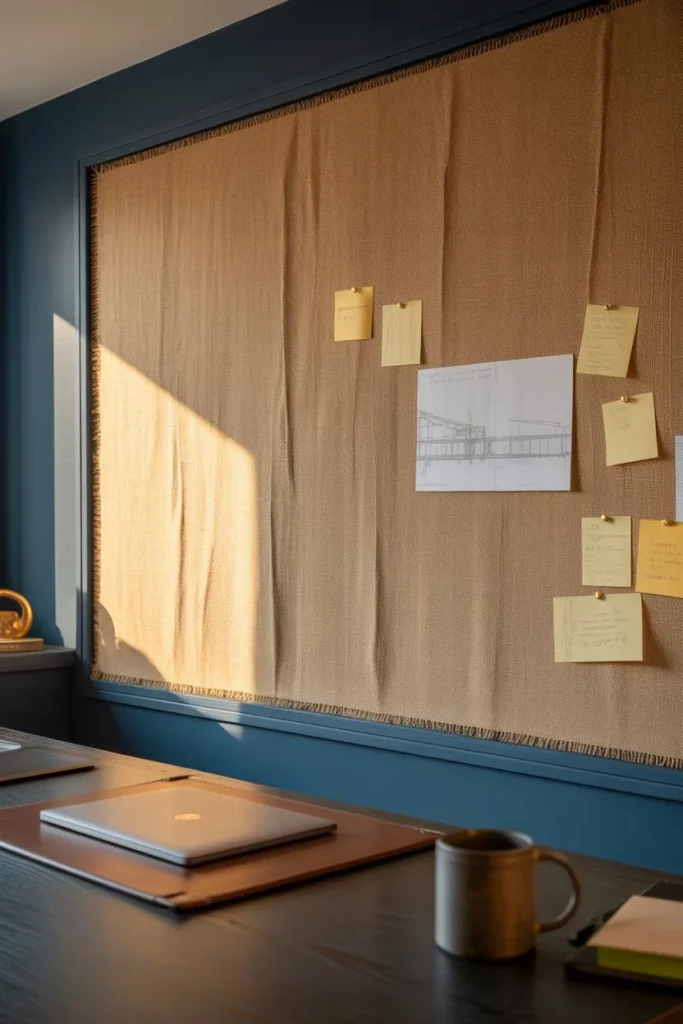
A large, floor-to-ceiling or desk-width pinboard wrapped in heavy, oatmeal-colored linen is a functional masterpiece. Unlike cork, linen has a sophisticated, matte texture that absorbs light and sound, helping to quiet the “echo” during meetings. When you run your hand over it, you feel the cool, slightly rough weave of the natural fibers.
The visual reality of a working pinboard is its constant state of flux. You’ll see the tiny, dark holes left behind by moved pushpins and the slight “sag” of a heavy reference book page clipped to the top. In the midday sun, the linen shows a fine, fuzzy texture, while in the evening, under a desk lamp, the fabric creates a soft, warm backdrop that reduces glare.
The sensory experience is subtle but effective. You’ll hear the muffled thwack of a pin entering the board and notice the faint, clean scent of dry fabric. It’s a piece of wall design that grows with your projects, holding the physical remnants of your brainstorms while keeping your desk clear of clutter.
2. Symmetrical Grid of Monochromatic Nature Prints
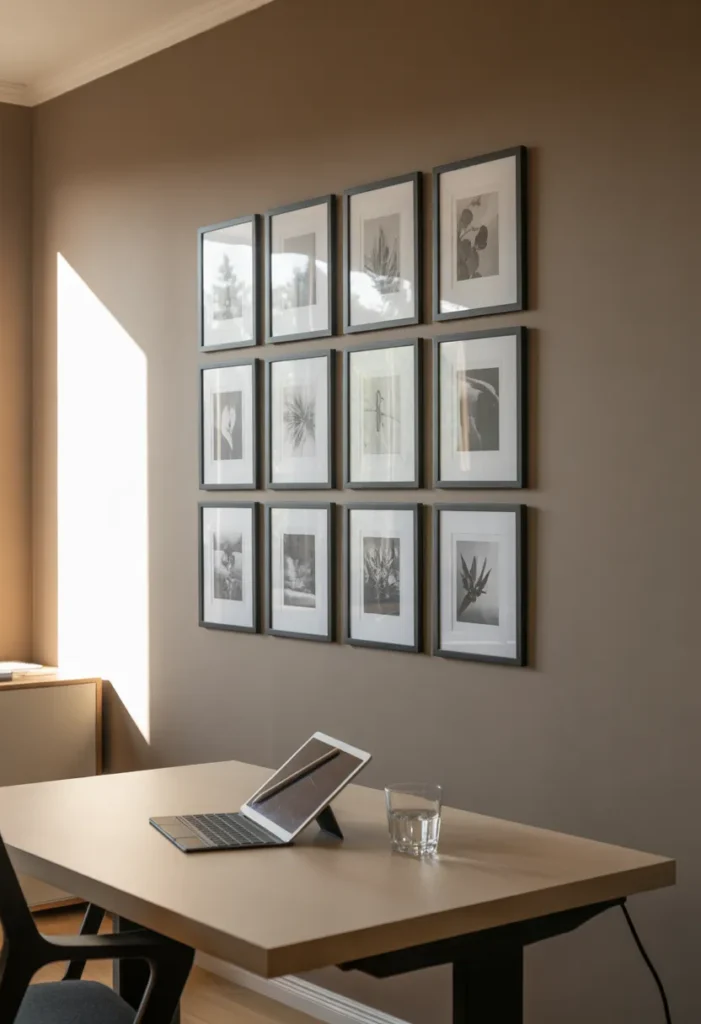
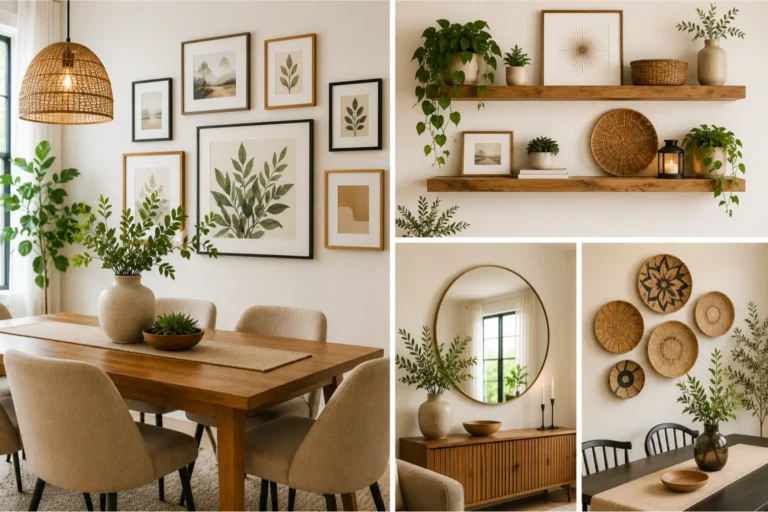
For a home office that requires deep focus, a strict 3×3 or 4×2 grid of black-and-white nature photography provides a sense of mathematical order. Whether it’s close-ups of fern fronds or aerial views of mountain ranges, the repetition creates a rhythmic visual interest. The frames are typically thin, matte black metal that feels cold and sharp to the touch.
The reality of a grid is the challenge of alignment. No matter how precise the installation, one frame might be a millimeter off, or the wire on the back might cause one to lean forward slightly more than the others. The glass will catch the reflection of your computer monitor, creating a dancing blue glow that shifts as you move.
You’ll notice a thin layer of dust on the top edges of the frames if they haven’t been wiped in a week. This wall styling choice offers a “window to the outside” without the distraction of movement, providing a calm, professional aesthetic that grounds the room’s color palette.
A large, floor-to-ceiling or desk-width pinboard wrapped in heavy, oatmeal-colored linen is a functional masterpiece. Unlike cork, linen has a sophisticated, matte texture that absorbs light and sound, helping to quiet the “echo” during meetings. When you run your hand over it, you feel the cool, slightly rough weave of the natural fibers.
The visual reality of a working pinboard is its constant state of flux. You’ll see the tiny, dark holes left behind by moved pushpins and the slight “sag” of a heavy reference book page clipped to the top. In the midday sun, the linen shows a fine, fuzzy texture, while in the evening, under a desk lamp, the fabric creates a soft, warm backdrop that reduces glare.
The sensory experience is subtle but effective. You’ll hear the muffled thwack of a pin entering the board and notice the faint, clean scent of dry fabric. It’s a piece of wall design that grows with your projects, holding the physical remnants of your brainstorms while keeping your desk clear of clutter.
3. Floating Walnut Ledges for “Rotating” Inspiration
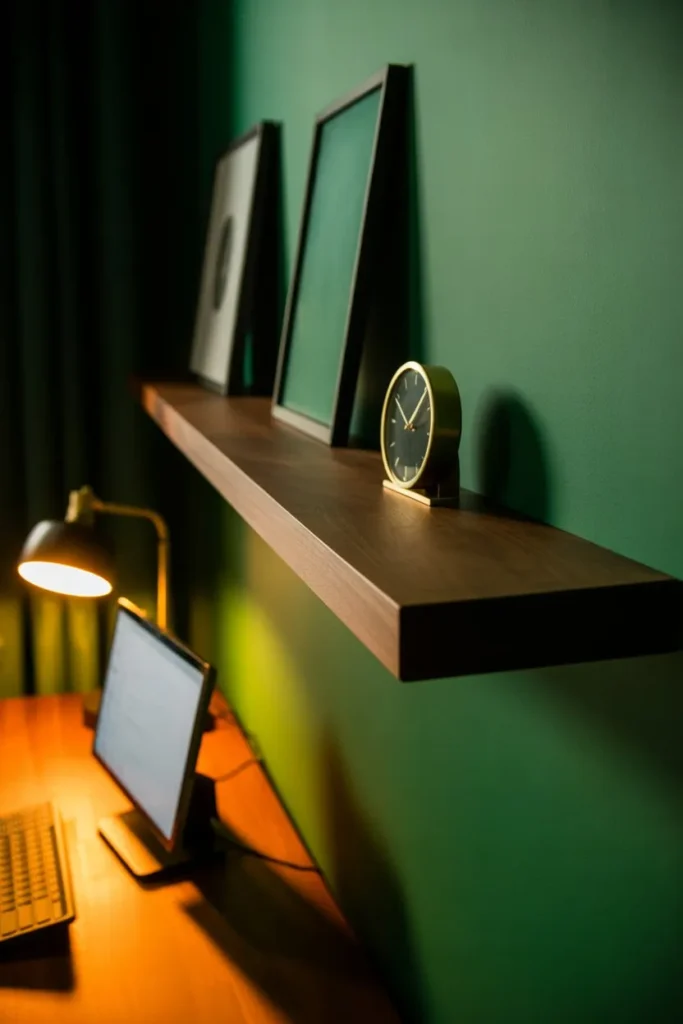
A solid walnut picture ledge allows you to swap out your aesthetic inspiration without putting new holes in the wall. The wood is dark, rich, and feels oily and smooth under your fingers. It creates a heavy, horizontal line that anchors the room and serves as a base for learning art, awards, or old journals.
The light plays beautifully with the wood grain, highlighting the knots and the natural “swirls” in the timber. In the late afternoon, the sun casts a long, sharp shadow below the ledge, emphasizing its thickness. You’ll find that dust settles in the corners where the ledge meets the wall, and the wood might develop a slight patina over time in the spots where you frequently rest your hands.
Because the items are leaned rather than fixed, they might let out a tiny, resonant clink when you set down a coffee mug on the desk nearby. It’s a dynamic focal point that allows your environment to evolve alongside your career, making the space feel personal and alive.
4. Oversized Industrial Magnetic Metal Map
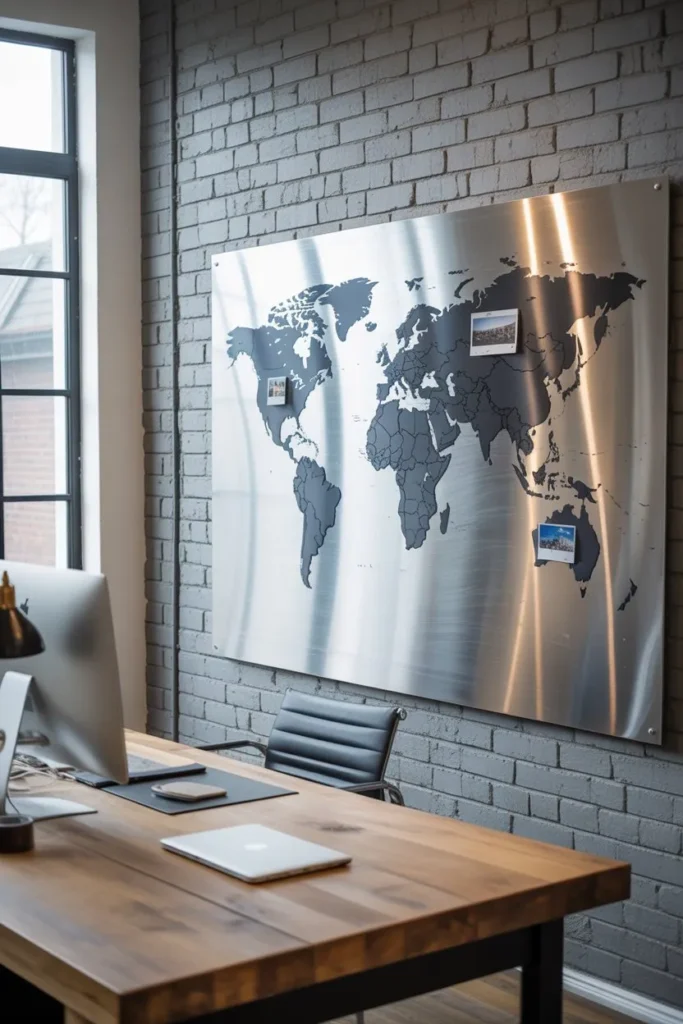
A massive sheet of brushed steel or iron, laser-etched with a world map, turns an entire wall into an industrial-chic planning center. The metal is cold, heavy, and has a slight “grit” to the finish. It doesn’t reflect light cleanly; instead, it creates a hazy, metallic sheen that looks different from every angle.
The visual reality includes the marks of use: faint scratches from moving magnets around and perhaps a few smudges from fingerprints. You’ll see the “heat” in the metal where it was cut, and the edges might show a tiny bit of dark oxidation over the years. It’s a sturdy, permanent piece of wall art that feels like it could last a century.
The sound is the most distinct part of the sharp, magnetic snap when you pin a new lead or a project location to the map. It’s a satisfying, tactile feedback that signals progress. This interior design choice is perfect for someone who thinks globally and needs a high-impact visual to stay motivated.
5. Collection of Vintage Patent Drawings
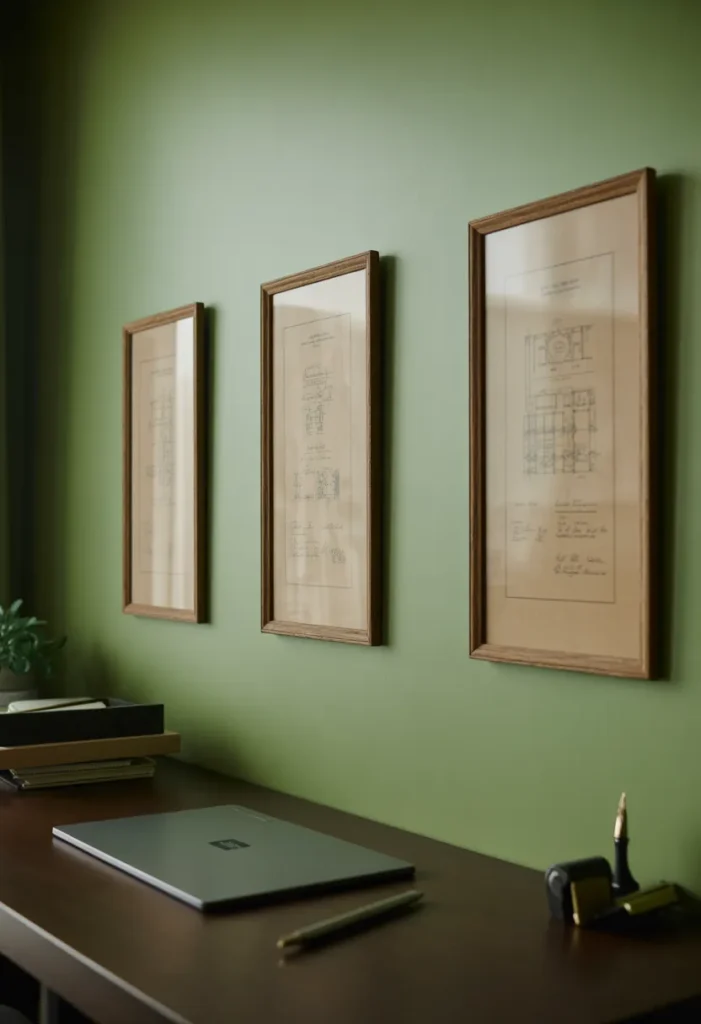
Framing vintage patent drawings perhaps of a camera, a typewriter, or a lightbulb adds an intellectual, “inventor” vibe to a home office. These are usually printed on yellowed, sepia-toned paper that shows the original fold lines and the fine, technical hatch-marks of the draughtsman. The paper feels dry and slightly brittle behind the glass.
The frames are often mismatched, giving the wall a “collected over time” look that feels more authentic than a store-bought set. In the morning light, the aged paper looks warm and inviting; in the evening, it takes on a deeper, more historic tone. You might notice a slight ripple in the paper where it hasn’t been mounted perfectly flat, a human imperfection that adds character.
You’ll find a bit of dust caught in the ornate carvings of an older frame or a faint streak on the glass. These drawings serve as a constant reminder of human ingenuity and the “process” of work, providing a sophisticated aesthetic inspiration that fuels long hours of problem-solving.
6. Minimalist Acoustic Felt Wall Tiles
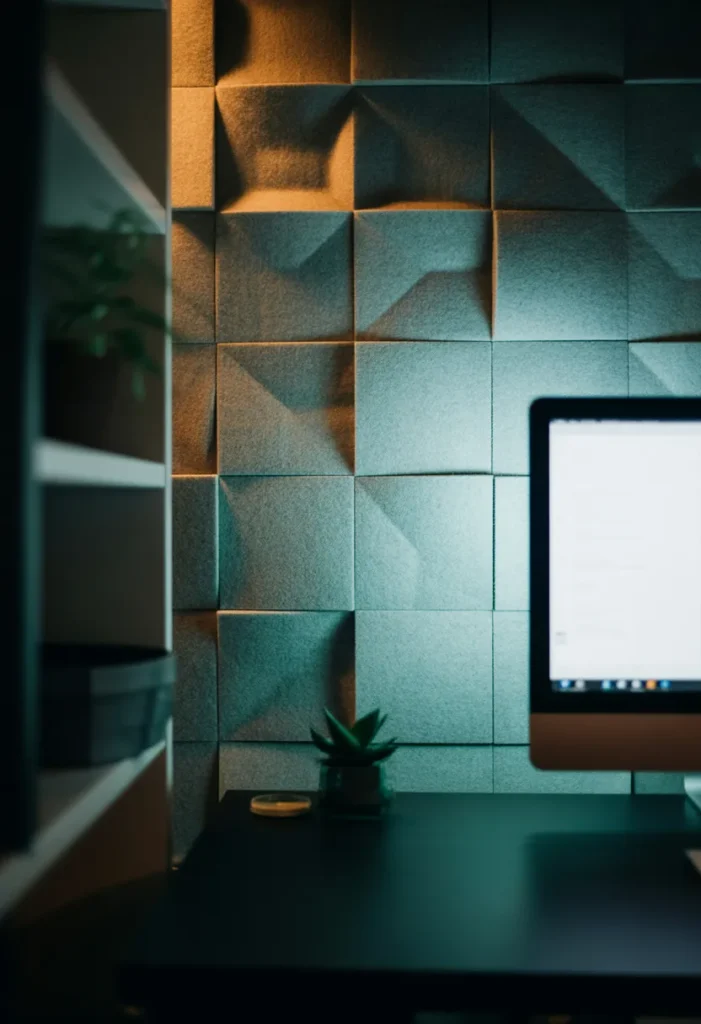
For the person who spends their day on calls, acoustic felt tiles are a must. These are thick, dense panels made of recycled fibers that feel like a heavy wool coat. They are usually arranged in geometric pattern hexagons or squares creating a three-dimensional wall design that is as functional as it is beautiful.
The felt absorbs almost all light, making the wall look deep and “void-like.” It also absorbs sound, changing the “air” of the room from a hollow echo to a quiet, padded sanctuary. You might notice a bit of lint or a stray fiber poking out from the edge of a tile, and the edges might not be perfectly flush, showing the hand-installed nature of the project.
There is no sound when you touch these; they are the ultimate “soft” décor. The smell is faintly earthy, like wool. This interior styling choice is perfect for a small office where you need to maximize quiet and minimize visual distractions, providing a clean, modern spatial balance.
7. Large Scale Typography “Statement” Piece
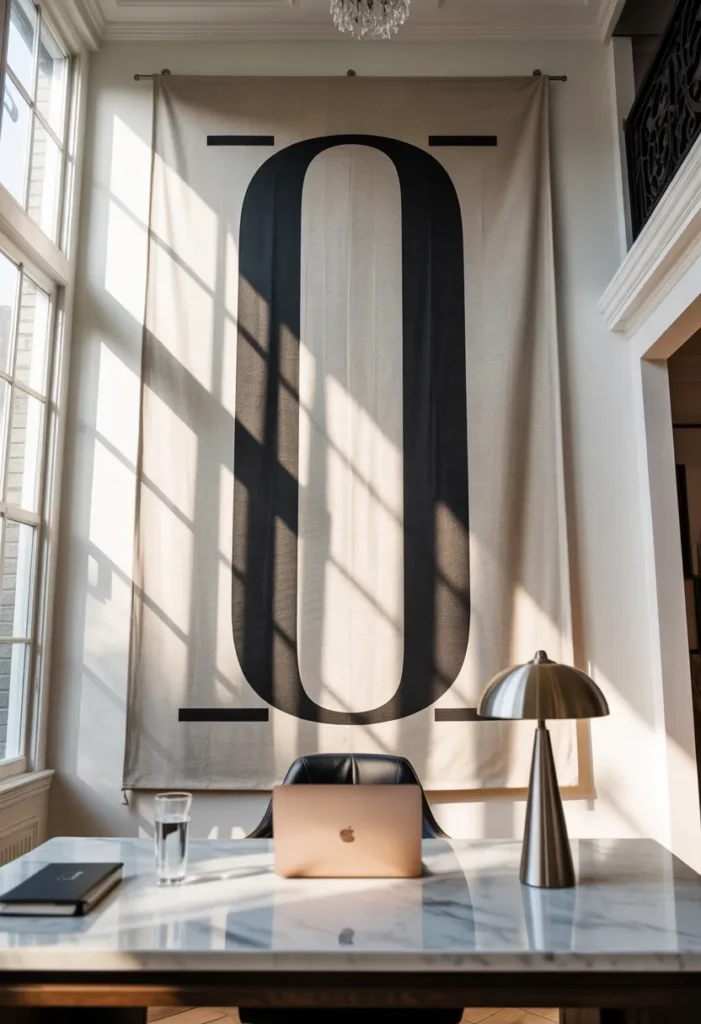
A single, massive piece of typography, perhaps a single word or a short, powerful phrase can act as the ultimate focal point. Rather than a cheap sticker, a high-quality print on textured canvas or a hand-painted wooden sign feels substantial. The paint might show the faint ridges of the brush, and the canvas has a visible “weave” that catches the light.
The visual reality is the scale; it dominates the room and sets the tone for the day. In the midday sun, the black ink looks deep and cavernous, while in the evening, the canvas takes on a softer, creamier tone. You might see a slight fraying at the very edge of the canvas or a bit of dust settled on the top of the wooden stretcher bar.
It doesn’t make a sound, but its presence is loud. It’s a bold style choice that keeps your primary goal front and center. By choosing a high-quality material over a temporary decal, you ensure the piece feels like a permanent part of your professional identity.
Conclusion
Your home office walls should be a reflection of the work you do and the person you want to be while doing it. Whether you prefer the rhythmic order of a photography grid or the tactile, evolving nature of a linen pinboard, the goal is to create a space that supports your focus.
Don’t be afraid of the small, real-world imperfections: the dust on a frame, the slight tilt of a ledge, or the pinholes in the fabric. These are the details that make the room feel like a personal workshop rather than a cold corporate cubicle. By focusing on visual interest and high-quality materials, you can build a home office that doesn’t just look professional, but actively inspires productivity every time you sit down to work.