8 Kitchen Canvas Print Ideas That Add Personality
The kitchen is often called the heart of the home, but from an interior styling perspective, it is easily the most difficult room to decorate. Because it is a high traffic workspace dominated by hard, non porous surfaces like stainless steel appliances, polished quartz countertops, and ceramic backsplashes, it can quickly feel sterile and clinical. Striking a proper spatial balance requires introducing materials that absorb sound and break up the harsh, reflective monotony.
A heavy duty canvas print is the perfect textural countermeasure. However, the kitchen wall requires a distinct approach to curation: standard food photography or generic coffee cup graphics can cheapen a high end build. Instead, we want to look for unexpected artistic genres that offer visual interest while standing up to the reality of a busy cooking environment. By treating the kitchen wall as a gallery space, these ideas provide a sophisticated aesthetic inspiration that introduces true personality without disrupting the room’s clean, modern layout.
1. The Deconstructed Typographic Family Recipe
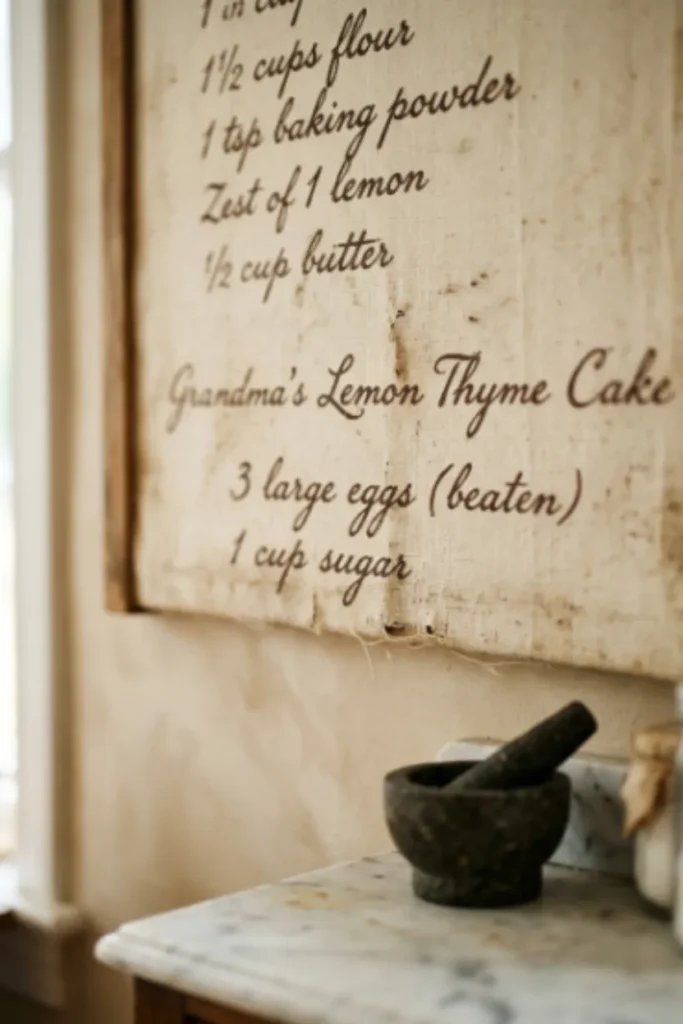
Instead of standard kitchen quotes, taking an old, hand written family recipe card complete with the original cursive script, ink blots, and faded margins and blowing it up into a massive, vertical canvas print adds an incredible layer of personal history. The canvas should be finished in an ultra matte coat to keep the background looking like aged, toothy parchment paper. It serves as an intimate focal point that anchors the dining nook or baking station.
The visual beauty lies in the scaling of the handwriting. You will see the texture of the original paper grain replicated on the canvas fibers, along with realistic details like the faint yellowing around the edges where oil or water splattered decades ago. In the soft light of a morning kitchen, the dark ink script stands out sharply, drawing people closer to read the ingredients. It is a deeply sentimental piece of wall design that balances out the cold, technical machinery of modern appliances.
2. High Contrast Moody Botanical Herb Prints
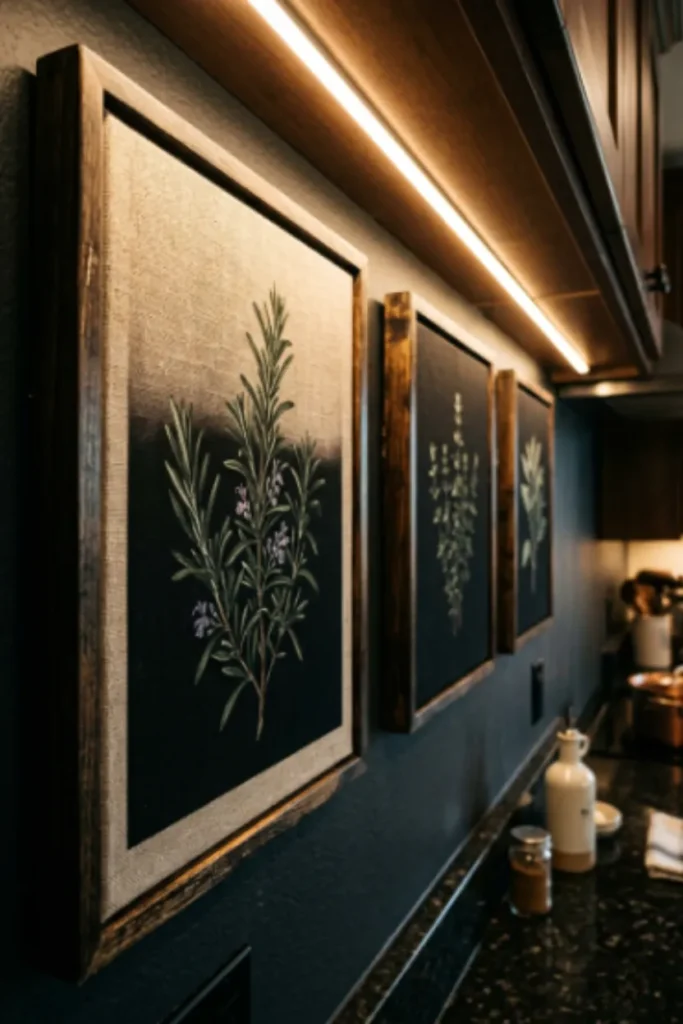
Moving away from bright, country style plant illustrations, this concept uses a series of three vertical canvases featuring deep, moody macro photography of culinary herbs like rosemary, thyme, or dark purple basil. The background of the prints is a solid, velvety matte black, allowing the rich, waxy textures of the green leaves to pop dramatically. This creates a powerful focal point that breaks up the bright glare of standard white upper cabinets.
Visually, the canvas captures the fine, glistening dew drops on the leaves and the intricate network of veins in the plant structure. You will notice how the matte canvas absorbs the kitchen’s ambient lighting, eliminating the annoying glares that traditional glass framed prints suffer from in brightly lit rooms. This intense, dark botanical presence provides a grounding anchor that offers a sophisticated variation of the styles we explored in our 8 Boho Kitchen Wall Décor Ideas That Look Natural guide.
3. The Vintage Agricultural Blueprint Scroll
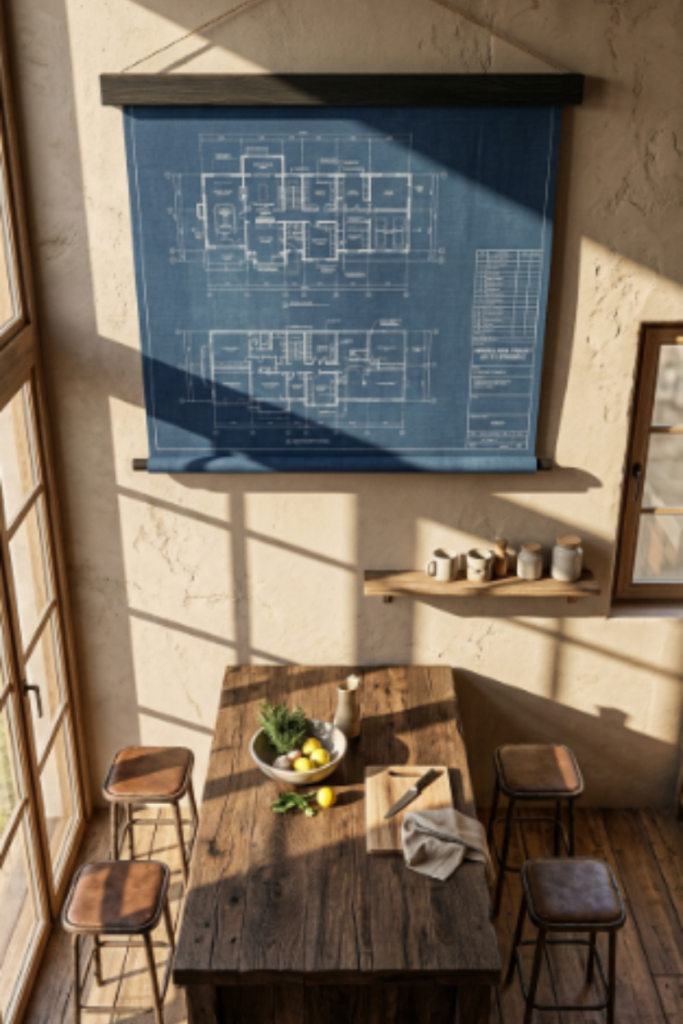
A massive, horizontal canvas print featuring a late 19th century patent drawing or technical blueprint of an old agricultural tool like a cast iron coffee grinder or a copper still injects a sophisticated, intellectual vibe. The canvas is finished in a deep indigo blue or aged sepia tone, held at the top and bottom by two raw, blackened oak wood rails instead of a traditional frame.
The light interacts beautifully with the unpolished texture of the canvas. You will see the original, historic fold lines and small ink imperfections from the vintage document replicated on the fabric. If a kitchen window is open, the bottom rail might sway a fraction of an inch, adding a subtle, living energy to the room. It is an ideal way to bridge the gap between historic charm and modern structure.
4. Oversized Minimalist Mid Century Abstract Shapes
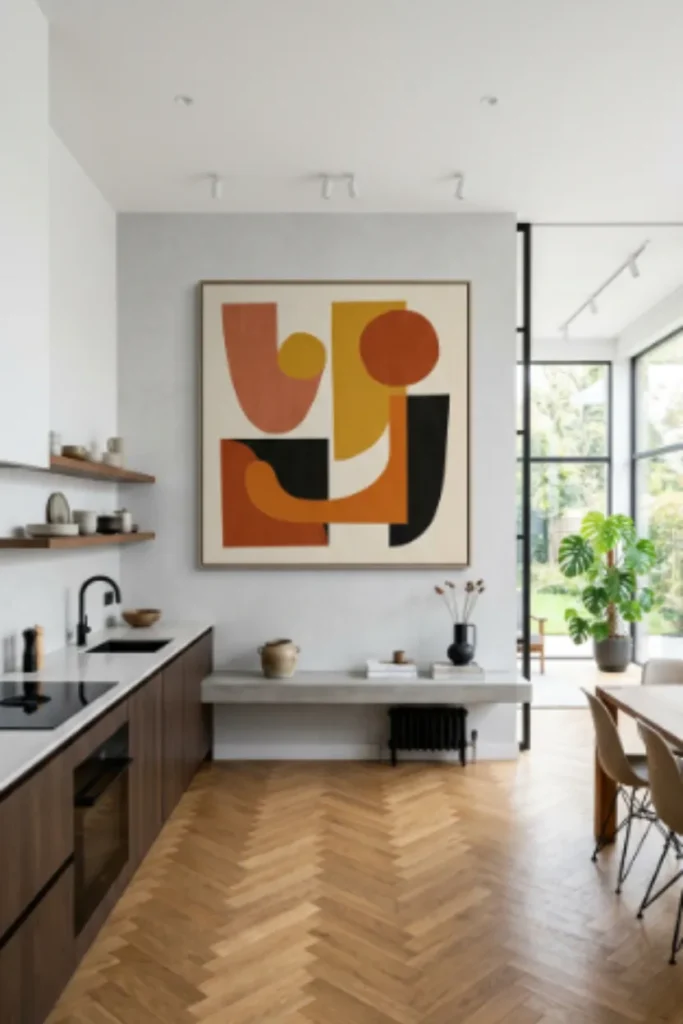
To complement a sleek, handle less modern kitchen, a large scale canvas featuring bold, asymmetrical mid century geometric shapes in an earth toned color palette like terracotta, mustard yellow, and raw umber works beautifully. The artwork relies on large blocks of flat, solid color with no gradients, acting as a clean, graphic contrast to the busy lines of tile grout or wood paneling.
Because the canvas is oversized, it fills the visual void of an empty wall with pure, calming geometry. You will notice the subtle texture of the paint strokes visible within the color blocks and a faint line of dust settled on the top edge of the wrapped canvas. In the afternoon sun, the earth tones warm up the entire space, balancing out a cool toned stone countertop or a slate floor. It is a brilliant way to handle large, open walls without cluttering the kitchen’s spatial balance.
5. The Blurred Culinary “Motion Blur” Abstract
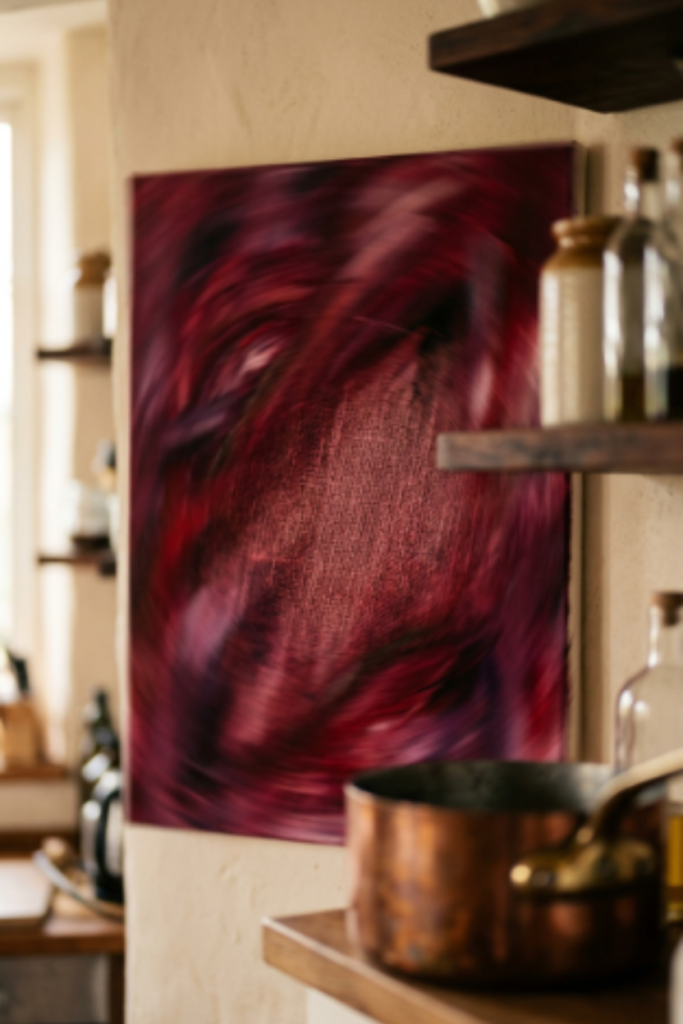
A highly contemporary choice for the modern home is a canvas print featuring abstract motion blur photography of fresh ingredients like the swirling crimson of a pouring red wine or the exploding green of freshly chopped herbs. The artwork is intentionally out of focus, transforming a literal food item into a vibrant, fluid wave of rich color and energy.
The magic of this art piece is its dynamic movement. Up close, the canvas texture breaks down the blurred colors into a beautiful, pointillist matrix of threads, while from a distance, it looks like a smooth, moving stream of pigment. It does not reflect light; it diffuses it softly, creating a rich visual layer that does not distract from the cleanliness of the workspace. It offers an excellent, colorful alternative to the structural, monochromatic ideas found in our playbook.
6. Fine Art Macro “Salt & Stone” Textures
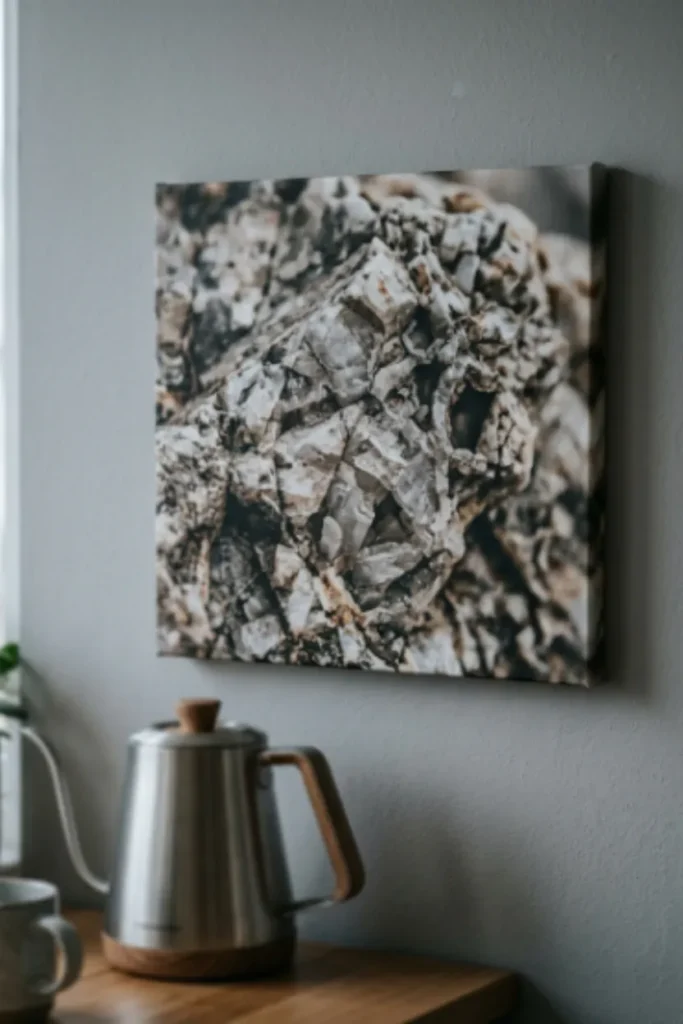
For kitchens designed around natural materials, a collection of canvas prints showcasing hyper macro photography of raw culinary elements like the jagged, crystalline structure of pink Himalayan salt rocks or the porous, pitted surface of ancient volcanic grinding stones adds incredible tactile depth. The images are desaturated, focusing entirely on form, shadow, and texture rather than color.
The immediate effect of this choice is a sense of raw, elemental luxury. You will see the microscopic crags, tiny fissures, and dusty pockets of the stone surfaces blown up to a grand scale. When the kitchen’s overhead spotlights hit the canvas, the texture of the fabric combines with the texture of the photography, creating an incredibly rich, 3D visual illusion. It is a sophisticated piece of wall styling that honors the raw ingredients of cooking.
7. The Vintage European Farmer’s Market Sign
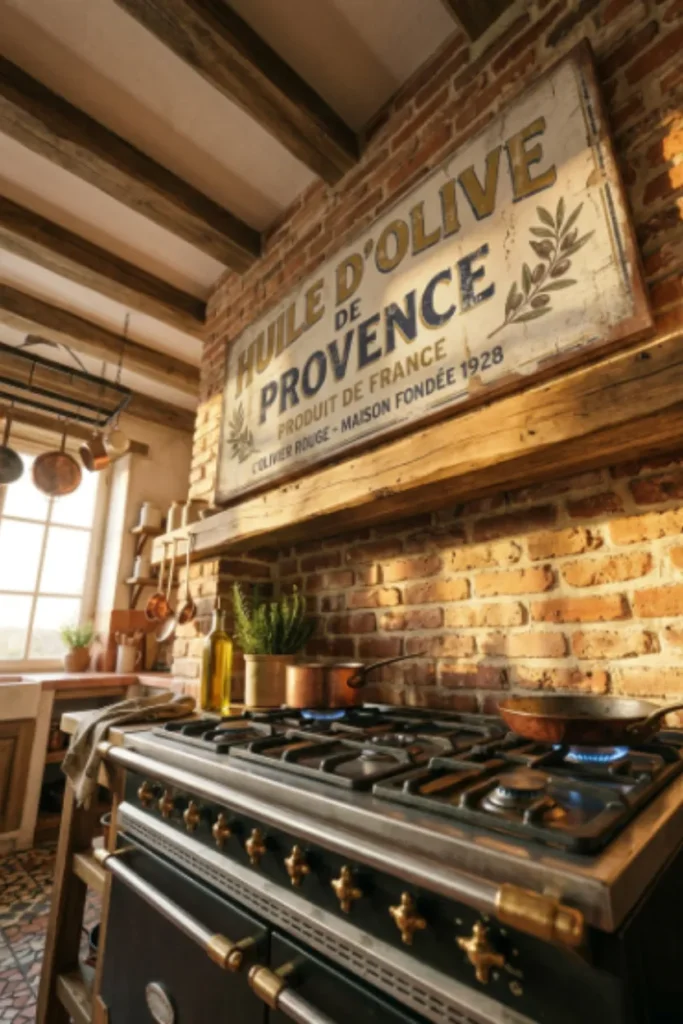
A canvas print designed to look like a weathered, hand painted wooden sign from an old European marketplace featuring faded French or Italian typography for olive oil, wine, or artisanal cheese provides a warm, nostalgic touch. The graphic is artificially aged, showing realistic wood grain splits, peeling paint textures, and faded stenciled lettering.
The canvas fabric is ideal here because it perfectly mimics the matte, chalky quality of old outdoor signage. You will see the simulated water stains and the slight scuffs along the wrapped edges of the canvas that make it look like a genuine antique find. It introduces a playful, storyteller element into the kitchen, acting as a welcoming focal point that feels familiar, cozy, and full of lived in personality.
Conclusion
Adding personality to a kitchen is a delicate balancing act between utility and art. The goal is to move away from plastic, easily wipeable decorations that feel cheap and temporary, leaning instead into heavy duty canvas prints that introduce true material depth. Whether you choose the rich history of a blown up family recipe or the bold graphic statement of mid century geometry, you are creating an environment that feels curated and intentional.
Embrace the real world details that come with a working kitchen like the way the canvas fibers catch the changing daylight, the faint layer of dust on a top rail, or the rich contrast between the canvas weave and a polished quartz backsplash. These are the elements that transform a cold cooking laboratory into a warm, sophisticated sanctuary, providing a permanent layer of visual interest that makes the heart of your home truly complete.
