5 Cheap Dining Room Wall Ideas That Still Look Stylish
Designing a dining room on a budget often feels like a balancing act between utility and elegance. We want a space that feels sophisticated enough for a dinner party but durable enough for a Tuesday night takeout. Often, the walls are the first place where we feel the pinch; large-scale art can be expensive, and custom woodwork is often out of reach. However, a stylish dining room isn’t defined by the price tag of the décor, but by the visual interest and spatial balance created through thoughtful layering.
In a room where people sit for long periods, the walls are under constant scrutiny. You notice the way the light catches a texture while you’re waiting for dessert, or how a specific color shifts as the sun goes down. To make a “cheap” idea look high-end, you have to lean into interior styling techniques that focus on authenticity—the subtle dust on a frame, the slight misalignment of a gallery, or the way a natural material reacts to the warmth of the room. This guide explores how to achieve a professional aesthetic inspiration without the “ultra-luxury” cost, focusing on grounded, real-world details.
1. Oversized “Basket Gallery” Wall
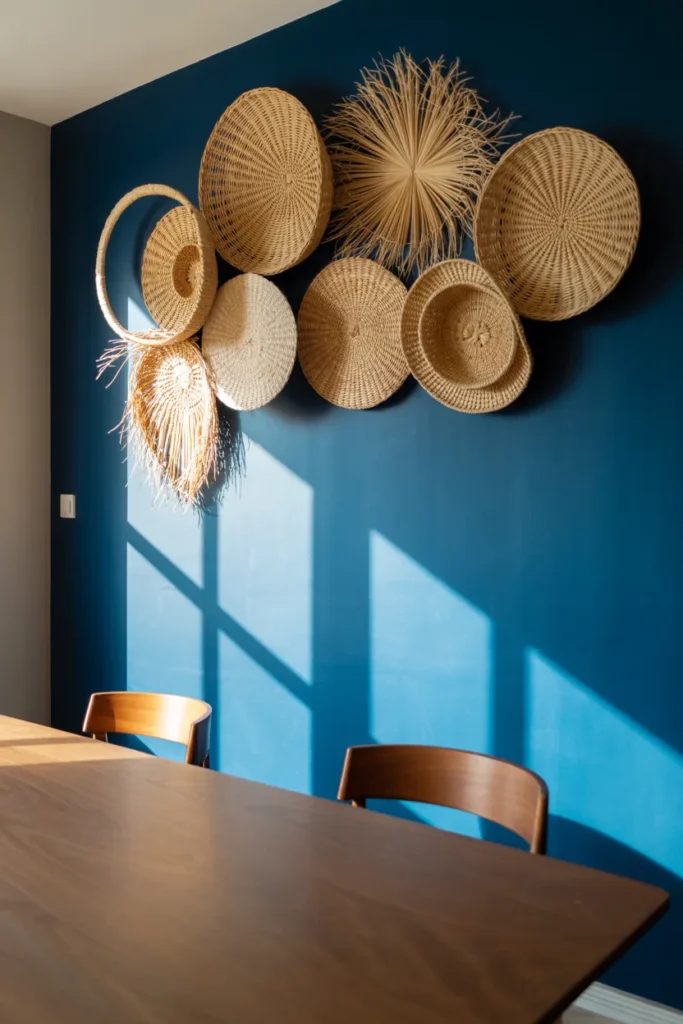
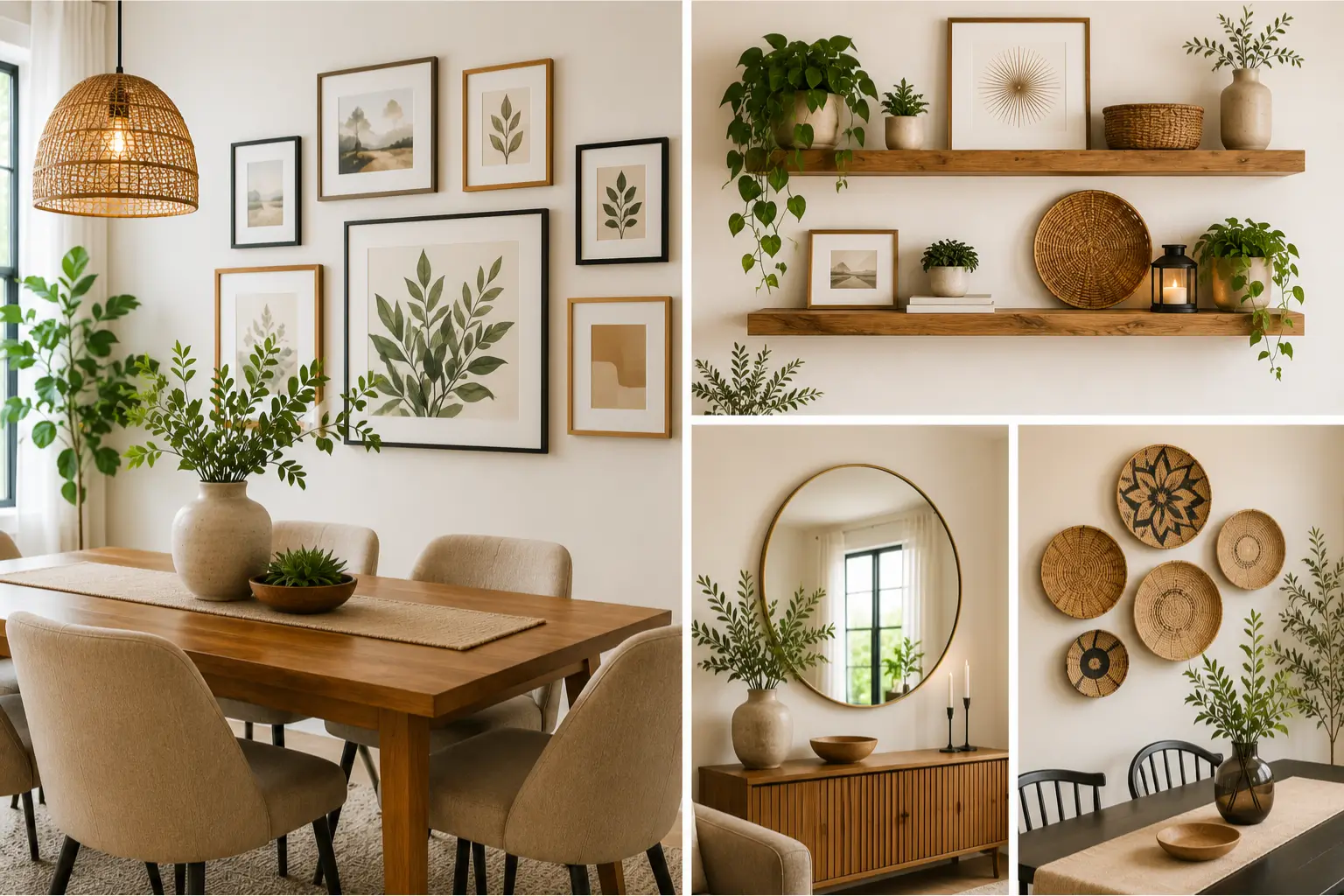
One of the most effective wall design tricks for a large dining area is using woven seagrass or willow baskets. You can often find these at thrift stores or local markets for very little, but when clustered together, they create a massive, high-impact focal point. The material is rough and prickly to the touch, and it carries a faint, earthy scent of dried grass that becomes more pronounced when the room is warm.
Visually, these baskets handle light beautifully because of their deep, concentric weaves. In the morning, the side-lighting creates a complex map of shadows within the fibers. Because they are handmade, no two are perfectly round; you’ll notice stray fibers poking out or a slight wobble in the weave. They aren’t perfectly flat against the wall, which adds a three-dimensional “thickness” to the room that flat art simply can’t provide.
When a breeze moves through the dining room, you might hear a very soft, dry rustle as the baskets settle against the plaster. Over time, the seagrass might fade from a vibrant green-gold to a more muted, sandy tan—a natural aging process that only adds to the room’s stylistic depth.
2. Symmetrically Framed Architectural Blueprints
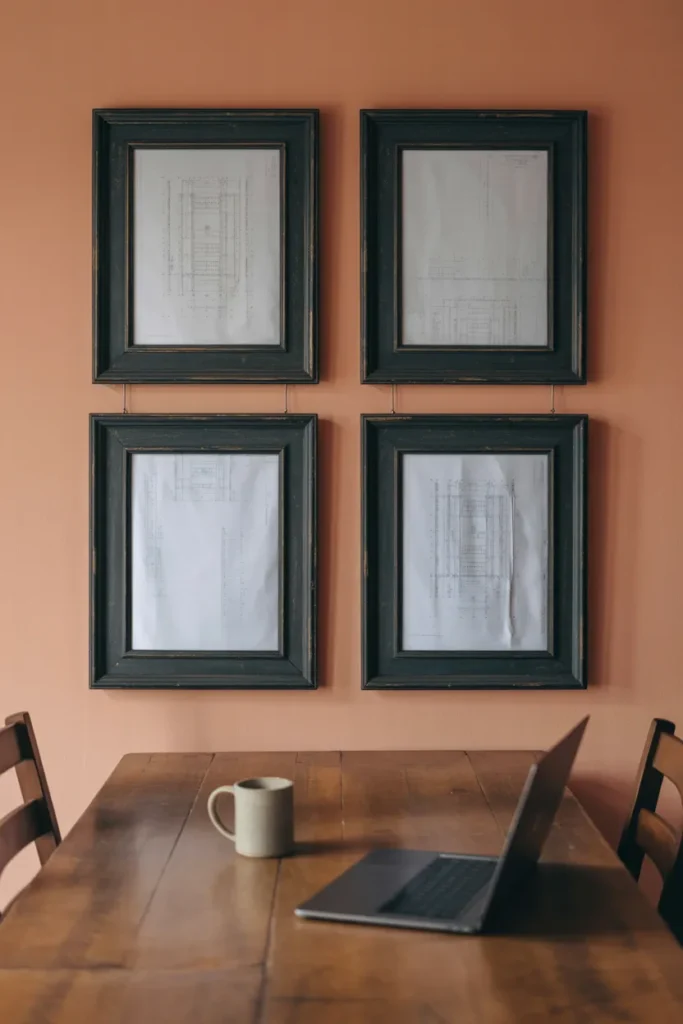
For a sophisticated, intellectual look, you can download public-domain architectural blueprints or vintage city maps and print them at a local shop. Framing these in simple, thin black frames creates a high-contrast wall styling moment that looks like a custom commission. The paper has a slight tooth to it, and you can see the fine, spindly lines of the ink and the occasional “age spot” or fold line from the original scan.
To keep this looking “expensive,” the symmetry is key. However, the reality of a home is that nothing is perfectly level. You’ll notice one frame might sit a millimeter lower than the other, and the glass will inevitably catch a reflection of the dining table and chairs. In the evening, the white paper of the blueprints looks crisp under a chandelier, while during the day, it takes on a softer, greyish tone.
The frames are cold metal or smooth plastic, and if you tap the glass, it has a thin, high-pitched ring. You might see a faint fingerprint near the corner of the frame where someone adjusted it. This interior design choice provides a sense of order and “gravity” to the dining room without requiring a massive investment.
3. Floating “Library” Ledge for Rotating Art
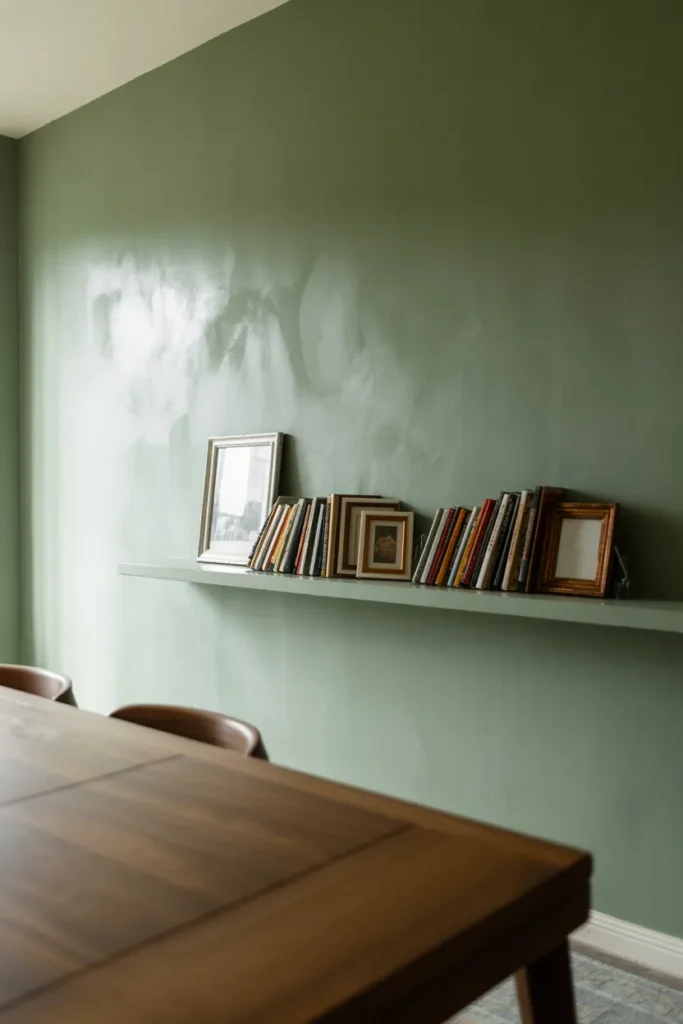
Instead of committing to one large piece of art, a single long, thin picture ledge allows you to layer smaller prints, postcards, and even menus from favorite meals. This how to style approach is perfect for a budget because you can use what you already have. The ledge itself is usually a simple piece of painted MDF or pine that feels smooth and solid.
The visual beauty of a ledge is the overlapping layers. A small frame might partially hide a larger one, creating a “busy” but intentional look. In the afternoon, the sun creates a long, horizontal shadow line across the wall where the ledge is mounted. You’ll find that dust settles quickly on the flat surface of the ledge and along the top edges of the leaning frames—a small detail that makes the room feel lived-in.
Because the frames aren’t fixed to the wall, they might lean at slightly different angles. If someone walks past quickly or closes a door hard, you’ll hear the soft clink of the frames shifting against each other. It’s a dynamic, evolving focal point that you can change with the seasons.
4. Statement “Block” Paint Arch
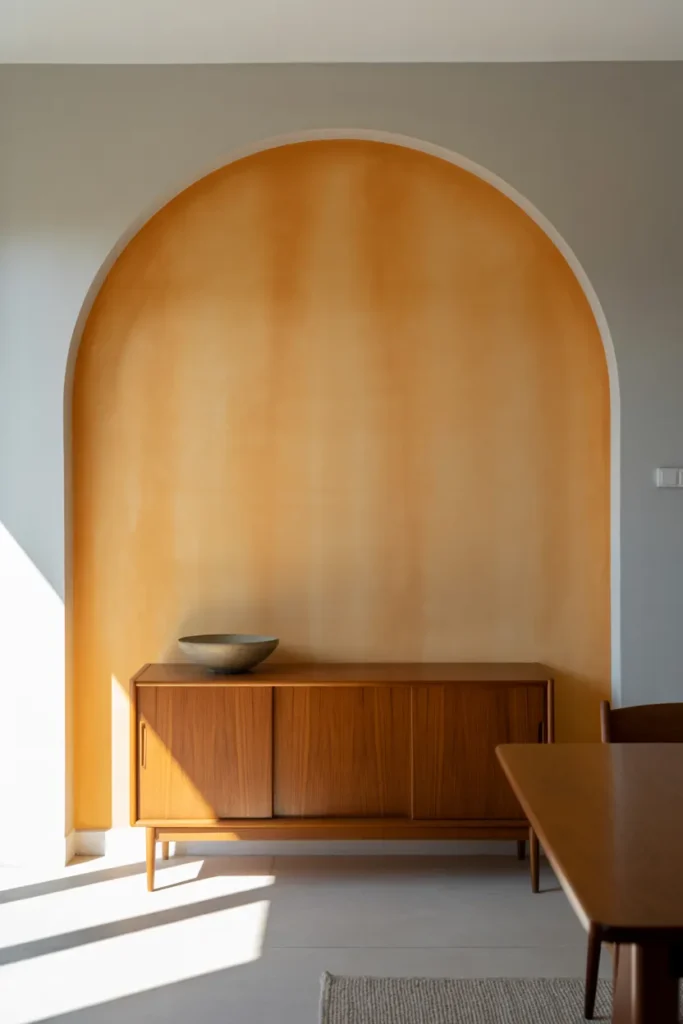
Sometimes the cheapest wall décor ideas involve no objects at all, just a single quart of paint. Painting a large, geometric arch or a tall vertical block of color behind your sideboard creates a “zone” that anchors your furniture. The paint has a slight texture from the roller, and you might see the faint “lap marks” where the paint dried at different speeds.
This block of color acts as a backdrop for the rest of your décor. If you choose a matte finish, it absorbs the light, making the dining room feel cozy and intimate. If you choose a satin finish, you’ll see a soft glow where the light hits the curve of the arch. You might notice a tiny imperfection at the edge where the painter’s tape didn’t leave a perfectly crisp line—a human touch that makes the DIY effort feel authentic.
The wall feels cool to the touch and smells faintly of fresh paint for the first few days. It provides a massive visual interest boost for the price of a coffee. It turns a boring, flat wall into a structured architectural feature that makes the whole room feel “designed.”
5. Antique Plate “Cloud” with Mismatched Patterns
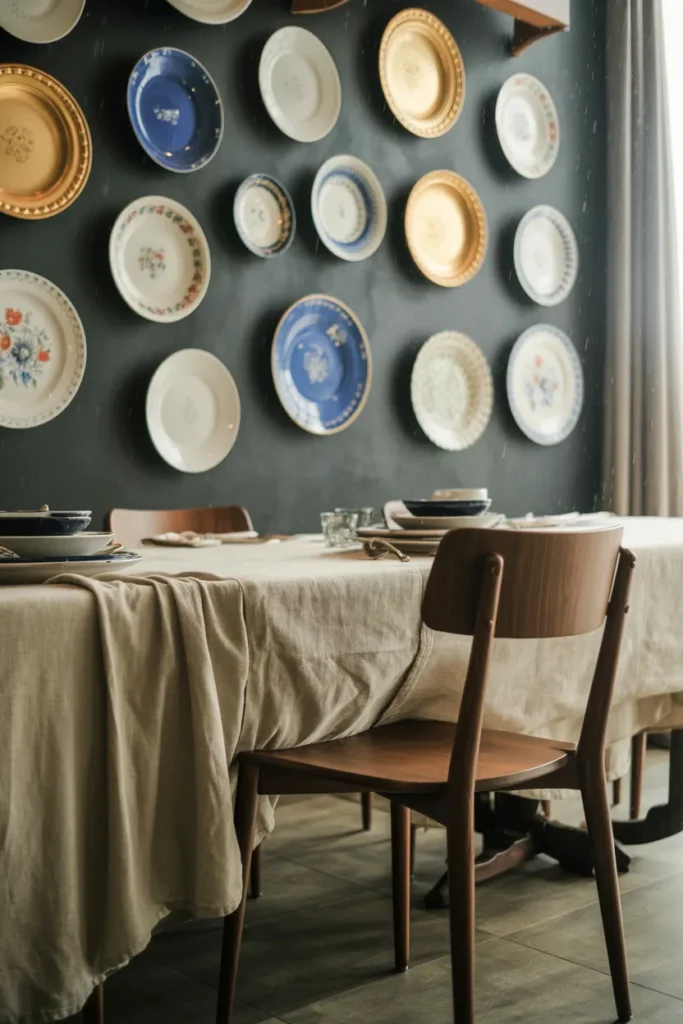
Thrift stores are overflowing with beautiful, single ceramic plates that can be turned into a “cloud” of wall design. These plates have a weight and a glassy temperature that feels substantial. By mixing a few ornate, gold-rimmed “grandma” plates with simple, modern matte ones, you create a conversation piece that bridges the gap between old and new.
The light reflects off the various glazes in different ways; the shiny ones will catch a sharp glint of the window, while the matte ones stay soft and shadowy. You might notice a fine “crazing” in the glaze of an older plate or a tiny chip on the rim—imperfections that tell a story of past dinners. The plates are held by wire hangers, which means they sit a fraction of an inch off the wall, casting small, circular shadows.
You’ll find a thin line of dust on the top edge of each plate if they haven’t been cleaned recently. When you walk through the room, the plates might let out a tiny, high-pitched vibration if the floorboards are a bit loose. It’s a clustered, tactile way to add spatial balance to a dining room without spending more than a few dollars per piece.
Designing with Intent, Not Just Dollars
Creating a stylish dining room is ultimately about how you direct the eye. When you’re working with a limited budget, the “magic” happens in the details—the way a basket’s texture breaks up a flat wall, or the way a symmetrical grid of blueprints provides a sense of calm. These cheap dining room wall ideas prove that you don’t need a massive budget to create a space that feels curated and professional.
Don’t be afraid to leave some empty space, and don’t feel the need to hide the fact that your décor is lived-in. The slight tilt of a frame, the dust on a ledge, and the chipped rim of a thrifted plate are the elements that give a room its soul. A dining room should be a place where the atmosphere is as inviting as the food. By focusing on visual interest and authentic materials, you can create a high-end look that feels grounded, real, and entirely your own.