17 Kitchen Wall Décor Ideas That Make Your Space Look Stylish
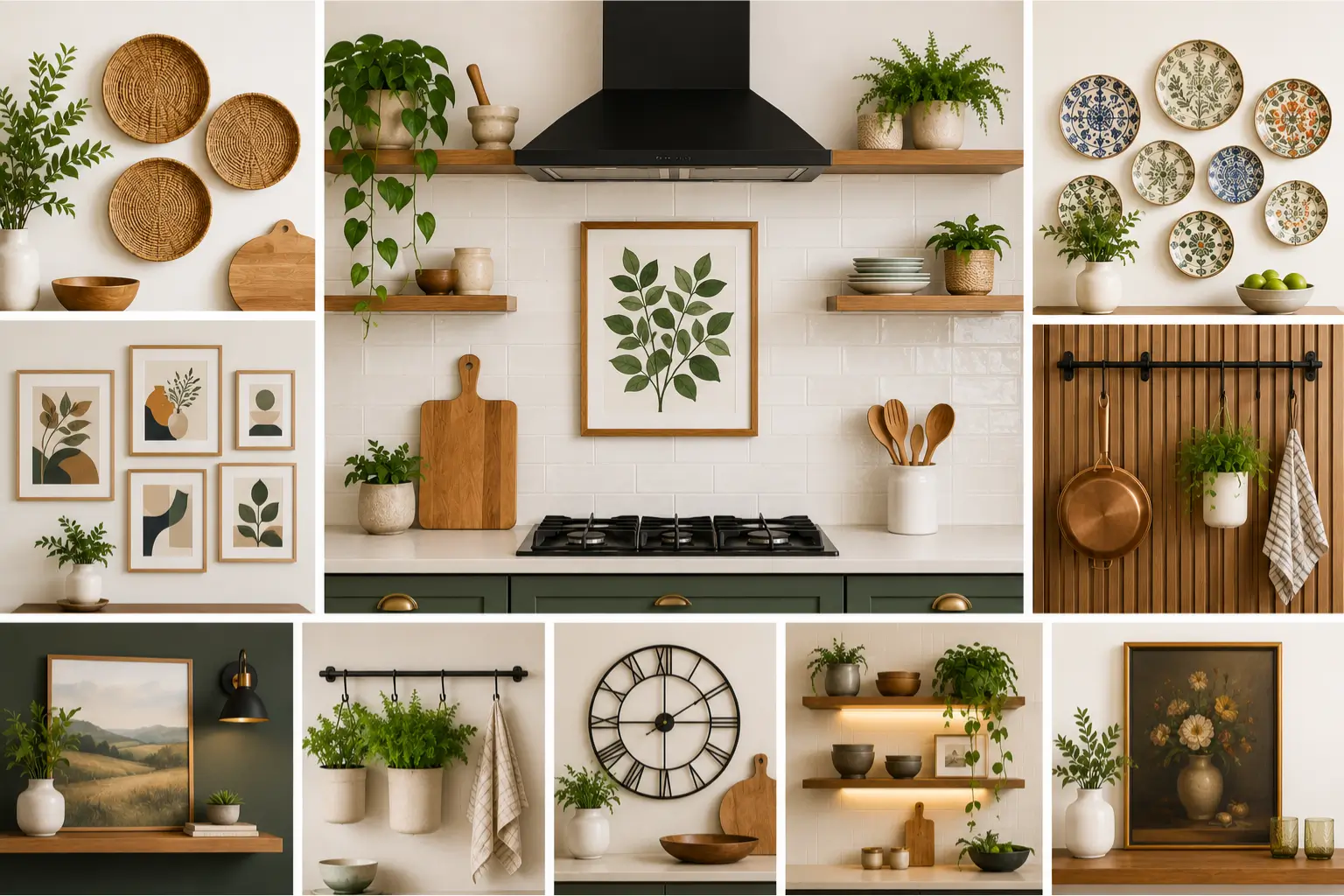
The kitchen is often the loudest room in the house, filled with the clatter of pots and the hum of the refrigerator, yet its walls are frequently the most neglected. We focus so much on the utility of the countertop and the organization of the pantry that we forget the vertical space is what actually holds the room’s atmosphere together. A kitchen wall shouldn’t just be a backsplash; it should be a place where the morning light catches a texture or where a stray splatter of olive oil becomes part of the room’s history.
This isn’t about creating a sterile, “perfect” kitchen that looks like a catalog. It’s about finding a balance between the hard surfaces of appliances and the warmth of a lived-in home. You want a kitchen that feels curated but still smells like toasted sourdough and fresh herbs. From the way a copper pan reflects the stove’s flame to the slight dust that gathers on a high shelf, these ideas are designed to make your kitchen feel like the actual heart of your home.
1. Reclaimed Wood Floating Herb Racks
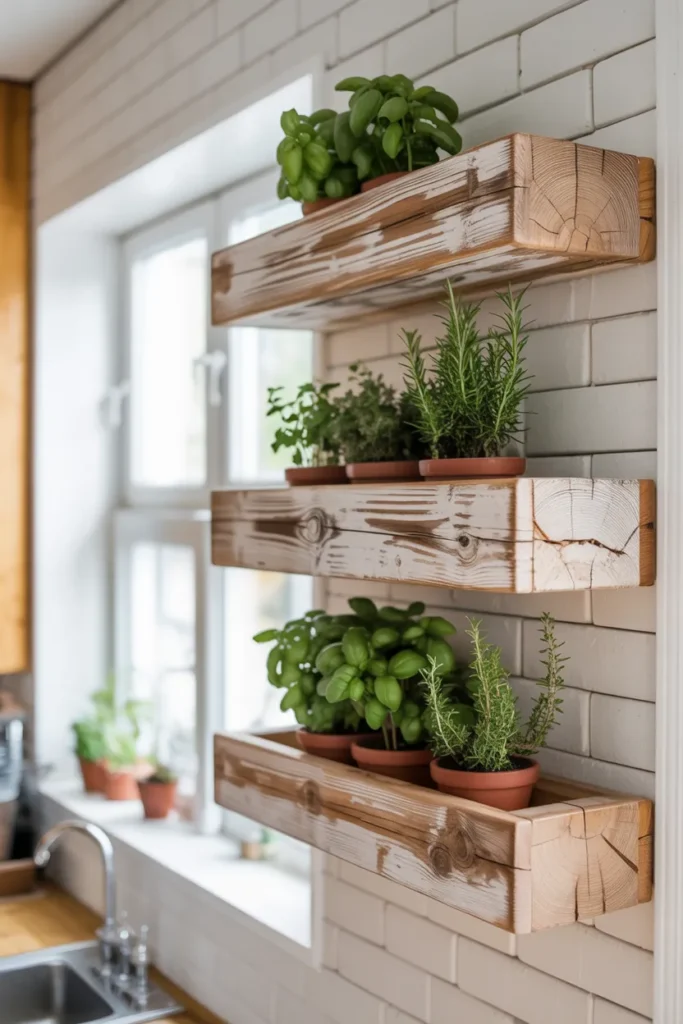
There is something deeply satisfying about reaching for a handful of basil directly from your wall. Installing floating racks made of reclaimed timber, wood that still bears the scars of old nail holes and uneven grains—brings an immediate organic warmth to the kitchen. When you touch the wood, it feels slightly rough and dry, a sharp contrast to the cold marble or laminate of your countertops.
The plants themselves add a layer of “living” décor. In the morning, you’ll see the sunlight filtering through the green leaves, casting soft, flickering shadows against the wall. Because it’s a working herb garden, it isn’t perfect; there might be a few fallen leaves on the shelf or a water ring on the wood from a recent misting.
The sensory experience here is the strongest. When the kitchen gets warm from the oven, the scent of damp soil and fresh mint or rosemary subtly fills the air. You might even hear the soft clink of a small terracotta pot settling against the wood when you move a nearby stool. It’s a functional, beautiful imperfection that makes the kitchen feel grounded.
2. Over-the-Sink Vintage Copper Pot Rail
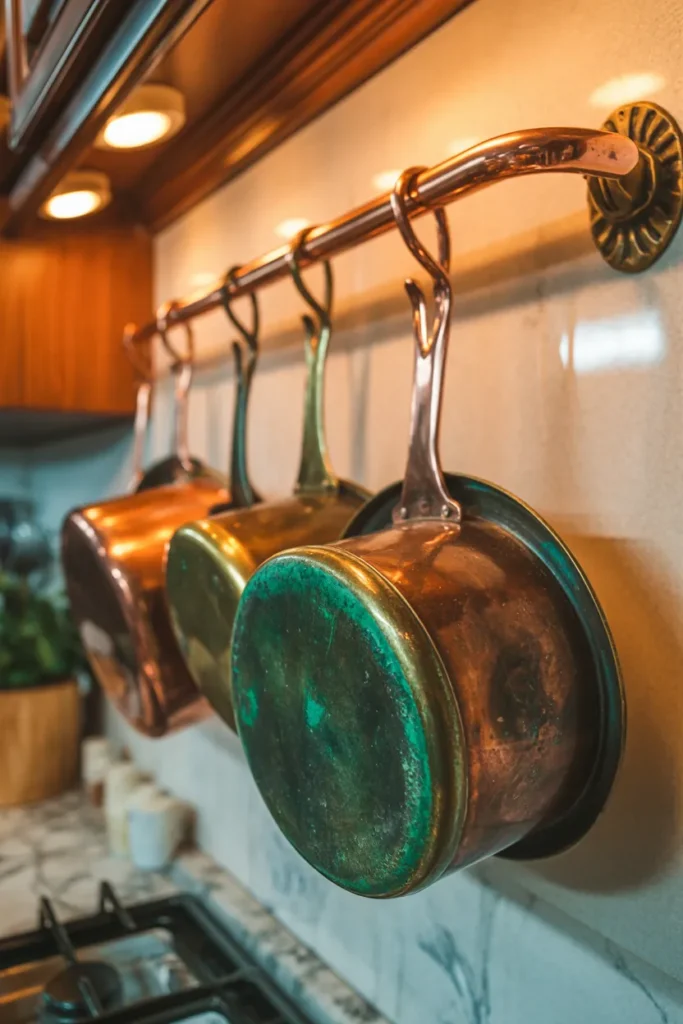
A kitchen wall often feels too flat, and a heavy brass or copper rail hung above the sink or stove breaks that plane perfectly. Hanging a collection of well-used copper pans or vintage colanders creates a focal point that feels professional yet historic. These aren’t shiny, store-bought pans; they are pieces with a dark patina and perhaps a few small dents from years of making Sunday roasts.
The way light interacts with this wall is constantly changing. In the evening, the overhead lights create sharp, amber reflections on the curved metal surfaces. You’ll notice the slight tarnish near the handles and the way the copper has deepened in color where it has been exposed to the most heat.
The sound is part of the charm, too. When you hang a pan back up, there’s a resonant, metallic ring that echoes slightly in the room. If the window is open, a breeze might cause the pots to shift almost imperceptibly, creating a tiny, rhythmic tapping against the backsplash. It’s a display that suggests a person who actually loves to cook lives here.
3. Oversized Framed Chalkboard for “Daily Specials”
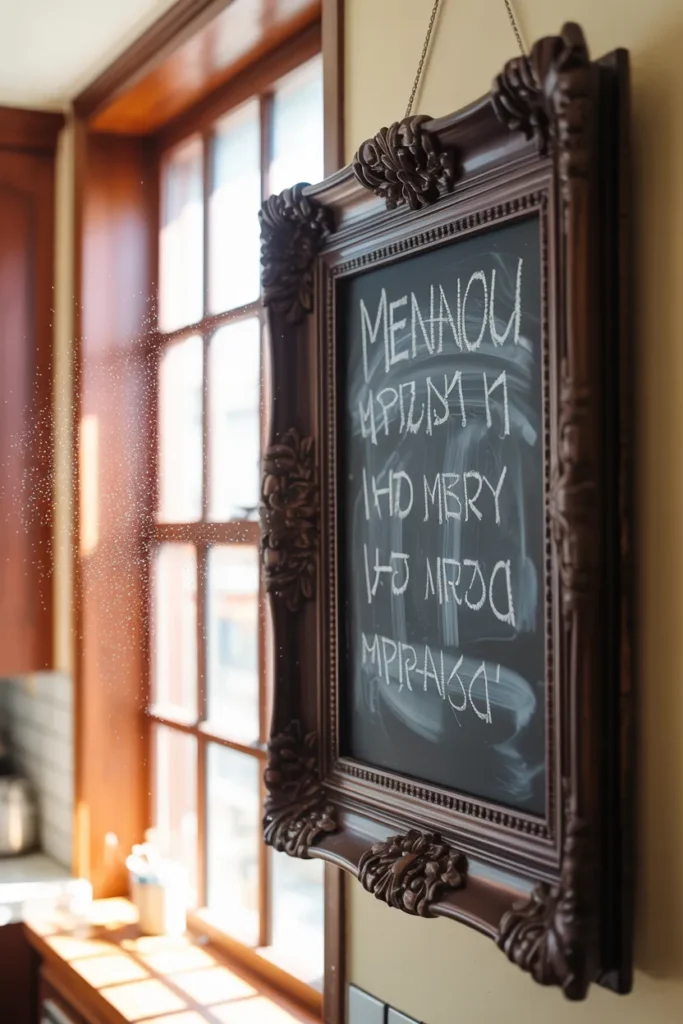
A large, framed chalkboard brings a bit of café energy into a home kitchen without feeling forced. The frame should be chunky and heavy—perhaps an old mirror frame that has been repurposed. When you write on it, the chalk feels gritty, and you can hear the sharp scritch against the slate.
This décor piece is never static. It’s a place for grocery lists, a “menu” for guests, or just messy doodles from the morning. Because it’s used daily, the surface is never perfectly black; there’s always a faint, cloudy haze of chalk dust left behind from previous erasures. You might even see a few fingerprints around the edges of the frame where it’s been touched a thousand times.
In the afternoon light, the chalk dust can look almost like a fine mist on the board. The imperfections—the slightly crooked handwriting or the faded ink of a permanent marker in the corner are what make it feel human. It’s a wall that talks back to you, capturing the fleeting moments of your daily routine.
4. Antique Bread Board Gallery Wall
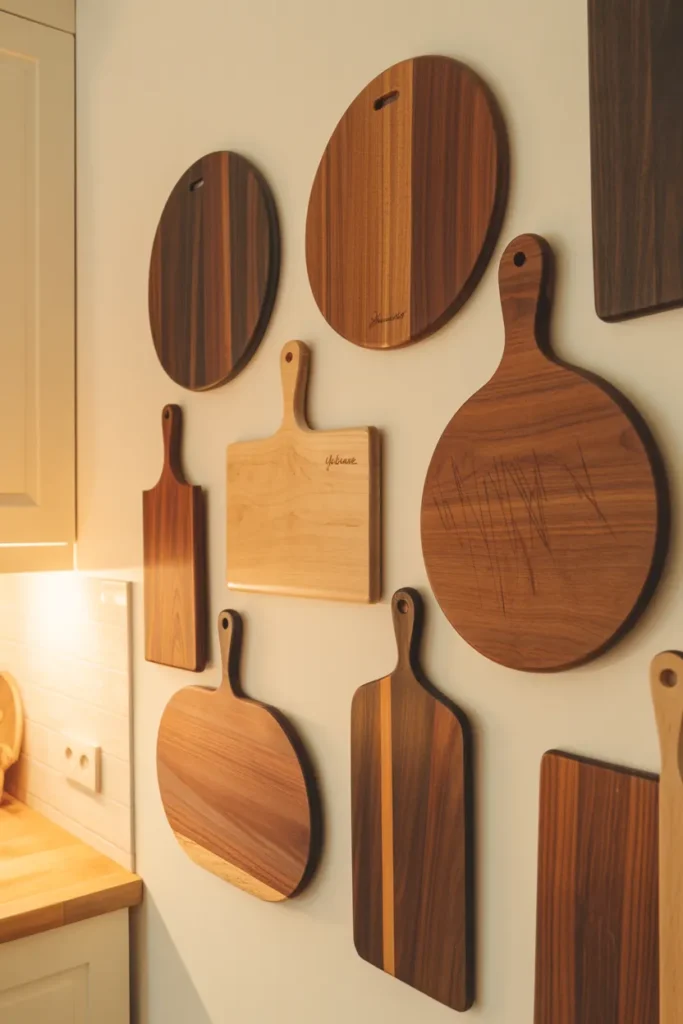
Gathering a collection of antique wooden bread boards and hanging them in a tight cluster turns a kitchen wall into a texture study. These boards come in different shades—some as light as sand, others a deep, oily walnut. If you run your hand over them, you’ll feel the deep knife scores and the smooth, worn-down edges from decades of slicing loaves.
The visual reality of wood is that it’s never “finished.” In the midday sun, the different grains stand out, showing the cracks and the natural warping of the timber. Some boards might have a slight greyish tint from being washed too many times, while others have a rich glow. They don’t reflect light; they absorb it, making a bright kitchen feel more intimate and quiet.
When the house is still, you might hear the wood expand or contract with a tiny, dry click. There’s often a faint, lingering scent of dry wood and old flour if you get close enough. It’s a wall that feels heavy with history, a reminder of all the meals that have been prepared in that space before you.
5. Open Shelving with Mismatched Ceramic Pitchers
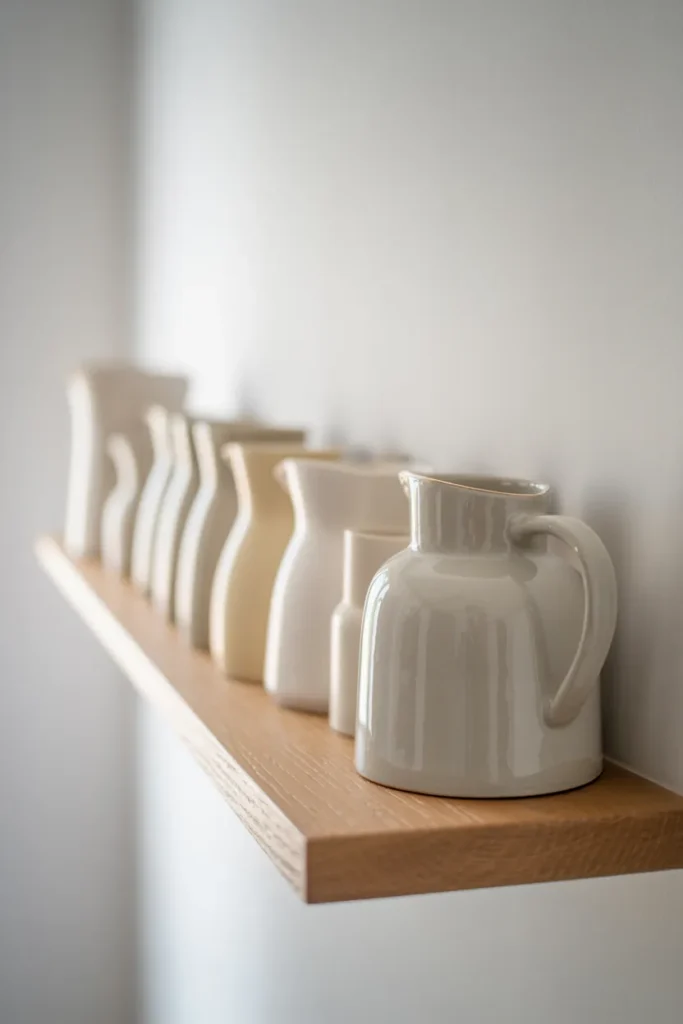
Replacing a traditional cabinet with a single, long open shelf for ceramic pitchers adds height and a sense of “air” to the kitchen. Ceramics have a weight and a temperature that feels distinct; they are cool to the touch and have a slight “ping” when they tap against each other. By choosing mismatched pieces—some glazed and shiny, others matte and earthy—you create a wall that feels like a curated collection.
The lighting on these pieces is beautiful. Glazed pitchers will catch a bright, sharp reflection of the window, while the matte ones will show soft, blurry gradients of shadow. You might notice a tiny chip on the spout of a favorite pitcher or a crazing pattern in the glaze of an older piece. These aren’t flaws; they are the marks of a kitchen that is actually used.
Because these shelves are open, they collect a thin layer of dust on the top edges of the pitchers if they haven’t been used in a week. When you pull one down to fill it with water, you feel the solid weight of the clay. The shelf itself might sag just a millimeter in the center from the weight of the collection, a small detail that makes the room feel settled and real.
6. Framed Vintage Seed Packets or Botanical Illustrations
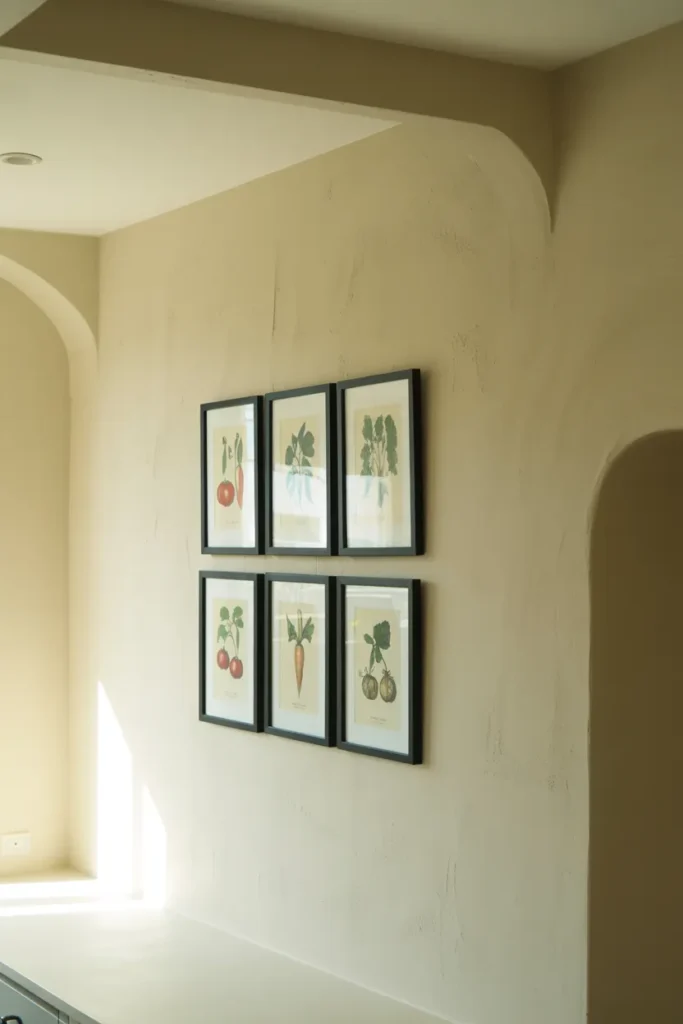
There is a nostalgic charm in the delicate, faded colors of vintage seed packets. Arranging a series of small, uniform frames containing botanical illustrations of heirloom tomatoes, carrots, or wildflowers creates a rhythmic pattern on a kitchen wall. These aren’t high-gloss posters; they are prints on slightly yellowed, off-white paper that shows the grain of the original woodblock or lithograph.
The visual experience changes as the sun moves. In the bright morning light, the colors look vibrant and crisp, but by dusk, the aged paper takes on a deeper, sepia-toned warmth. You’ll notice the glass in the frames catches reflections of the kitchen activity—the flicker of a stovetop flame or the movement of someone walking by. The frames themselves might have a thin layer of kitchen grease or dust on the top edge, a common reality in a room where cooking happens daily.
Tactilely, the frames are light and often made of thin, dark metal or stained wood. If the kitchen door closes firmly, you might hear the soft, rhythmic click-clack of the frames settling back against the wall. It’s a quiet, intellectual touch that brings a sense of the garden indoors, reminding you of the raw ingredients that start every meal.
7. Large Scale Minimalist Clock with Exposed Gears
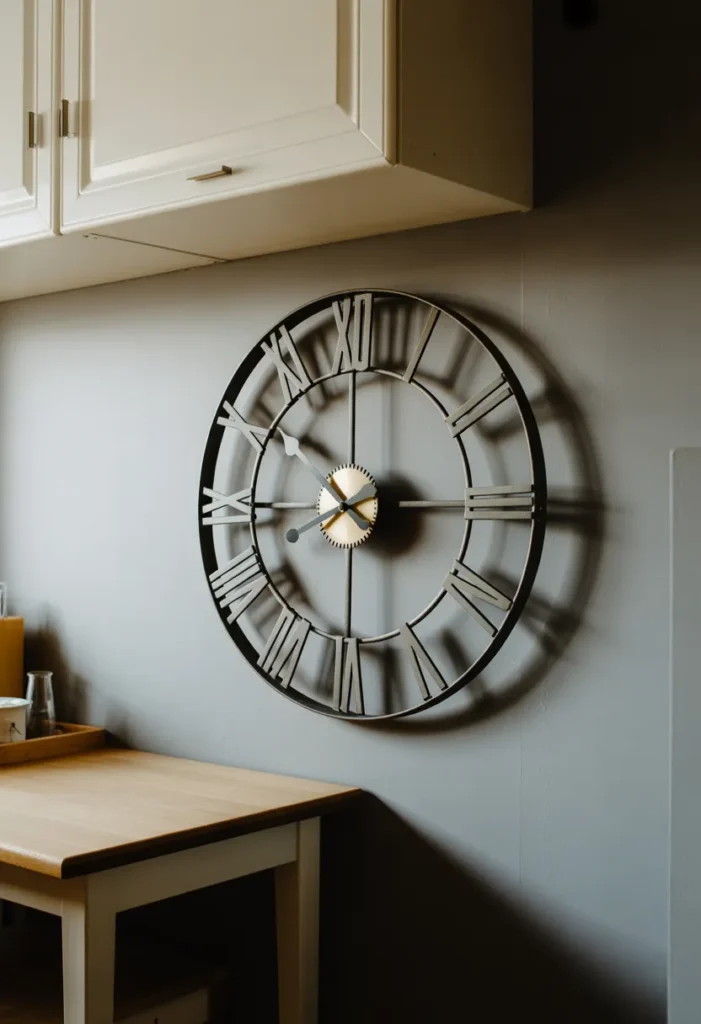
A kitchen is a place governed by time—minutes for an egg, hours for a braise. A large, minimalist wall clock with an open face and exposed brass or iron gears turns a functional necessity into a piece of industrial art. The metal is cold and heavy, often showing a slight tarnish or “wear” around the central pivot point where the hands have turned a thousand times.
The movement is the most captivating part. In a quiet kitchen, the steady, rhythmic tick-tock provides a heartbeat to the room, a sound that is often dampened by the hum of the dishwasher but becomes clear in the early hours of the morning. The shadows cast by the long, thin clock hands stretch across the wall as the afternoon sun hits them at an angle, creating a moving sundial effect on your plaster.
Because it’s an open-face design, dust tends to settle in the crevices of the gears and along the tops of the numerals. You might see a slight smudge on the wall behind it where it was adjusted or hung. It’s a grounded, mechanical piece that adds a sense of “gravity” to the kitchen, making the wall feel substantial and purposeful.
8. Industrial Mesh Wall Organizer for “Living” Storage
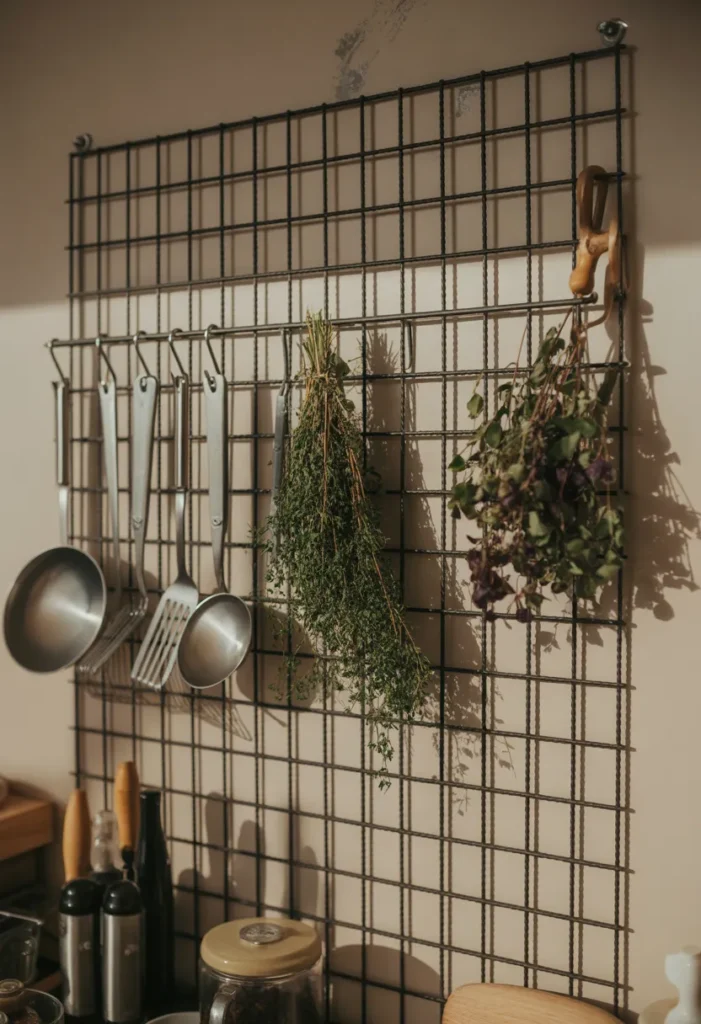
Replacing a blank wall with a large, black industrial wire mesh panel creates a “living” wall that changes based on what you need that day. It’s a rugged, tactile material—cold, thin wire that feels slightly rough under your fingers. You can hook anything onto it: a bundle of drying sage, a copper whisk, or a handwritten recipe card clipped with a rusted metal bulldog clip.
The visual depth here is layered. Because the mesh is open, you can still see the wall behind it, but the items hanging on it create a complex landscape of shapes and shadows. The light passes through the wire, casting a cross-hatched shadow pattern on the backsplash. It’s a look that is intentionally “unfinished,” embracing the clutter of a busy, creative kitchen.
You’ll hear the metallic tink every time you clip something new to the grid. Over time, the black coating on the wire might show silver nicks or scratches from the metal hooks, an imperfection that tells the story of your most-used tools. It’s a wall that works as hard as you do, keeping the essentials within reach while looking effortlessly styled.
9. Plaster Wall Medallions in Tonal Colors
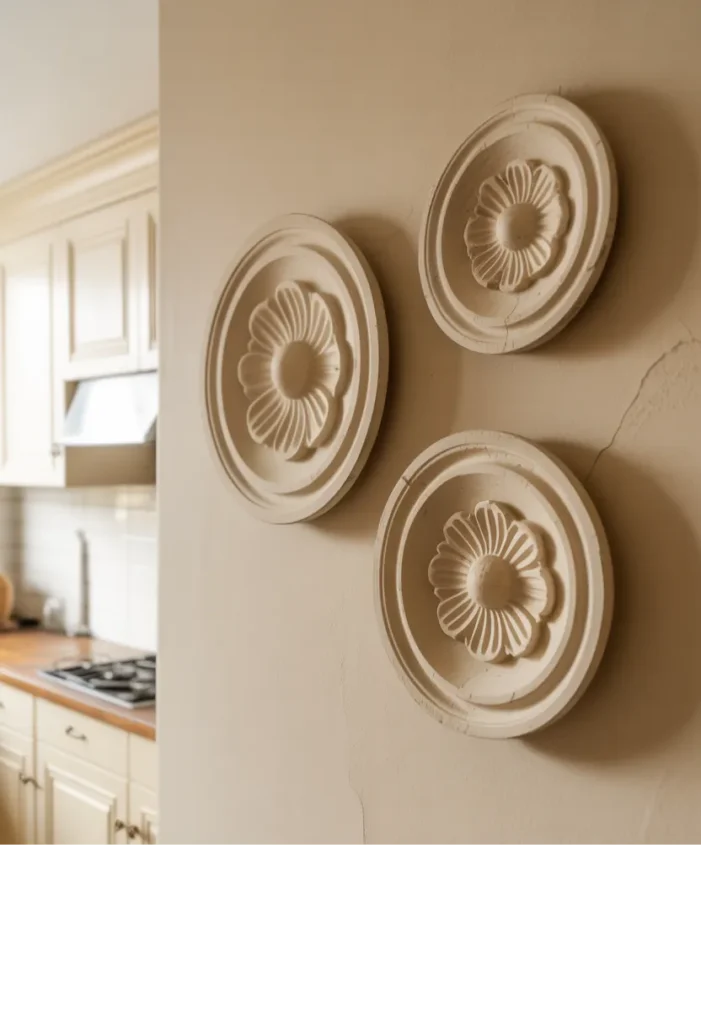
For a more architectural and European feel, hanging a collection of mismatched plaster ceiling medallions directly on a flat wall adds incredible texture without adding “clutter.” These are heavy, ornate pieces with deep ridges and floral carvings. When they are painted the same color as the wall—perhaps a soft off-white or a deep terracotta—the décor becomes all about the play of light and shadow.
In the morning, the side-lighting from a window catches the high points of the plaster, making the carvings look sharp and dramatic. If you touch them, they feel chalky and cool, and you might notice small pits or “bubbles” in the plaster from the casting process. They aren’t perfect; a petal on a floral carving might be chipped, or there might be a fine hairline crack running through one side.
These medallions also change the acoustics of the kitchen, breaking up large flat surfaces that usually bounce sound around. They make the room feel “thick” and historic. You might find a stray cobweb tucked into the deeper grooves of the carving, a tiny detail that makes the house feel like a real, settled home rather than a showroom.
10. Horizontal Magnetic Knife Strip in Walnut
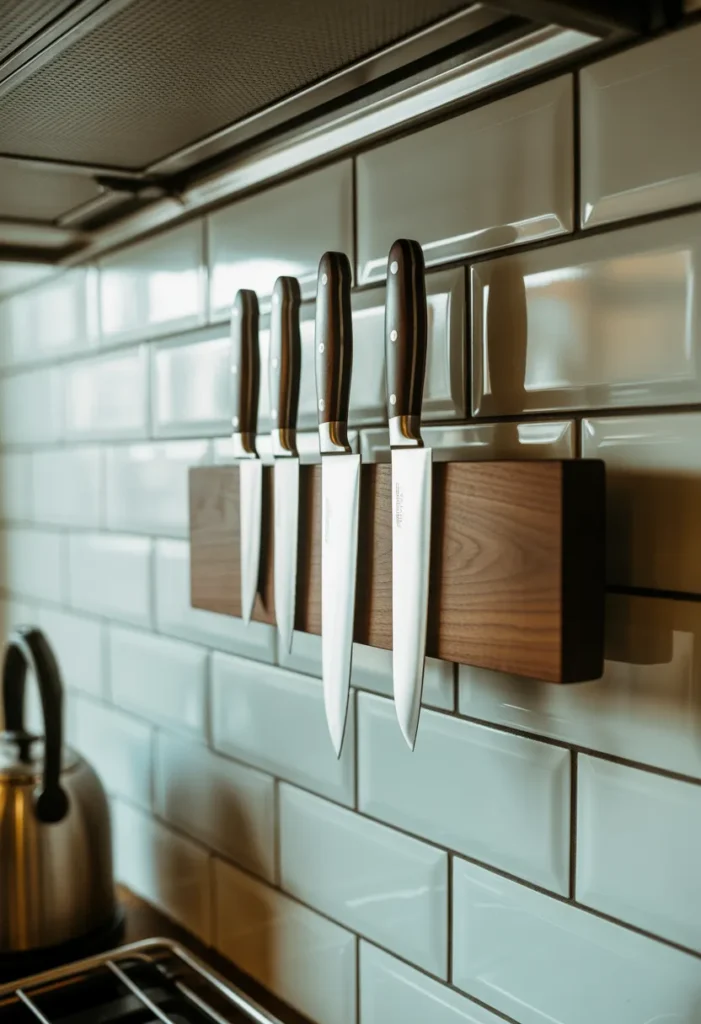
A magnetic knife strip is a classic choice, but choosing one encased in a thick, raw-grain walnut block turns it into a piece of art. The wood is smooth but has a natural oiliness to it that catches the light in a dull, rich glow. The cold, brushed steel of the knives against the warm, dark wood creates a high-contrast visual that feels both modern and rustic.
The sound is the most iconic part of this idea: the sharp, magnetic thwack when the blade finds the strip. It’s a solid, satisfying noise that signals the start of a meal. In the afternoon, the sun reflects off the polished blades, sending bright “light-pockets” dancing across the ceiling.
Over time, the wood will develop faint horizontal scratches from the knife bolsters, and the steel of the knives might show a bit of water-spotting if they weren’t dried perfectly. These tiny imperfections are the “scars” of a healthy kitchen. The strip might even be mounted a fraction of an inch off-level—a small human error that only you notice during your morning coffee.
11. Antique Mirror “Backsplash” Extension
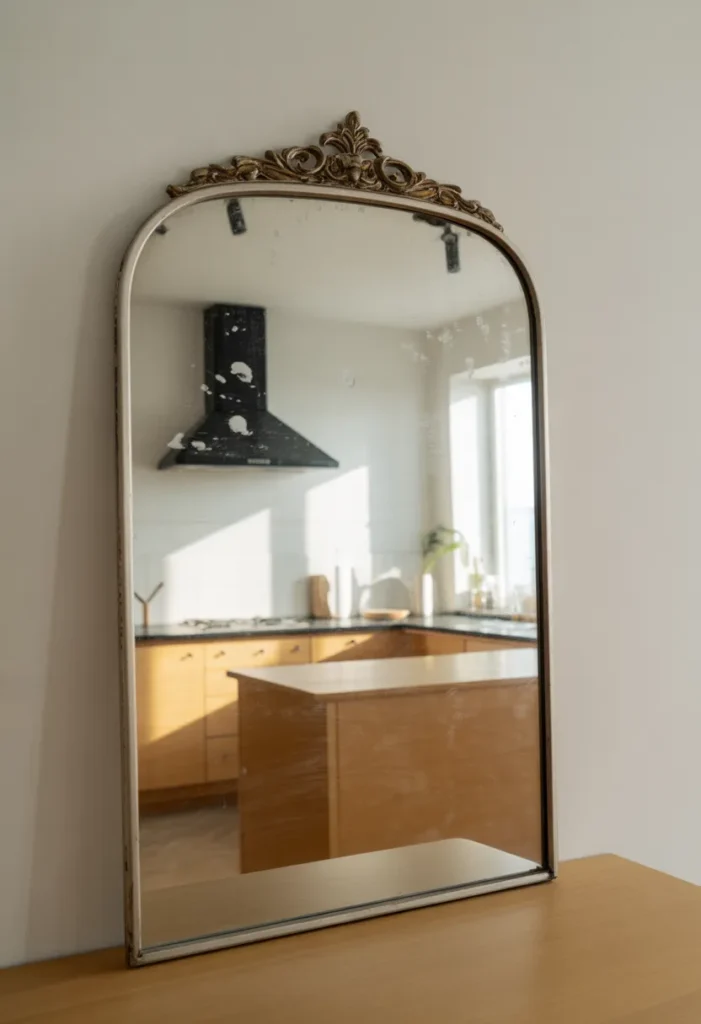
Extending an antique, “foxed” mirror—glass that has developed dark, cloudy spots and silvering loss over time—up a kitchen wall creates a sense of infinite space. Unlike a standard mirror, an antique one doesn’t give a perfect reflection; it offers a hazy, atmospheric view of the room that looks like an old oil painting.
The visual reality of an antique mirror is its moodiness. In the evening, it catches the warm glow of candles or under-cabinet lighting, reflecting it in a soft, blurred way that hides the mess of a post-dinner kitchen. The glass feels cool and slightly uneven to the touch, often held in place by small, blackened brass clips.
You’ll notice the imperfections immediately: the “ghosting” edges where the silver has worn away and the way the glass might have a slight wave in it. Dust is visible in the corners, and perhaps a few dried water spots from the sink reside near the bottom. It’s a sophisticated, slightly weathered look that makes a small kitchen feel twice as large and ten times more interesting.
12. Floating Slate “Daily Bread” Ledge
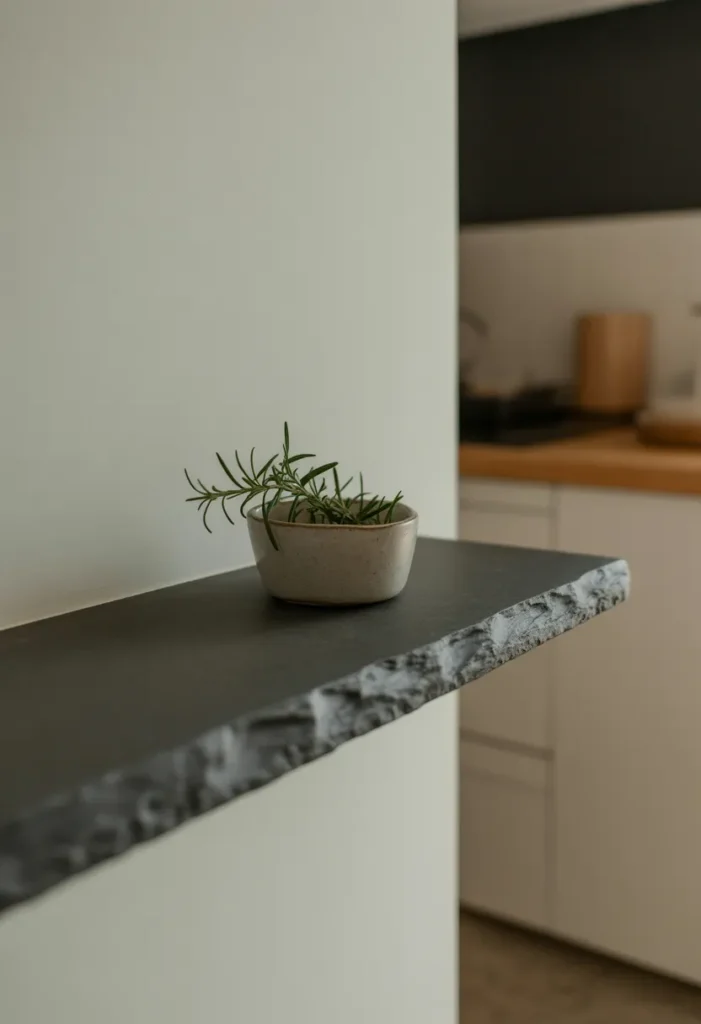
A slim, dark slate ledge mounted at eye level serves as a rotating gallery for the kitchen’s most tactile items. Slate is a heavy, cold stone that feels brittle and layered to the touch. Unlike wood, it has a matte, charcoal finish that doesn’t reflect light; instead, it creates a deep shadow line against the wall, making the items placed on it appear to float.
This ledge is where you rest a single, flour-dusted cookbook, a small dish of sea salt, or a sprig of drying lavender. In the morning light, you can see the fine, dusty texture of the stone’s surface. It’s prone to “ringing”—if you set a glass jar down too hard, you’ll hear a sharp, stony clink.
Because slate is a natural material, it shows the history of its use. You might notice white scratches where a ceramic bowl was dragged across it or a dark, oily smudge from a thumbprint near the center. These marks are permanent, becoming part of the stone’s character. It’s a small, heavy detail that makes the kitchen feel solid and anchored.
13. Wrought Iron Wine Grid
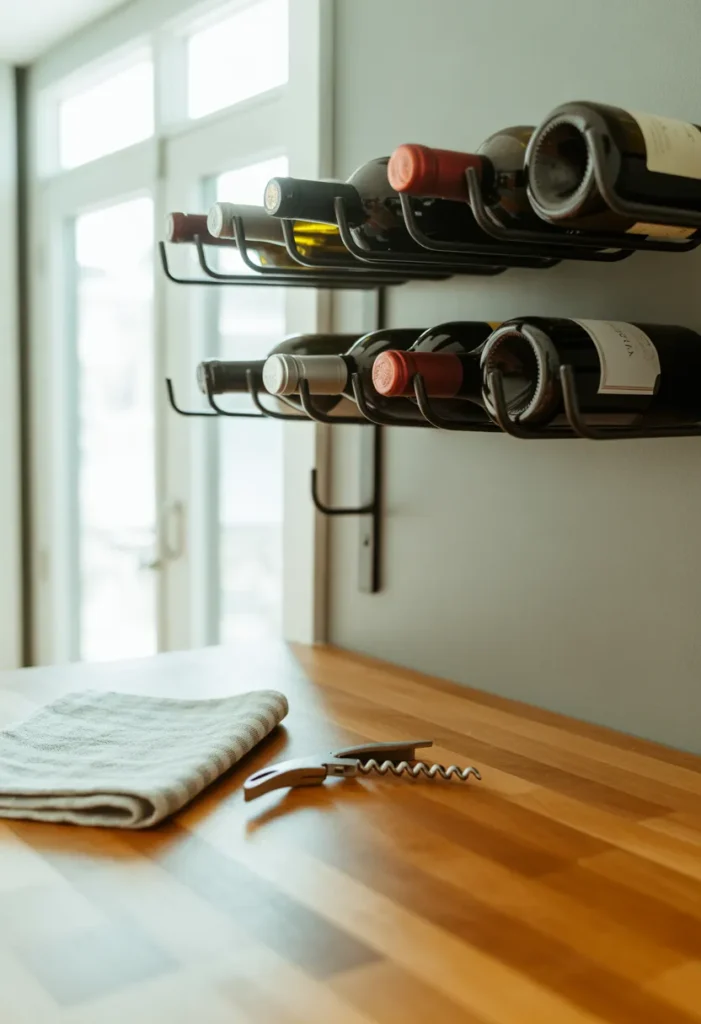
For those who appreciate the geometry of a cellar, a vertical wrought iron wine grid turns bottles into a graphic wall installation. The iron is black, rough, and cold, often showing the hammer marks from its forging. It creates a rigid, skeletal structure that contrasts beautifully with the smooth, curved glass of the wine bottles.
The lighting on this wall is particularly dynamic. As the sun moves, the circular shadows of the bottles stretch and distort across the wall behind the grid. The glass bottles catch tiny, sharp “glints” of light that flicker as you walk past. You might hear the faint, hollow clink of glass against metal when a bottle is removed or replaced.
Dust is a reality here; it settles on the top curves of the bottles and in the joints of the iron grid. You might even see a bit of red wine staining on the cork of an upright bottle. These small details suggest a collection that is actually being enjoyed, not just displayed. It’s a sturdy, industrial element that adds vertical height to the room.
14. Hanging Woven Garlic and Onion Baskets
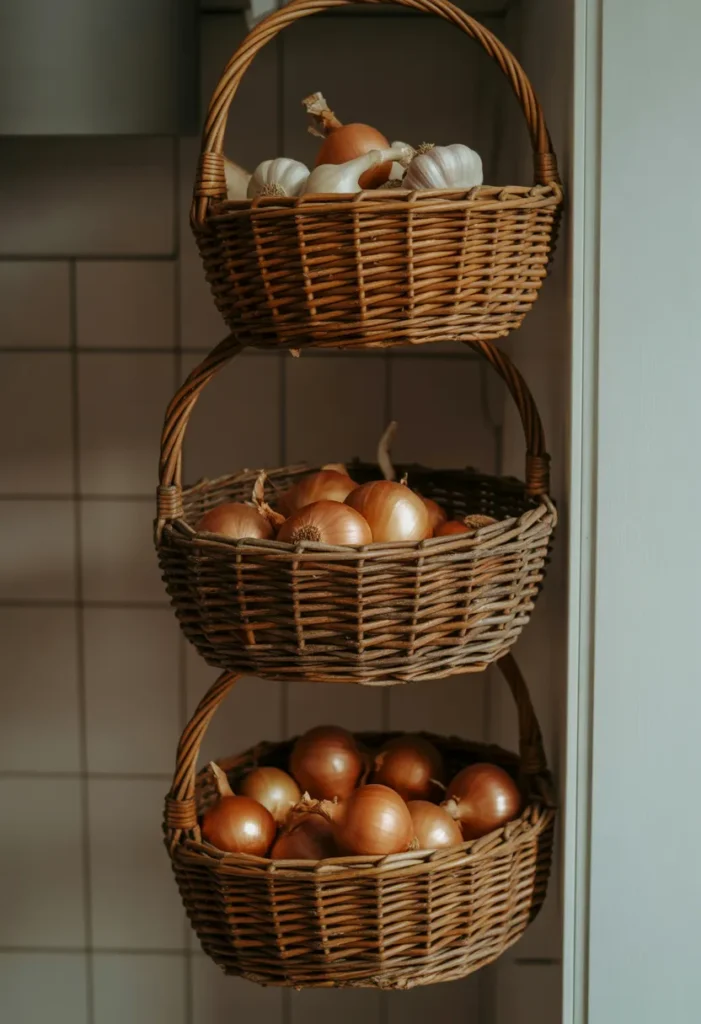
Nothing says “working kitchen” like tiers of hanging woven baskets filled with fresh produce. Made of seagrass or willow, these baskets have a rough, prickly texture and a dry, grassy scent. They bring a vertical, sculptural element to a corner that would otherwise be dead space.
The visual reality of these baskets is their lack of symmetry. They lean slightly to one side depending on how the weight is distributed. In the afternoon light, you can see the stray fibers of the weave poking out, casting a fuzzy, blurred shadow on the wall. You’ll see the papery, translucent skins of onions trailing out of the gaps, occasionally fluttering when a door opens.
There is a subtle sound associated with this décor—the soft, dry rustle of the baskets swaying against the wall. Over time, the wicker might darken in color from the kitchen’s humidity, and the wall behind them might show a few faint scuff marks where the baskets have rubbed. It’s an unpretentious, sensory addition that makes the kitchen smell and feel like a place of harvest.
15. Oversized Vintage “Market” Signage
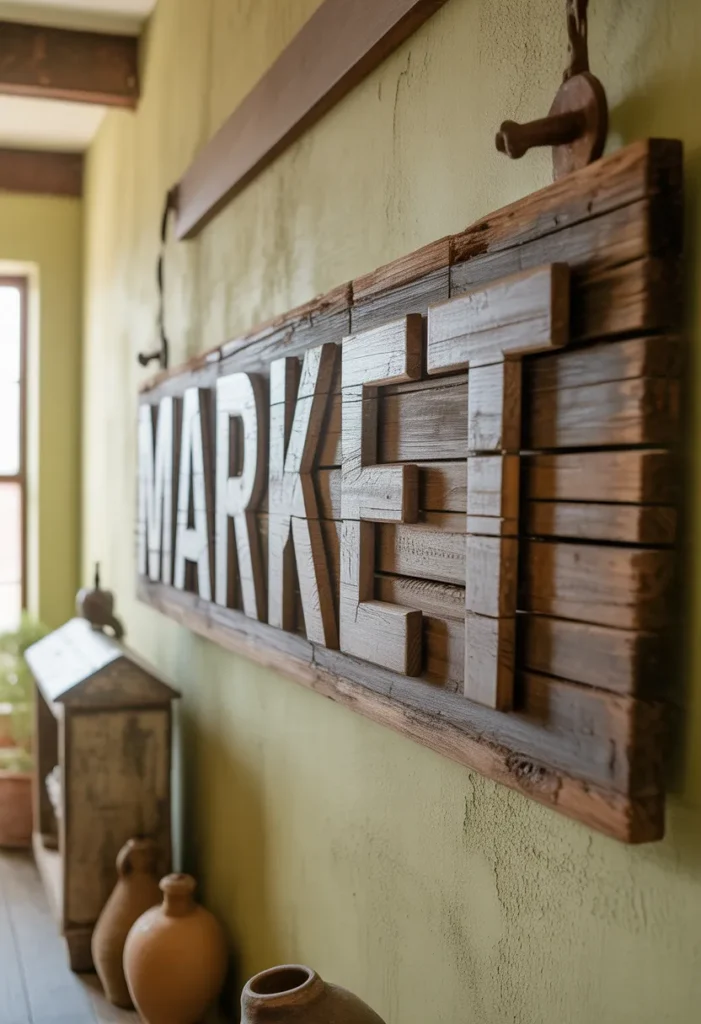
A large, weathered wooden or metal sign salvaged from an old grocery or market adds a sense of scale and history. These signs are often chipped, with paint that is slightly raised or “alligatored” from age. The letters might be faded or missing a stroke, making the message feel like a whisper from the past.
The scale is what makes this work. It takes up a massive amount of wall space, dampening the room’s acoustics and making the kitchen feel more intimate. If it’s a metal sign, it might have a slight “ping” when the house settles at night. You can feel the physical depth of the paint layers if you run your fingers over the letters.
Imperfection is the core of this look. You’ll see rust around the mounting holes or a slight warp in the wood. Dust settles into the cracks of the weathered paint, and the colors look different under warm evening light than they do in the harsh midday sun. It’s a bold, grounding piece that gives the kitchen a definitive “soul.”
16. Brass Rail with S-Hooks for Dried Florals
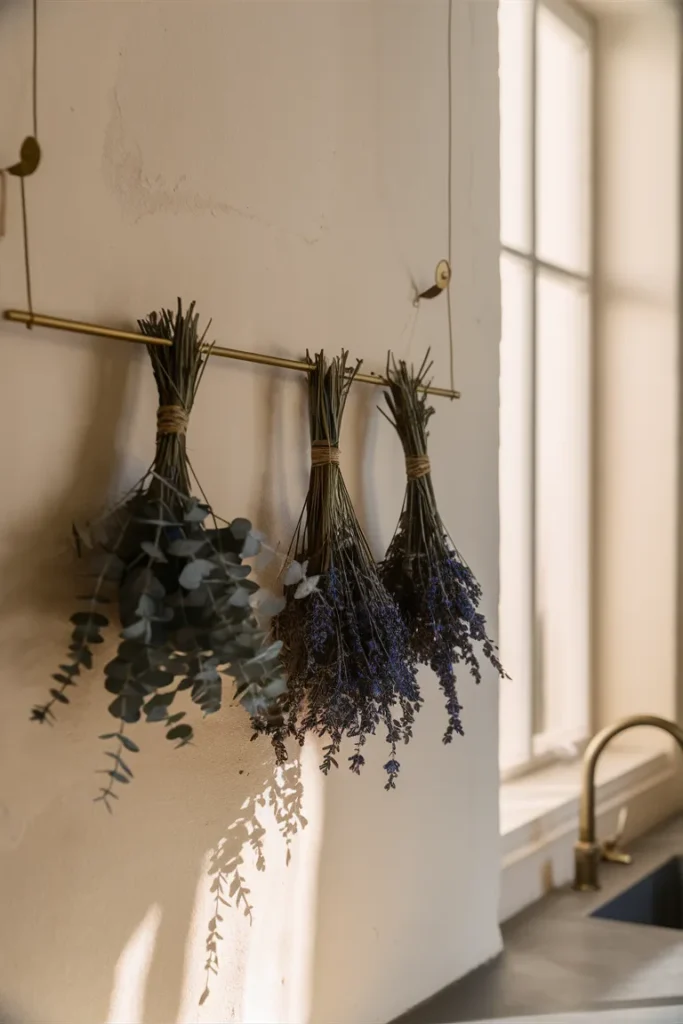
A slim brass rail isn’t just for pans; using it to hang bundles of drying flowers or eucalyptus creates a wall that is constantly in flux. The brass is shiny but develops a dull tarnish over time where your fingers touch the S-hooks. It’s a delicate, golden line that cuts across the wall, reflecting the warm tones of the kitchen.
The flowers provide a soft, organic contrast to the hard metal. As they dry, they become brittle and paper-thin; you can hear them rustle like parchment if there’s a draft. The scent is subtle—a mix of dried petals and honey—that becomes more pronounced when the kitchen gets steamy from a boiling pot.
You’ll notice tiny petals or bits of dried leaves on the floor or the counter below the rail, a small “mess” that makes the space feel artistic and real. The shadows of the hanging bundles are spindly and intricate, moving slightly with the air. It’s a romantic, ephemeral way to decorate that connects the kitchen to the changing seasons outside.
17. Ceramic Wall Plate “Cloud”
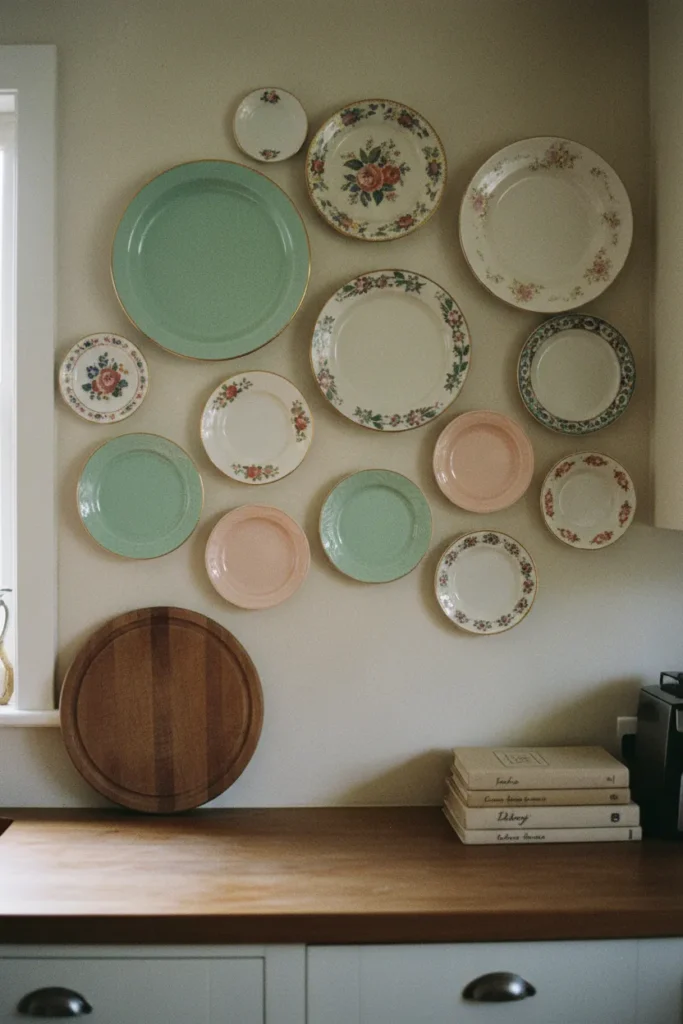
Arranging a “cloud” of mismatched ceramic plates in varying sizes and patterns creates a focal point that is both traditional and modern. These aren’t perfect sets; they are individual pieces—some with blue willow patterns, others with simple cream glazes. The plates have a cool, glassy feel and a significant weight.
The light plays beautifully off the curved surfaces of the ceramics. Each plate catches a slightly different reflection of the kitchen, creating a mosaic of light. You might notice a fine “crazing” in the glaze of an older plate or a tiny chip on the rim of another. The plates aren’t perfectly flat against the wall; the wire hangers cause them to sit at slightly different depths.
If you tap one, it has a clear, high-pitched ring. Over time, a thin line of dust will form on the top edge of each plate, and the wall behind them might collect a bit of shadow. It’s a clustered, busy look that feels like a collection of memories, turning a flat wall into a textured, three-dimensional story.
Bringing It All Together
Deciding on the right wall décor for a kitchen is rarely about finding the one “perfect” piece; it is about layering the room with textures that make the space feel settled. A kitchen is a high-traffic, high-utility environment, and the walls should reflect that energy. Whether you choose the cold, industrial weight of a wrought iron wine grid or the soft, organic rustle of hanging willow baskets, the goal is to break up the hard surfaces of your appliances with something that feels human.
Don’t be afraid of the imperfections that come with a working kitchen. A little dust on a high shelf, a slight tarnish on a brass rail, or a smudge of chalk on a menu board are the details that tell people this is a room where life actually happens. When you stand in your kitchen tomorrow morning, watch how the light hits the walls and notice where the empty spaces feel a bit too quiet. That is usually the best place to start. A stylish kitchen isn’t one that looks untouched; it’s one that looks like it has a story to tell.