7 Farmhouse Entryway Wall Ideas That Always Look Good
The entryway is the handshake of the home it sets the tone for everything that follows. In a farmhouse-style entry, the goal is to balance rustic utility with a sense of “slow living” and warmth. Achieving spatial balance in this high-traffic zone requires materials that can handle the grit of daily life while still looking effortless. It’s about creating a transition that feels grounded, using textures that tell a story of longevity and craftsmanship.
A successful farmhouse entry relies on tactile, heavy-duty materials. We move away from the delicate and toward the substantial: thick timbers, forged iron, and hand-woven fibers. By focusing on a singular, strong focal point, you prevent the small space from feeling cluttered with seasonal gear. These ideas focus on a professional-grade aesthetic inspiration that embraces the realistic wear and tear of a busy home, turning everyday items into part of the decor.
1. The Reclaimed Timber “Header” Beam
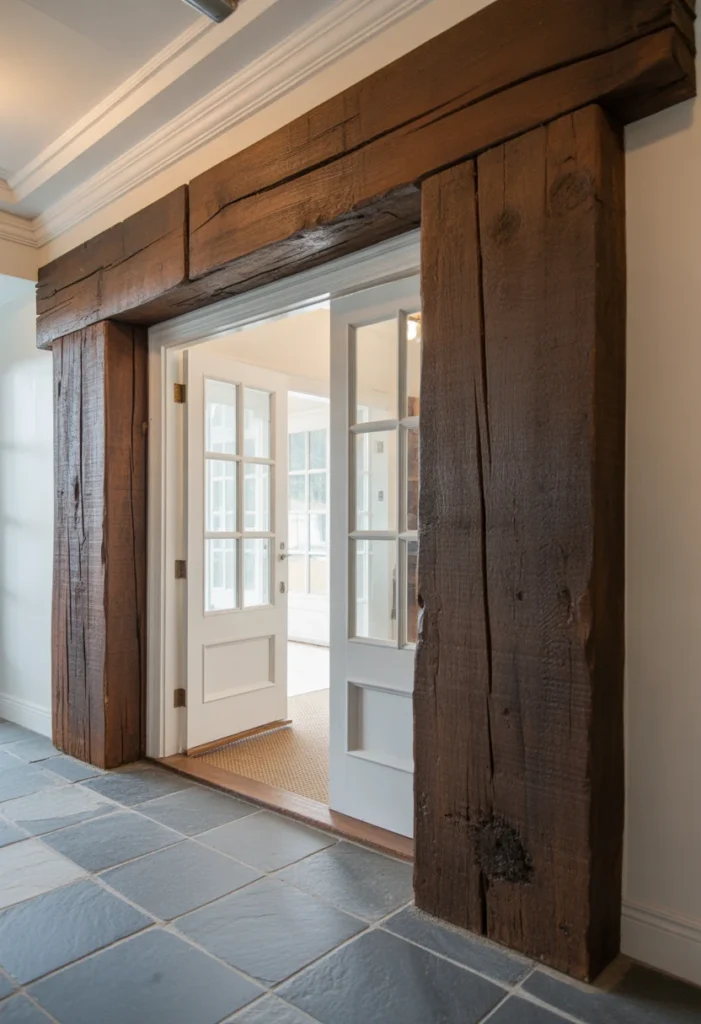
Instead of a standard lintel, mounting a thick, hand-hewn reclaimed timber beam above the entryway door or a console table adds instant structural history. The wood should be scarred, featuring original axe marks and old nail holes that suggest it was salvaged from a 19th-century barn. This approach mirrors the strategy for Minimalist Hallway Style by using a single, powerful horizontal line to define the space.
Visually, the beam provides a massive sense of “gravity.” You will notice the deep, jagged grain of the ancient oak and the realistic dust that settles into the deeper cracks. In the afternoon sun, the wood’s texture is highlighted by raking light, showing a soft, silvery patina. It is a sturdy wall design that makes the ceiling feel higher while keeping the spatial balance of the foyer firmly anchored.
2. Oversized Black Iron Utility Hooks
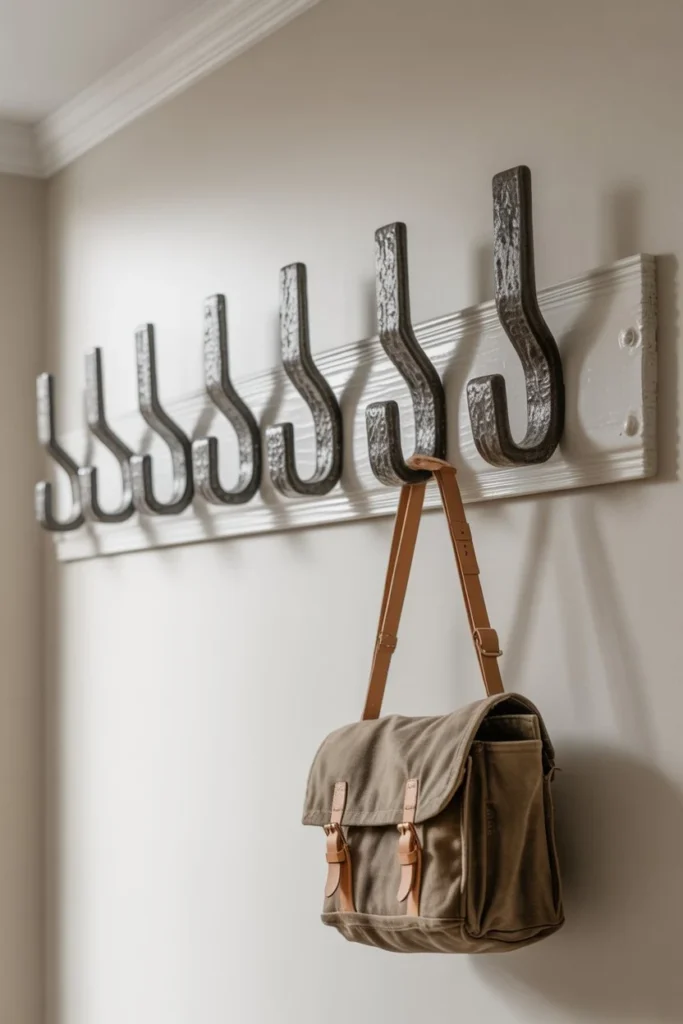
Farmhouse style is rooted in functionality. A row of five to seven oversized, hand-forged black iron hooks mounted directly onto a white-painted wooden board provides a rugged, industrial anchor. These hooks are cold, heavy, and have a slight grit to their matte finish. This method of organizing a high-use area is similar to the logic used for Narrow Entryway Walls to keep the floor clear of clutter.
The visual reality is one of “organized chaos.” You will see the heavy mounting bolts and perhaps a slight tarnish on the iron where wet coats have hung. The hooks should be spaced wide enough to show the wall between them, maintaining a clean look. In the evening, the black iron stands out sharply against the light wall, creating a series of strong, rhythmic silhouettes that act as a functional piece of art
3. Floor-to-Ceiling “Skinny” Shiplap
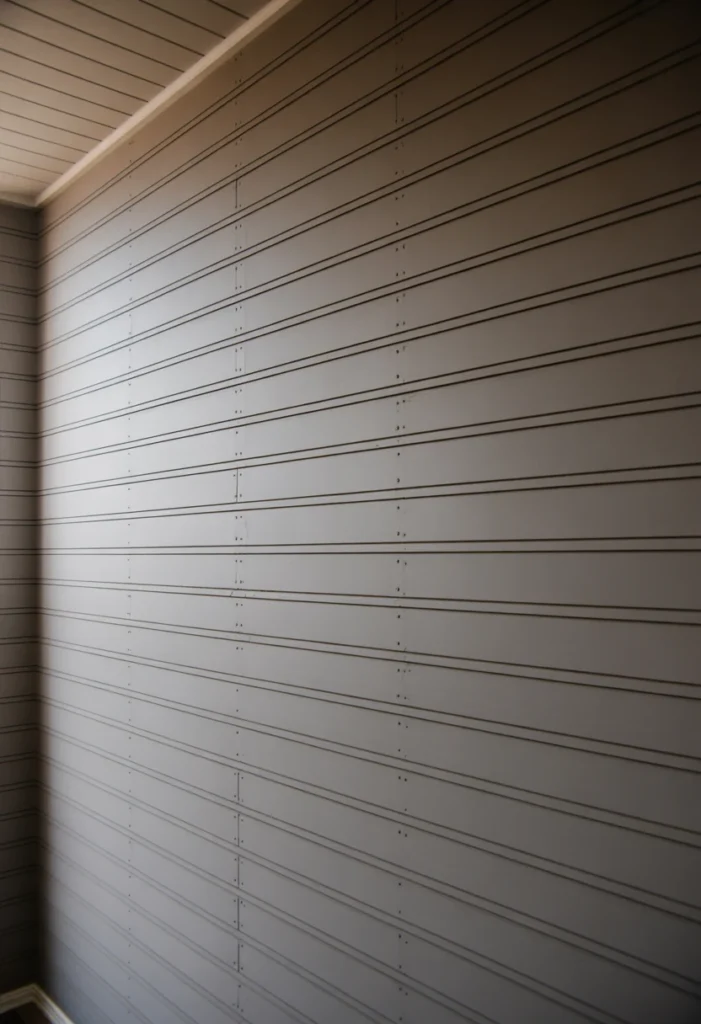
For a modern farmhouse twist, use “skinny” shiplap narrower boards than the traditional 6-inch variety installed vertically from the baseboard to the crown molding. This draws the eye upward, making a small entry feel significantly taller. This technique provides the same visual expansion as Cheap Wall Decor Ideas by using simple materials to alter the perceived dimensions of a room.
The vertical lines create a sophisticated map of narrow shadows. You will notice the tiny, realistic gaps between the boards and the subtle texture of the eggshell paint. Because the boards are narrow, they catch the light more frequently, creating a “shimmering” effect as you walk past. It is a clean, architectural way to introduce visual interest while keeping the narrow entry feeling open and airy
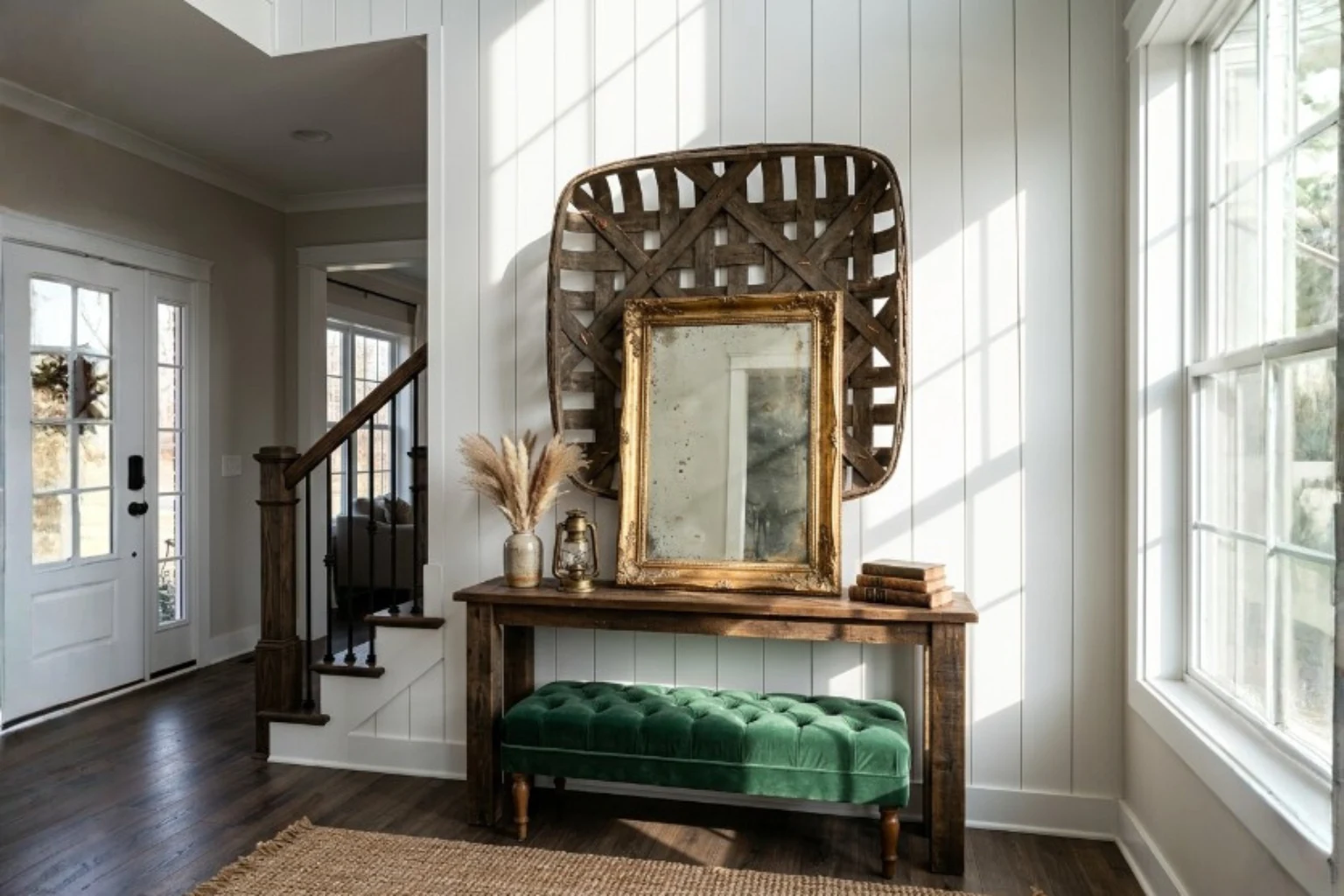
4. Hand-Woven Oversized Tobacco Basket
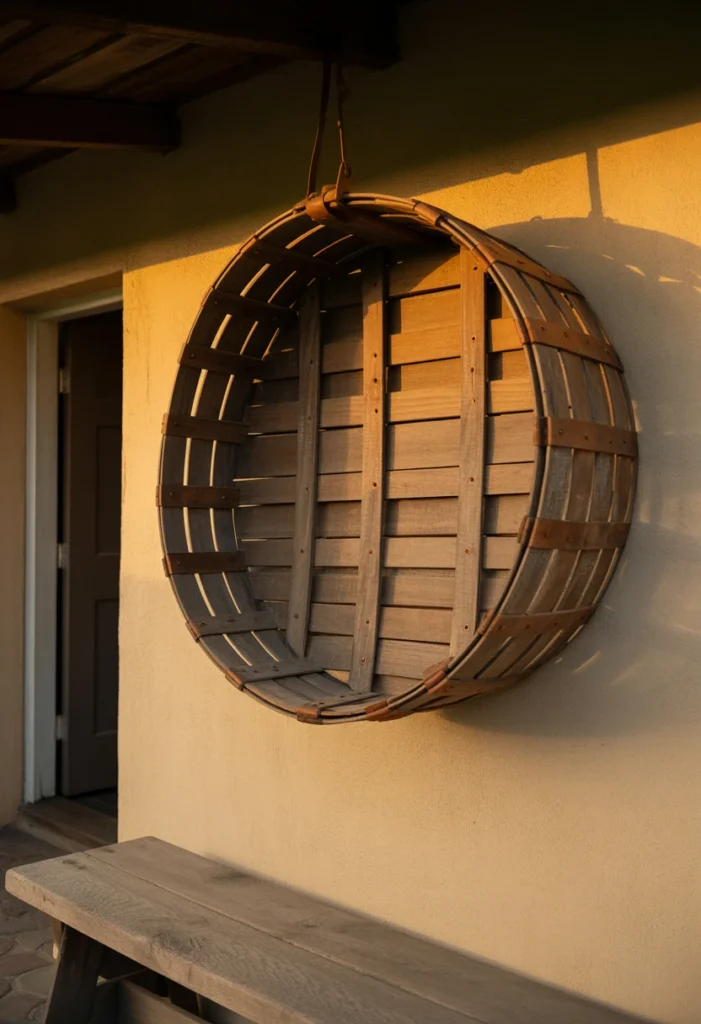
A single, massive tobacco basket made of weathered slat-wood provides a lightweight but high-impact texture. These baskets are wide and shallow, allowing them to sit flat against the wall without protruding into the walking path. The wood is thin, flexible, and has a dusty, natural finish that pairs perfectly with the “slow living” farmhouse vibe.
Visually, the basket is a web of intersecting lines. You will see the splinters in the wood and the copper staples that hold the slats together. In the “Golden Hour” light, the basket casts a complex, geometric shadow onto the wall behind it, adding a layer of 3D depth. It serves as a quiet, organic focal point that brings a touch of the outdoors inside, maintaining a soft and welcoming spatial balance.
5. Antique Gilt-Frame “Leaning” Mirror
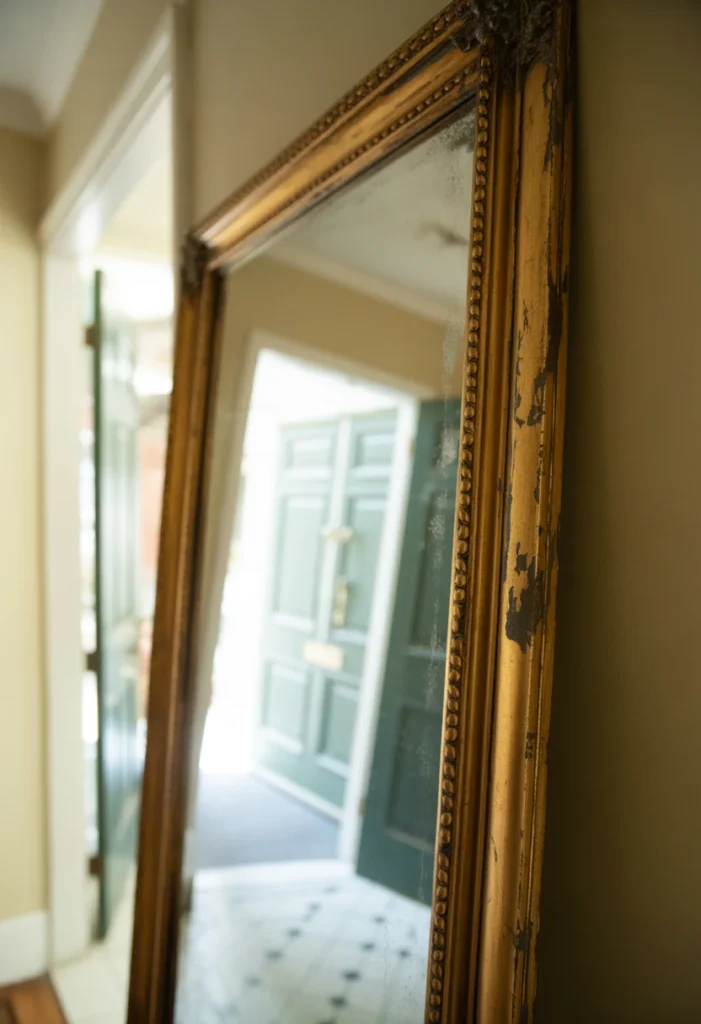
To bridge the gap between “farm” and “house,” a large, heavy mirror with an ornate, tarnished gilt frame adds a touch of historical elegance. Instead of hanging it, leaning it against the wall creates a more casual, relaxed feel. The gold leaf should be chipped and darkened with age, revealing the reddish clay “bole” underneath.
The mirrored surface reflects the light from the front door, instantly doubling the brightness of the entry. You will see the realistic “foxing” (antique spotting) on the glass and the dust that collects in the deep crevices of the ornate frame. It provides a sophisticated metallic glint that moves with you, acting as a functional tool for a final check before leaving while serving as a high-end piece of aesthetic inspiration.
6. The “Mudroom” Slate Tile Wainscoting
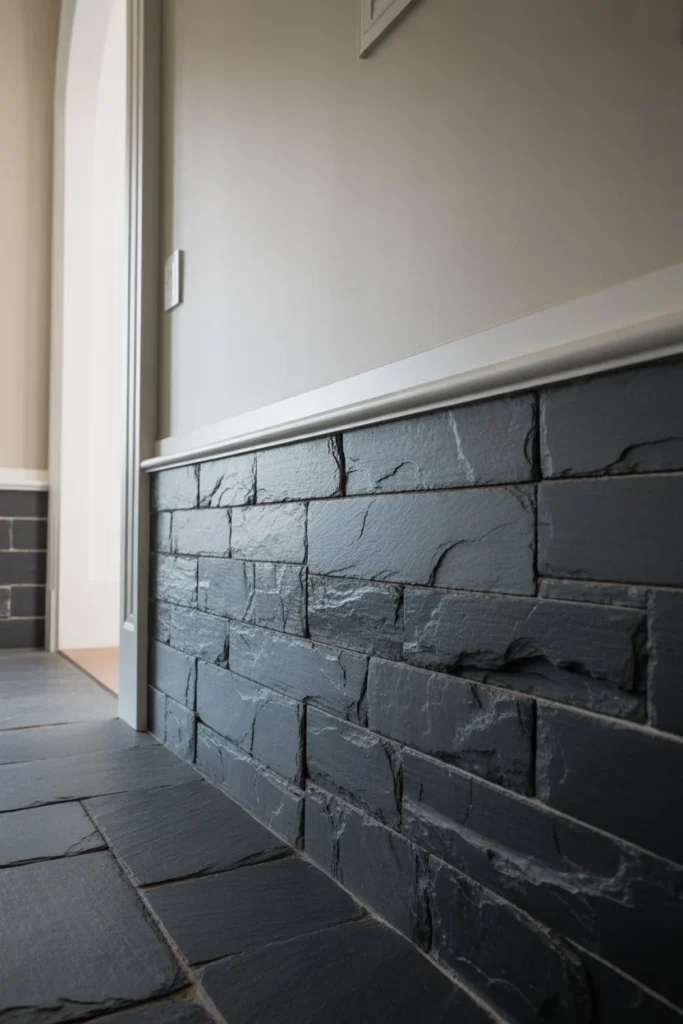
In the most high-traffic part of the farmhouse, traditional wallpaper or paint can fail. Installing a “wainscoting” of raw, riven slate tiles up to hip-height provides a bulletproof and beautiful solution. The slate is dark, cold, and has a natural, jagged cleft surface that hides mud and scuff marks perfectly.
The visual reality is one of intense texture. You will see the “oily” sheen of the natural stone and the slight variations in color from deep charcoal to rusty orange. The thick grout lines add to the rugged, “built-to-last” feel of the home. It is a high-impact wall styling detail that makes the entry feel like a functional part of a working farm, grounded in material honesty and durability.
7. Galvanized Steel “Wall Pockets”
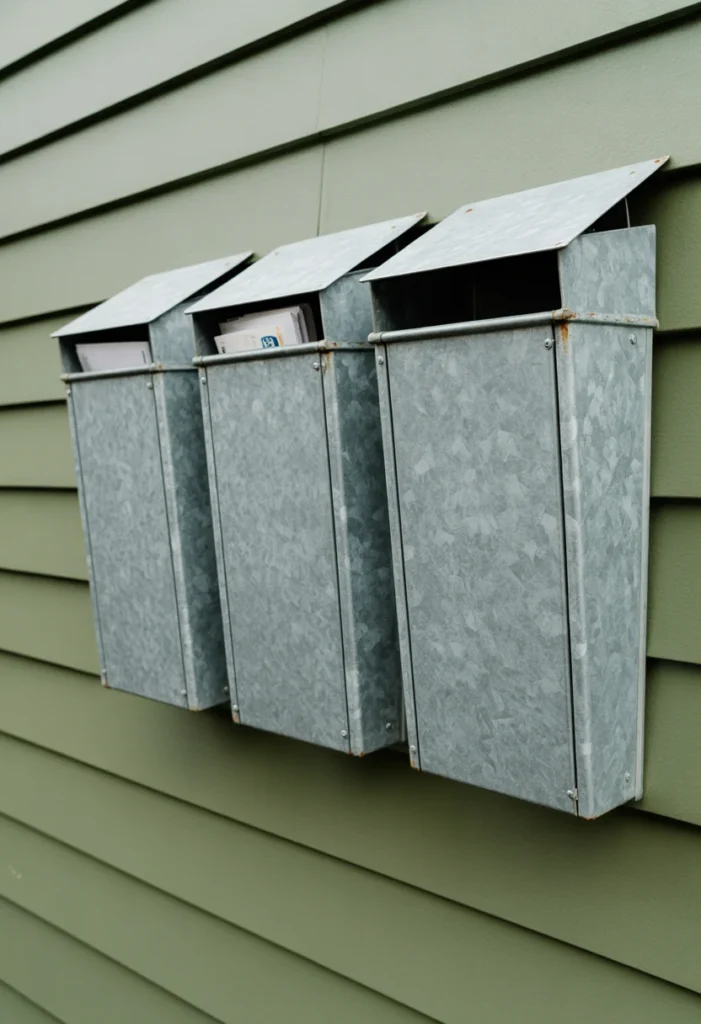
For mail and keys, a set of three vertical wall pockets made of aged, galvanized steel offers a utilitarian, “general store” aesthetic. The metal should have a dull, mottled grey finish with a few realistic rust spots near the seams. These pockets are deep enough to hold several magazines but slim enough to stay out of the way.
The galvanized steel catches the light in a soft, matte way. You will notice the heavy-duty rivets and the slightly wavy “zinc” pattern of the metal. It adds a cold, technical element that balances out the warmth of the wood and fabric in the rest of the entry. It is a practical, low-cost way to introduce visual interest that feels authentic to the farmhouse’s agricultural roots.
A Grounded Welcome
The farmhouse entryway is successful when it feels both sturdy and inviting. By choosing materials that have a real-world presence like the weight of reclaimed oak, the coldness of forged iron, or the grit of raw slate you turn a pass-through space into a layered, architectural feature.
Don’t be afraid of the authentic details: the dust in the wood grain, the tarnish on the iron, or the foxing on an old mirror. These are the elements that signal a home that is lived in and ready for the world. When you focus on spatial balance and material honesty, you turn your entryway wall into a sophisticated focal point that welcomes you back to the simple things every time you walk through the door.