6 Tiny Bathroom Wall Ideas That Work in Tight Spaces
Designing a small bathroom often feels like a game of inches. When the floor space is occupied by the essentials—the pedestal sink, the toilet, the narrow shower, the walls become your only real estate for personality. However, the bathroom presents a unique challenge: humidity. It is a room that breathes steam, where mirrors fog over and surfaces stay damp long after the shower is turned off.
In a tight space, every choice needs to be deliberate. You aren’t just looking for something “pretty”; you need a décor that handles the moisture, mimics the depth of a larger room, and doesn’t make the walls feel like they are closing in. These ideas focus on materials that feel cool to the touch, surfaces that catch the dim morning light, and textures that survive the daily cycle of heat and cold. From the way a glass shelf disappears into the wall to the subtle sound of a wicker basket brushing against the tile, these ideas are about making a tiny room feel intentional and expansive.
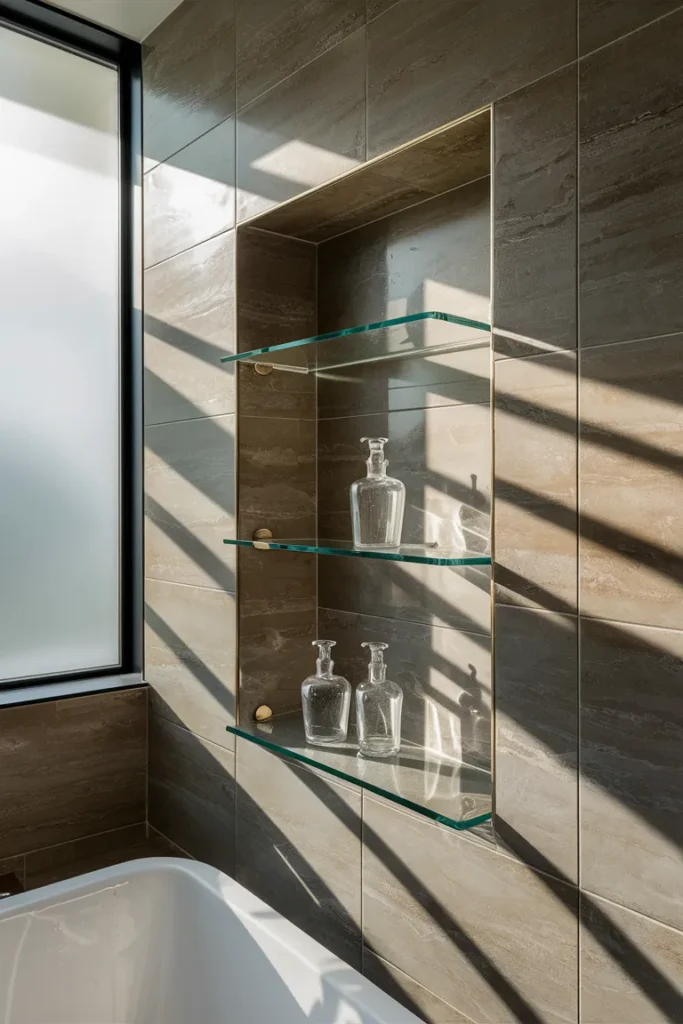
1. Recessed Glass Shelving with Polished Edges
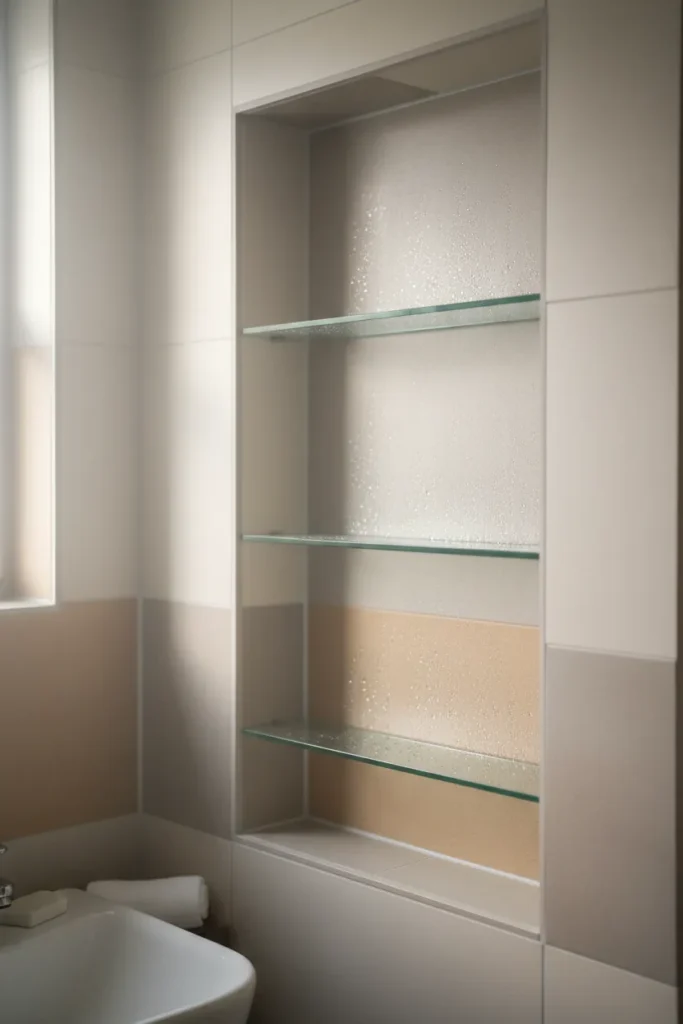
In a tiny bathroom, a traditional wooden shelf can feel like a heavy visual block. By cutting into the wall cavity to create recessed shelving and using thick, tempered glass inserts, you create storage that almost disappears. The glass is cold and smooth, and the edges are slightly rounded to catch the light. When you place a glass bottle of oil or a heavy ceramic jar on it, you hear a sharp, clean clink.
The visual reality of glass in a bathroom is its transparency. It doesn’t cast a heavy shadow on the wall below, which keeps the corner from feeling dark and cramped. In the morning light, the edges of the glass shelves glow with a faint green or blue tint. Because it’s a bathroom, the glass will inevitably show a few hazy water spots or a thin film of steam after a hot bath, a small detail that reminds you the space is working.
Over time, you might notice a little bit of dust settling on the back corners where the glass meets the tile. It’s a clean, minimalist look that relies on the “nothingness” of the material to make the room feel wider. It turns a functional necessity into a series of floating, light-filled pockets.
2. Vertical Shiplap in a Moody “Humidity-Proof” Hue
To make a low ceiling feel higher, running thin wood panels vertically up the wall is an old designer’s trick that works perfectly in tight quarters. In a bathroom, this wood should be painted in a semi-gloss or satin finish to handle the moisture. The texture is rhythmic and linear; you can feel the slight gaps between the boards if you run your fingers across them.
The way light hits vertical shiplap is dramatic. In the afternoon, the sun creates long, thin vertical shadows in the “nick” of each board, making the wall look like a textured fabric rather than a flat surface. It’s a grounded, architectural look. You might notice the paint is a bit thicker in the grooves or that a tiny knot in the wood is still visible under the finish—imperfections that make the “built-in” look feel more authentic.
Sound travels differently in a wood-paneled room; it feels a bit more muffled and quiet compared to the echo of a fully tiled space. As the bathroom heats up, the wood might let out a tiny, dry creak as it expands. It’s a way to bring a sense of “furniture” into a room that is usually dominated by cold porcelain.
3. Oversized Porthole Mirror with Aged Brass Trim
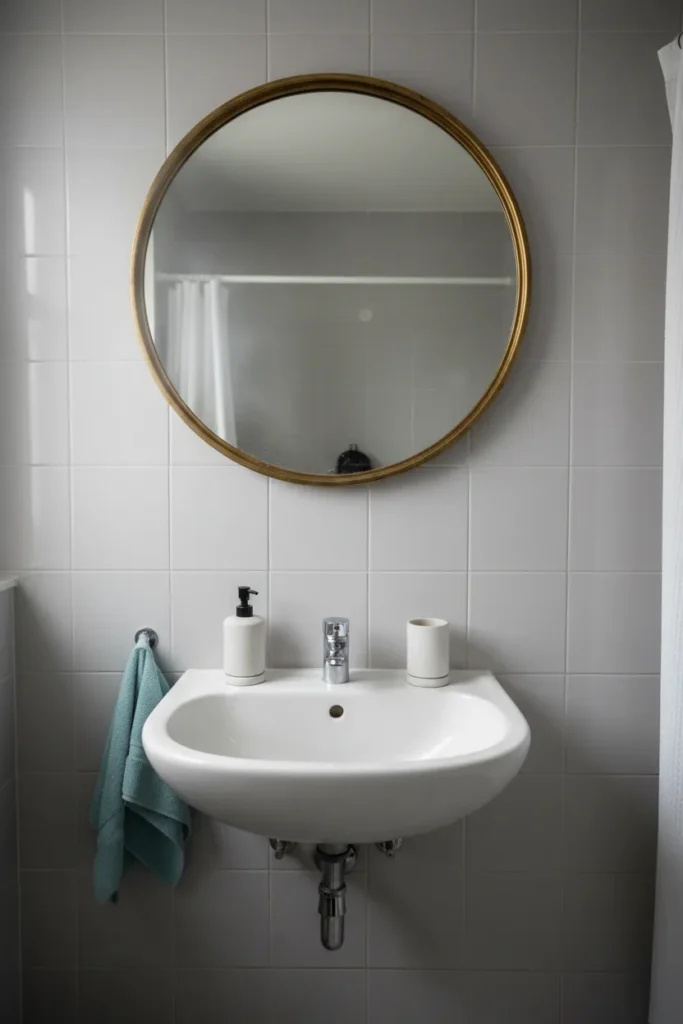
When a room is small, a single large, round mirror can “break” the squareness of the walls and create the illusion of a window where none exists. A porthole-style mirror with a heavy, aged brass frame feels substantial and historic. The brass is not perfectly shiny; it has a dull, lived-in tarnish and perhaps some fine scratches from being cleaned over the years.
The mirror is the primary light-driver in a tiny bathroom. It catches the reflection of the doorway or a small window, doubling the visual depth of the space. During a shower, the fog creeps in from the edges, leaving the center clear for a few minutes before the whole surface turns into a silver haze. You’ll notice the weight of the frame—if you touch it, it feels cold and solid, unlike a flimsy plastic mirror.
You might find a few dried water spots near the bottom of the frame or a bit of dust caught in the lip where the glass meets the brass. It’s a bold, singular piece that acts as both décor and a functional “space-expander,” giving the wall a definitive focal point that distracts from the narrowness of the floor.
4. Hammered Metal Sconces for Warm Side-Lighting
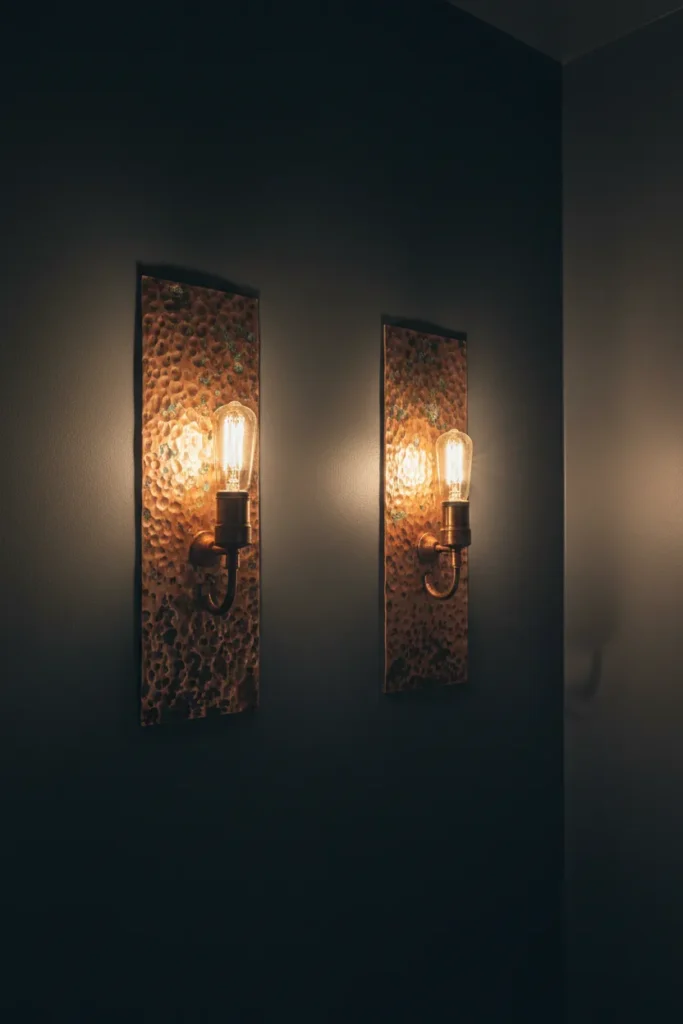
In tight bathrooms, overhead lighting can be harsh and unforgiving. Small, hammered metal sconces mounted at eye level provide a textured, warm glow that makes the walls feel softer. The metal—whether it’s copper or blackened iron—is bumpy and uneven; when the light is on, every tiny hammer mark creates its own miniature shadow and highlight.
The lighting experience is intimate. Instead of a flat wash of light, these sconces create “pools” of warmth on the wall. In the evening, the reflection of the bulb on the hammered metal creates a dancing, flickering effect. If you get close, you might smell the faint, metallic scent of the heated iron. The sconce might be slightly tilted or have a small patina of rust near the mounting plate from years of steam exposure.
Because space is tight, you might accidentally brush against the sconce while reaching for a towel, hearing the dull clink of the metal. It’s a tactile, heavy detail that makes the bathroom feel like a curated sanctuary rather than a cramped utility closet.
5. Single Column of Patterned Encaustic Tiles
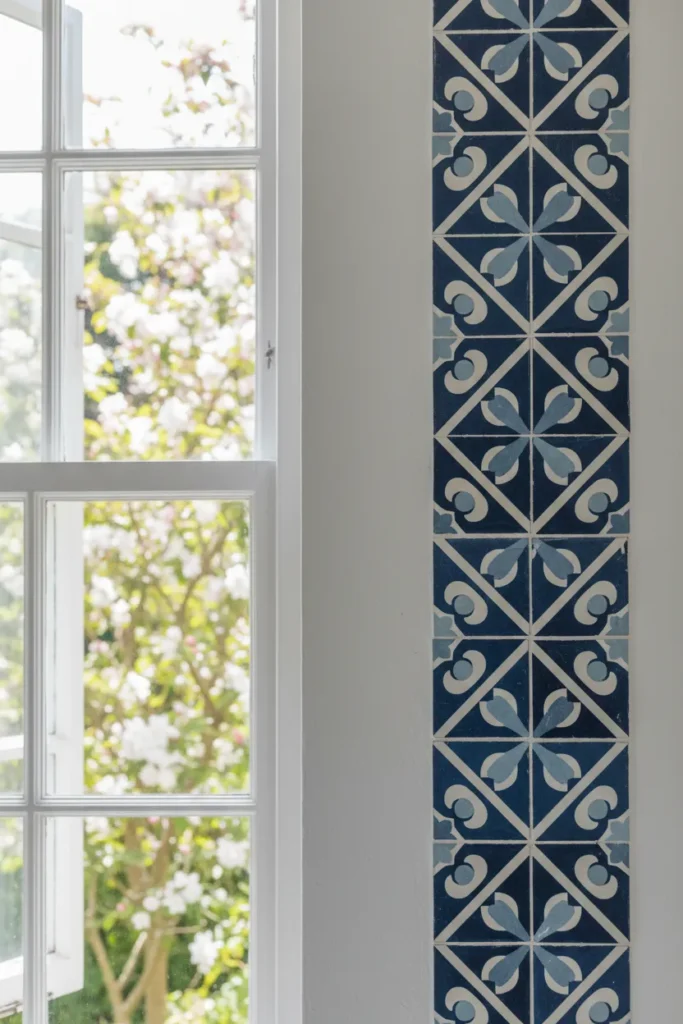
If the room is too small for a full feature wall, a single, vertical column of patterned encaustic tiles behind the sink or toilet can act as a “tapestry” made of stone. These tiles are matte and slightly chalky to the touch. The patterns are often slightly blurred at the edges—a sign of the hand-poured pigment process—and no two tiles are exactly identical.
These tiles handle light beautifully by absorbing it rather than reflecting it, creating a soft, grounded spot in a room of shiny surfaces. You’ll notice the grout lines aren’t perfectly uniform, and perhaps one tile is set a hair deeper than the others. Over time, the matte surface might develop a slight “sheen” in the spots you touch most often.
When you splash water on the wall, the stone tiles darken slightly as they absorb the moisture before drying back to their original chalky tone. It’s a vertical slice of art that adds color and history without overwhelming the limited square footage of the room
6. Woven Seagrass Baskets Mounted as Floating Shelves
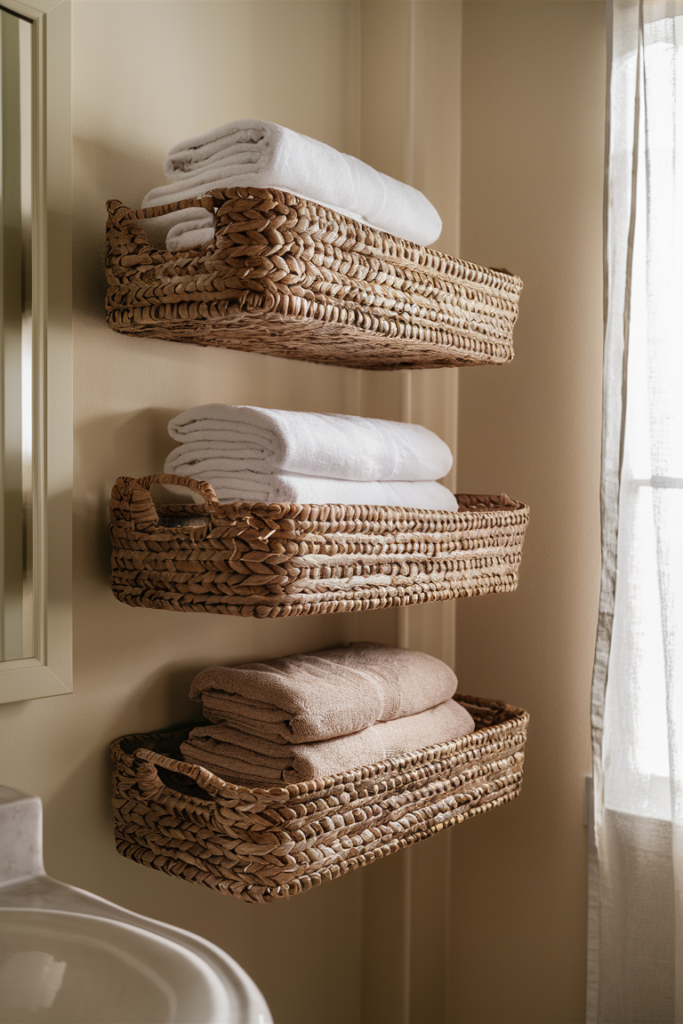
Turning deep, woven seagrass baskets on their sides and mounting the bottoms to the wall creates a series of organic, “cubby” style shelves. The seagrass is rough, prickly, and has a faint, hay-like scent that is enhanced by the warmth of the bathroom. It’s a soft material that contrasts with the hard tile and porcelain of the space.
The visual texture is incredibly dense. The weave creates a complex pattern of tiny shadows that move when the light shifts. These baskets aren’t rigid; they might sag slightly under the weight of a stack of fluffy white towels. You’ll see stray fibers poking out and a bit of fraying along the edges where the basket has been handled.
Every time you pull a towel out, there is a dry, satisfying rustle of the fibers against the wall. Because it’s a natural material, it may darken slightly over the years from the humidity, and the baskets might not be perfectly level—a small, human imperfection that makes the bathroom feel more like a spa and less like a sterile box.
Conclusion
When you are working with a tiny bathroom, the goal is to stop seeing the walls as boundaries and start seeing them as opportunities for depth. In a room this small, every texture is magnified—the grain of a shiplap board, the tarnish on a brass mirror, or the weave of a seagrass basket all become part of the daily experience.
Embrace the imperfections that come with a lived-in space. A bit of steam on the glass or a slightly tilted frame tells the story of a home that is active and alive. By choosing materials that handle light and moisture with grace, you can turn a cramped, utilitarian space into a stylish, atmospheric retreat. Stylish design isn’t about how many square feet you have; it’s about how you use the few inches you’ve been given.