7 Modern Wall Decor Ideas That Instantly Upgrade Any Space
The greatest mistake in modern interior design is treating a wall like a flat, two-dimensional boundary. When a room feels empty or uninspired, the instinct is often to crowd the floor with more furniture or throw up a collection of small, mismatched frames. However, true spatial balance is achieved by treating the vertical plane as a architectural canvas. A modern wall should offer visual interest through depth, material contrast, and the way it handles light throughout the day.
To instantly upgrade a space, we have to look past the generic paint color or standard wallpaper. The modern aesthetic relies on high-quality, tactile materials used in unexpected ways—where the wall itself becomes the furniture. By introducing elements that have a real, physical weight or a distinct texture, you can establish a powerful focal point that grounds the entire room. From the industrial grit of hand-applied finishes to the warm silence of acoustic textiles, these ideas offer a sophisticated aesthetic inspiration that feels permanent, intentional, and entirely custom-built.
1. The Raw Concrete “Poured-in-Place” Formwork
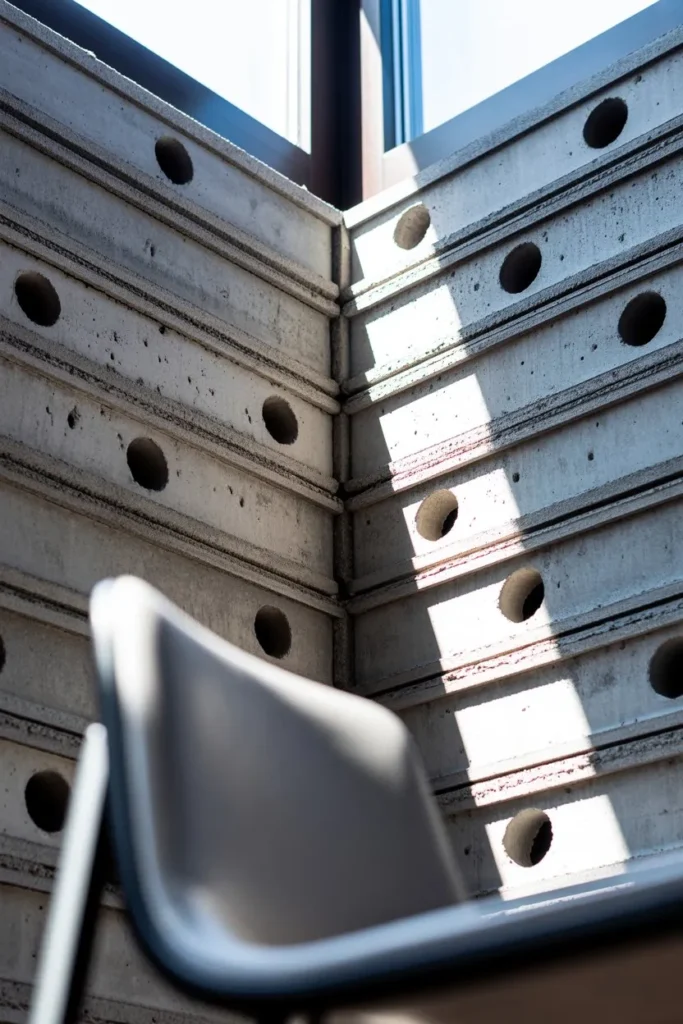
Instead of a smooth finish, using raw concrete panels that mimic the look of industrial, poured-in-place formwork adds a massive, brutalist weight to a room. These panels feature horizontal seams and distinct tie-rod holes left behind by the “casting” process. The concrete is a dusty, varied grey with a gritty surface that feels cool and solid to the touch. It serves as an excellent architectural alternative to the structural shifts we explored in our 9 Empty Wall Ideas That Actually Look Good guide.
The visual beauty lies in its unpolished reality. You will see patchiness in the coloration, tiny air bubbles, and even faint white “efflorescence” lines where minerals have leached out of the material. In the midday sun, the horizontal formwork lines cast deep, razor-sharp shadows that make the wall look like a structural foundation. It provides a heavy, masculine contrast to soft fabrics like linen or wool, grounding the room’s layout.
2. Oversized Heavy-Gauge Industrial Steel Plates
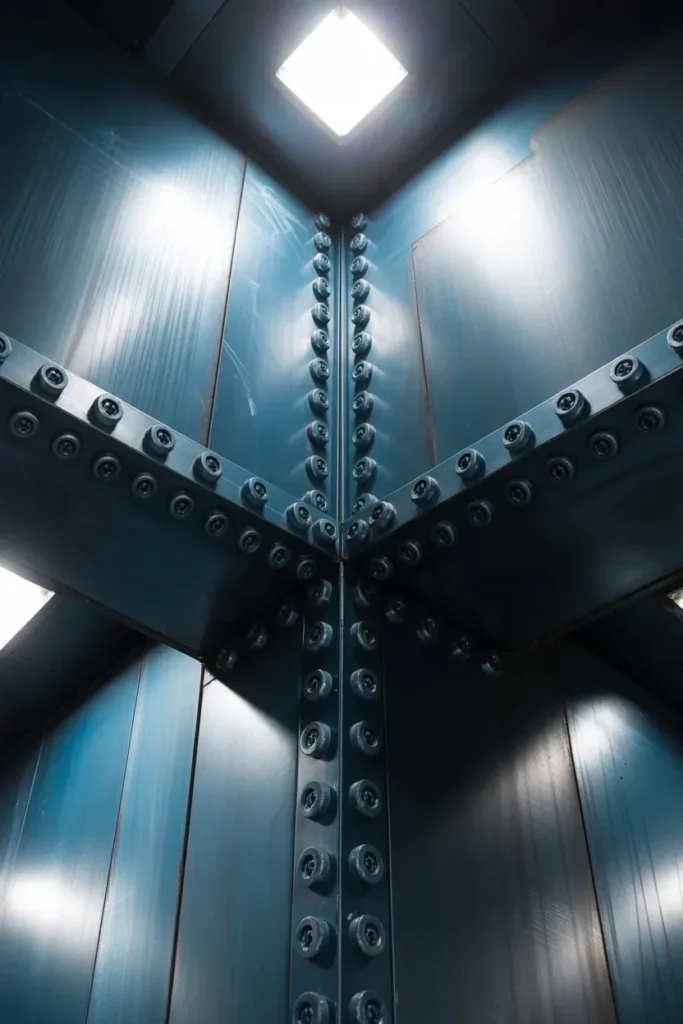
For an ultra-modern, industrial-edge upgrade, cladding a wall in massive, cold-rolled steel plates creates an incredibly dramatic look. The steel is not shiny or mirrored; it has a dark, oil-slick blue-black finish with natural mottling from the mill. The plates are mounted with heavy, visible button-head rivets along the seams, making the wall feel like the hull of a ship or an old warehouse door.
Visually, the steel behaves like a dark mirror, catching the light in soft, hazy gradients rather than sharp reflections. You will notice the subtle variations in the metal’s grain and perhaps a few faint fingerprints or water spots near the base—real-world details that anchor the material. This intense metallic presence creates a bold anchor that works perfectly behind a minimalist setup, offering a more industrial variation of the deep backgrounds discussed in our article.
3. Asymmetrical Vertical Timber Slats with Concealed Joins
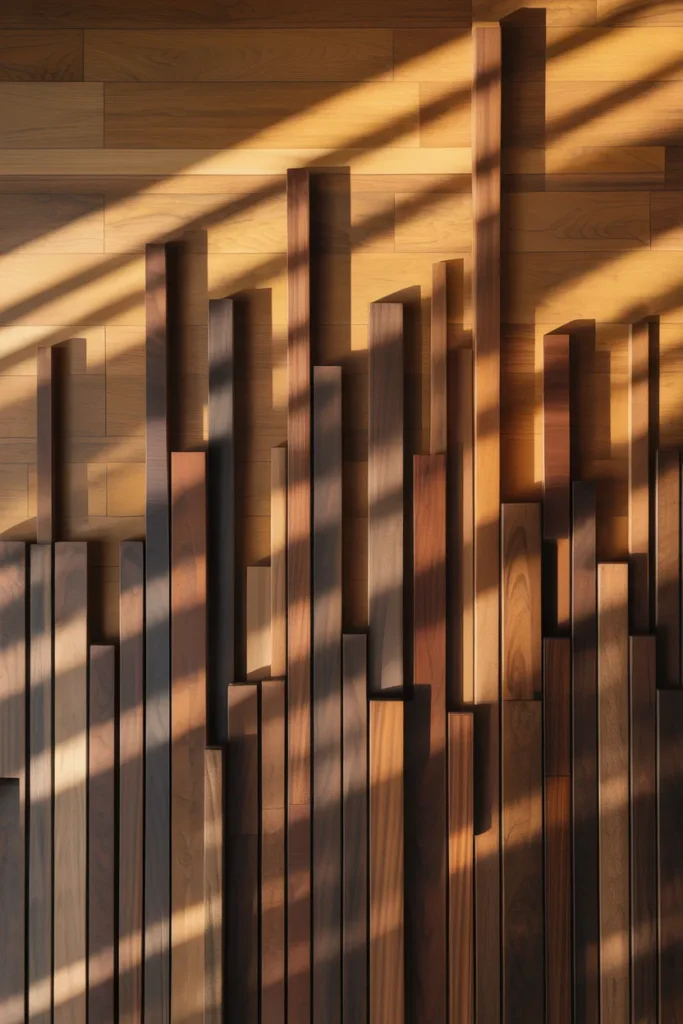
Moving away from standard symmetrical paneling, this design uses varying widths of deep oak or walnut timber slats arranged in an irregular, musical rhythm. Some slats stick out further from the wall than others, creating a three-dimensional wave pattern. The wood is finished in a ultra-matte clear coat that keeps the timber looking raw, dry, and organic.
The primary benefit of this setup is the incredible complexity of the shadows. As you walk past the wall, the lines seem to shift and change thickness based on your angle. You will notice the rich, swirling wood grain, original knots, and the tiny dust particles that inevitably settle on the top edges of the protruding slats. It is a highly sophisticated way to inject warmth into a cold room, providing the same sound-dampening benefits we focused on for the bedroom in our playbook.
4. Thick-Bed Hand-Applied Plaster with Trowel Ridges
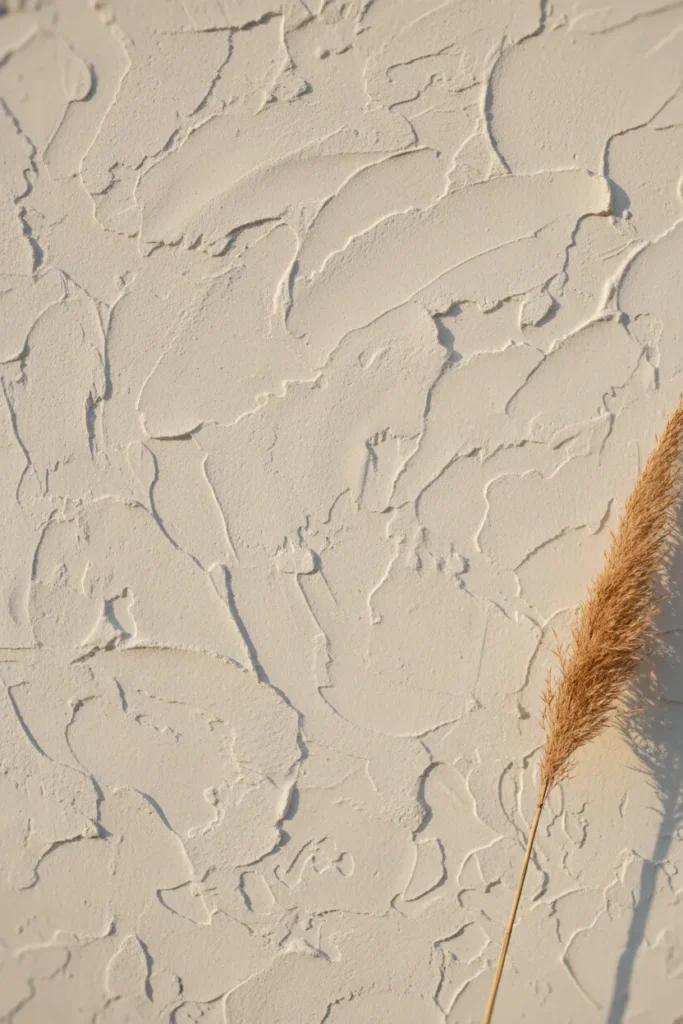
A return to Old World craftsmanship, this idea uses a thick layer of coarse, sand-infused plaster applied with deliberate, directional trowel marks. The finish is left un-sanded, resulting in a rough, artisanal stone-like surface. It is painted in a monochromatic shade like bone-white or clay-beige, allowing the physical texture to do all the visual work.
Because the plaster is applied by hand, it is full of human imperfections—ridges where the trowel stopped, small pits, and swirling patterns. When evening light hits the wall from a lamp, it catches the top of every plaster ridge, transforming the wall into a glowing, high-contrast landscape of highlights and deep shadows. It is a tactile, organic upgrade that feels completely custom and high-end, instantly removing the coldness from modern architecture.
5. Suspended Translucent Resin Monoliths
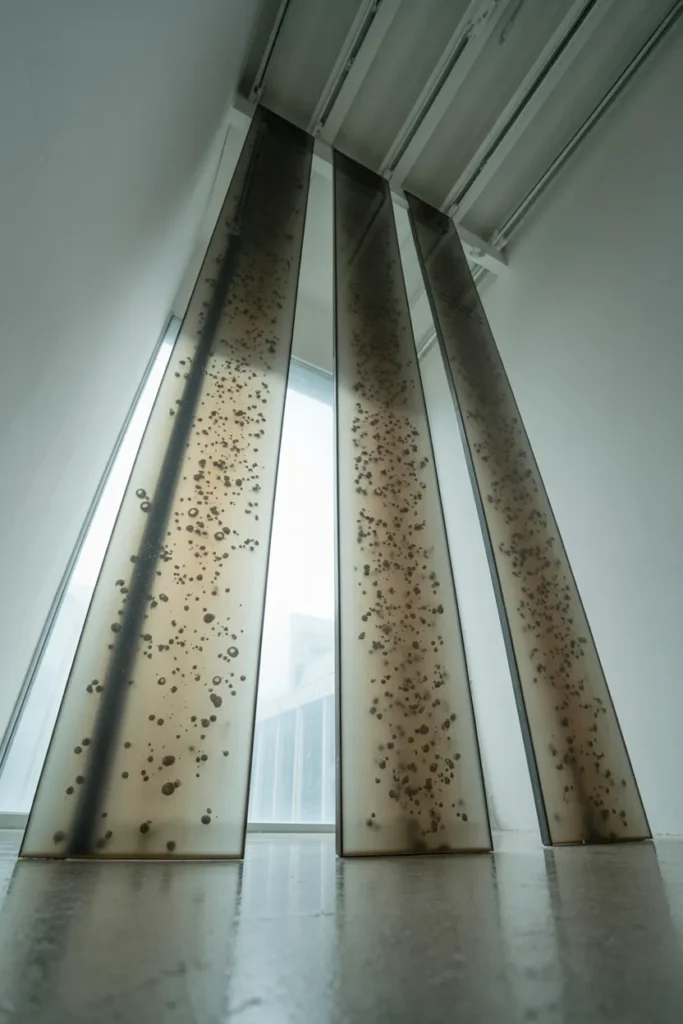
A highly futuristic approach to wall design involves mounting three large, vertical panels made of frosted, translucent resin. The panels are set two inches away from the wall on aluminum standoffs and feature an embedded “iced” finish that diffuses light. Rather than being a solid color, the resin shifts from a smoky grey to a pale amber depending on the thickness of the pour.
The visual magic of this installation is the “inner life” of the material. Inside the resin, you can see tiny, trapped air bubbles, swirling flow lines from the mold, and the blurred silhouette of the wall behind it. When natural light from a window passes through the panels, they seem to glow from within, casting a soft, colored mist onto the drywall. It is a gallery-level focal point that introduces a sense of weightlessness and high-end artistic curation.
6. Overlapping Architectural Felt Shingles
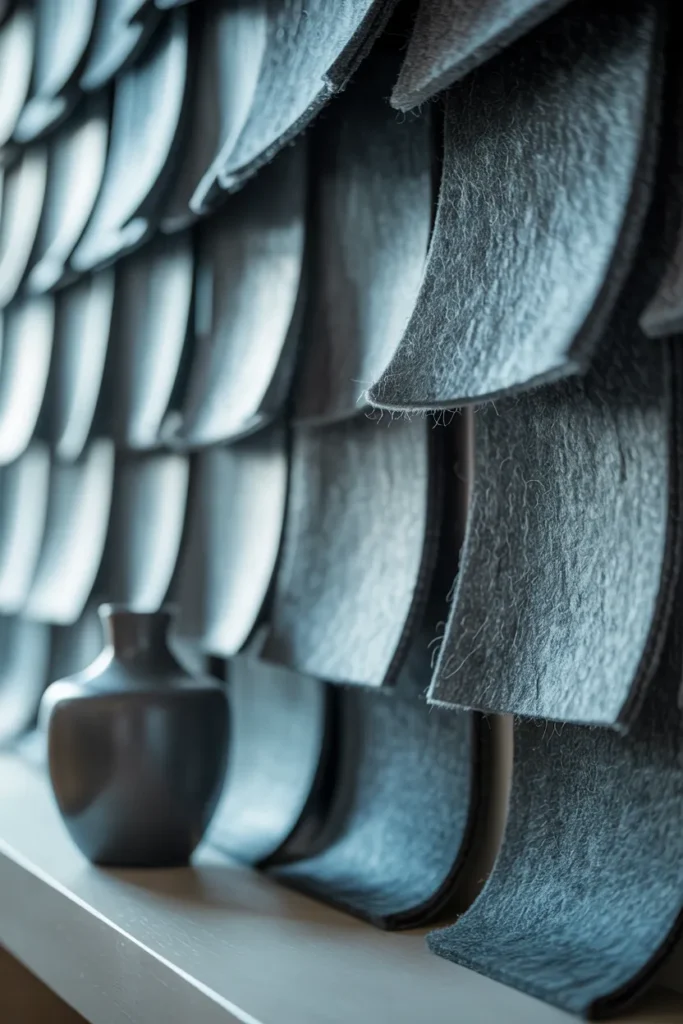
Acoustic felt is an incredible modern material that is rarely used to its full design potential. By cutting thick, industrial wool felt into large, interlocking geometric shingles and layering them across the wall, you create a soft, scale-like feature. The felt is kept in neutral tones like slate grey or oatmeal, offering a matte, light-absorbing finish that contrasts beautifully with glass or metal.
The immediate change in the room is auditory—the heavy felt absorbs all echoes and high frequencies, instantly making the space feel quiet, intimate, and expensive. Visually, the overlapping edges of the shingles create soft, repeating horizontal lines that anchor the room’s spatial balance. You will see the fuzzy, mottled fibers of the wool up close, adding a layer of cozy comfort that hard art simply cannot match.
7. The Inset Raw Brass “Matrix” Grid
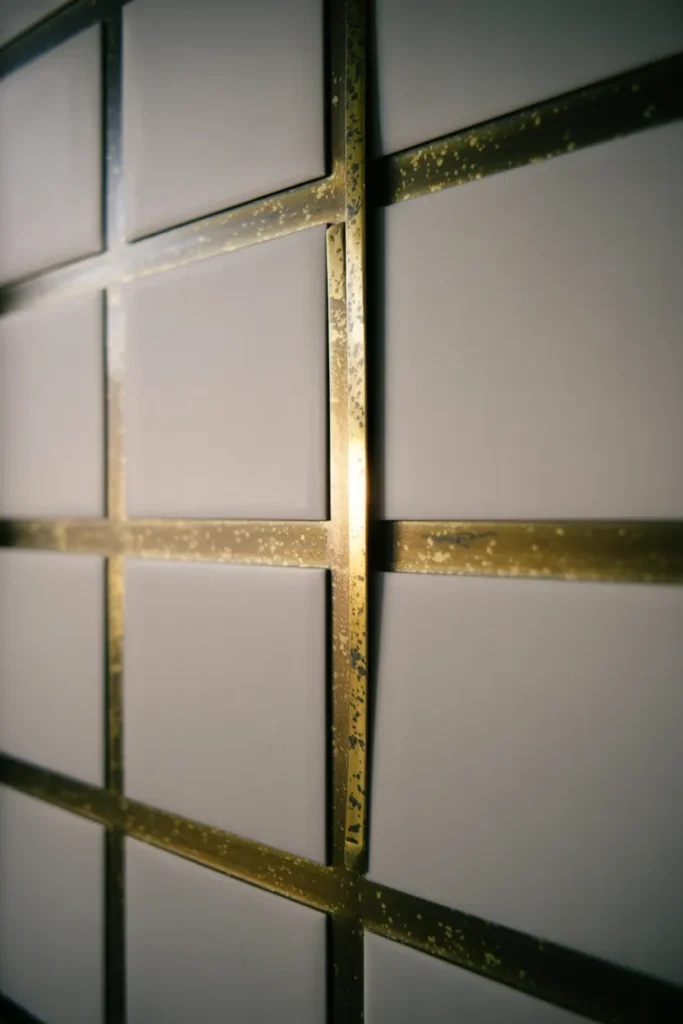
Instead of hanging a framed grid, this architectural detail involves cutting thin, vertical and horizontal channels into your drywall and inlaying raw, solid brass strips perfectly flush with the surface. The brass is unlacquered, meaning it will naturally oxidize, turning from a bright gold to a dark, rich bronze over time with handling.
Each channel catches a tiny, needle-sharp glint of light as you move through the space, creating a shifting matrix of golden lines. You will see the small scratches from installation, the slight gaps where the metal seams meet, and the mottled patina from fingerprints. It is an incredibly understated way to introduce a high-end luxury material, framing the entire wall in a modern, geometric pattern that serves as a permanent architectural backdrop.
Elevating the Everyday Space
Upgrading a modern wall is a process of choosing honesty in materials. The goal is to move away from faux textures and cheap finishes, leaning instead into elements that show their weight, their origin, and their relationship with the room’s light. Whether you choose the industrial gravity of cold-rolled steel or the hand-crafted warmth of troweled plaster, you are building a permanent atmosphere rather than just filling a space.
Embrace the real-world details that come with these high-end applications—the dust on a timber edge, the patina on a brass inlay, or the tiny air bubbles in cast concrete. These are the details that prevent a modern room from feeling like a sterile showroom, adding a layer of sophisticated visual interest that makes your home feel complete, structured, and perfectly balanced.