6 Narrow Entryway Wall Ideas That Actually Work
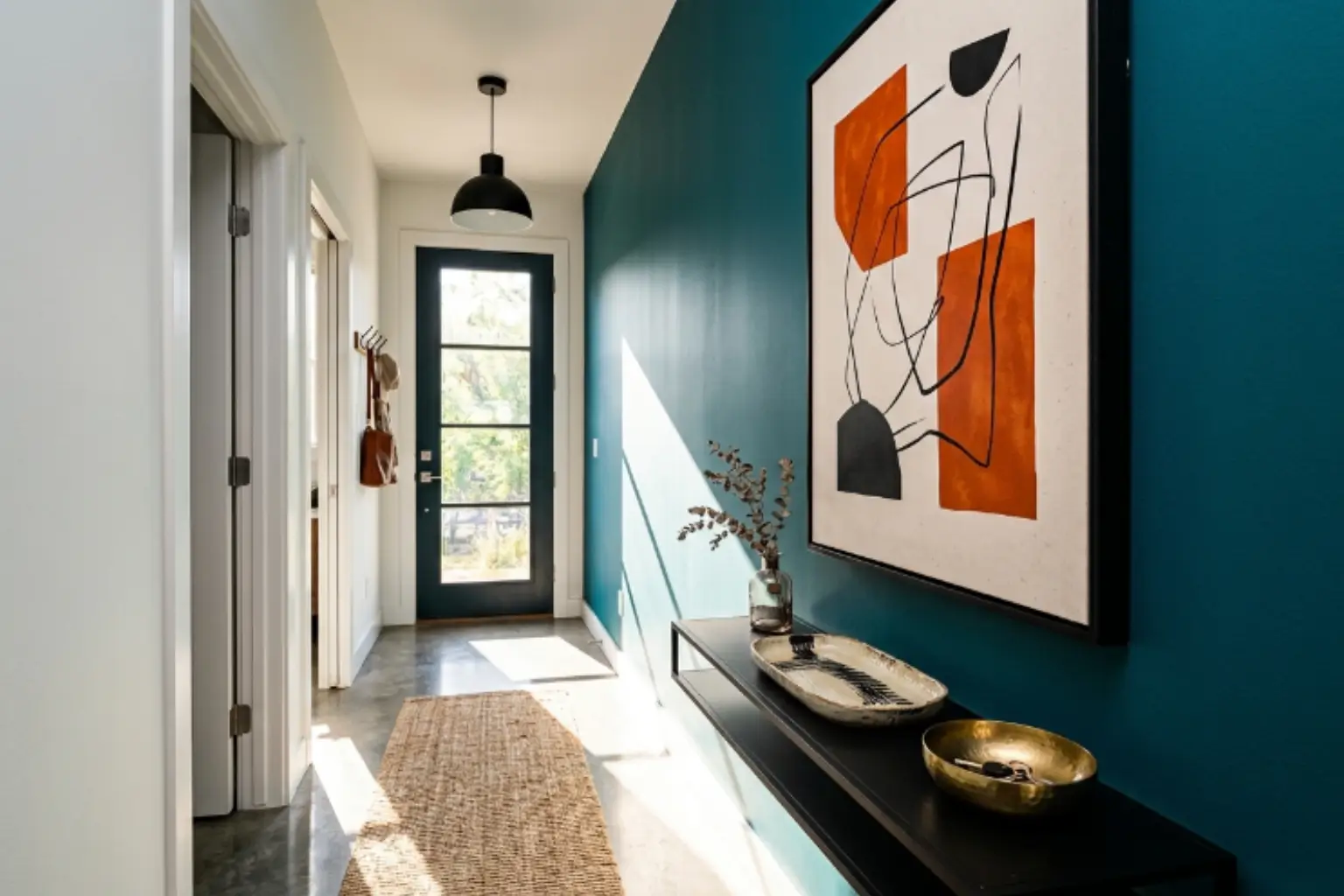
The entryway is the handshake of the home: it is the first impression for guests and the final transition for you as you head out the door. However, when that space is a narrow corridor, the walls often feel like obstacles. In interior styling, a narrow entry requires a delicate spatial balance where every item must be functional yet visually thin. To make these spaces “actually work,” we must look for narrow entryway wall ideas that pull double duty: adding character without shrinking the walking path.
A successful entryway needs to handle the friction of daily life: the tossing of keys, the hanging of damp coats, and the occasional bump of a grocery bag. To avoid a cluttered look, we focus on visual interest that stays close to the wall. By using authentic materials like cool metal, textured wood, and glass, you can create a focal point that feels intentional. From the way light glints off a brass rail to the subtle sound of a wicker basket brushing the baseboard, these ideas turn a cramped passage into an organized, high-output sanctuary.
1. The “Floating” Half-Moon Console Ledge
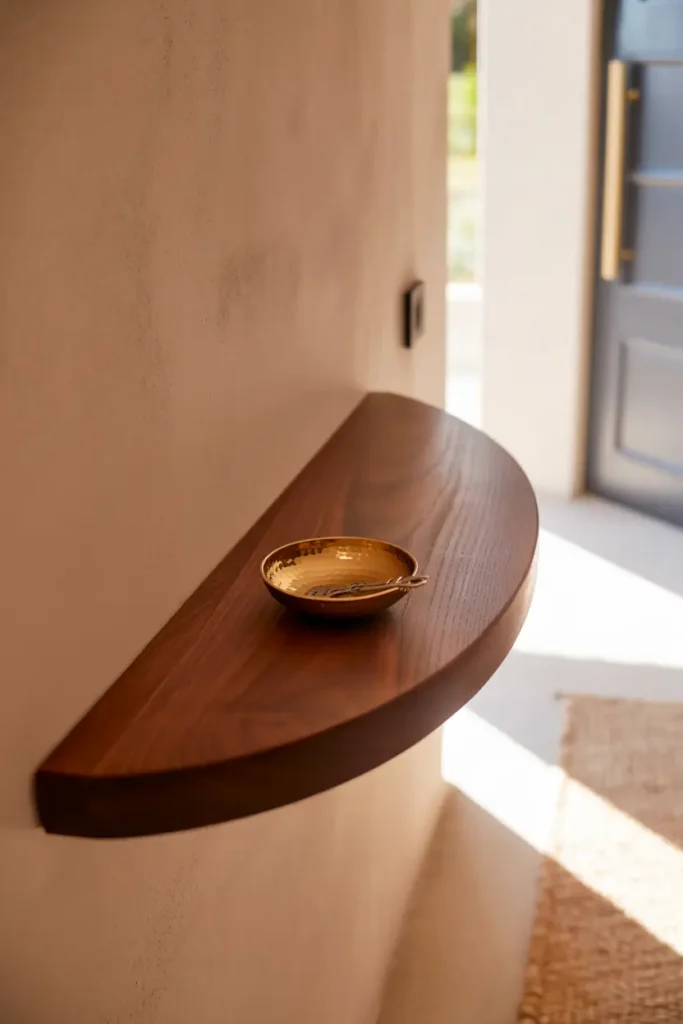
In a narrow entry, even a slim table can be too wide. A floating half-moon ledge: essentially a wall-mounted semi-circle: provides a landing strip for keys and mail without the bulk of legs. Usually made of a heavy, dark wood like walnut or oak, the surface is smooth and cool. It creates a soft, rounded silhouette that breaks up the sharp, straight lines of a long hallway.
The visual reality is the “nothingness” beneath it. Because the floor remains visible, the entryway feels wider. In the morning light, you will see the natural grain of the wood and perhaps a few fine scratches from sets of keys. You might notice a thin layer of dust in the curve where the wood meets the wall. Under the ledge, the shadows are deep and soft, hiding the mounting brackets.
The wood feels solid and grounded. If you tap it, you hear a low, resonant thud. It is a masterclass in spatial balance, offering just enough surface area for a small ceramic bowl or a single vase while keeping the floor path completely unobstructed.
2. Vertical Shaker Peg Rail in Natural Pine
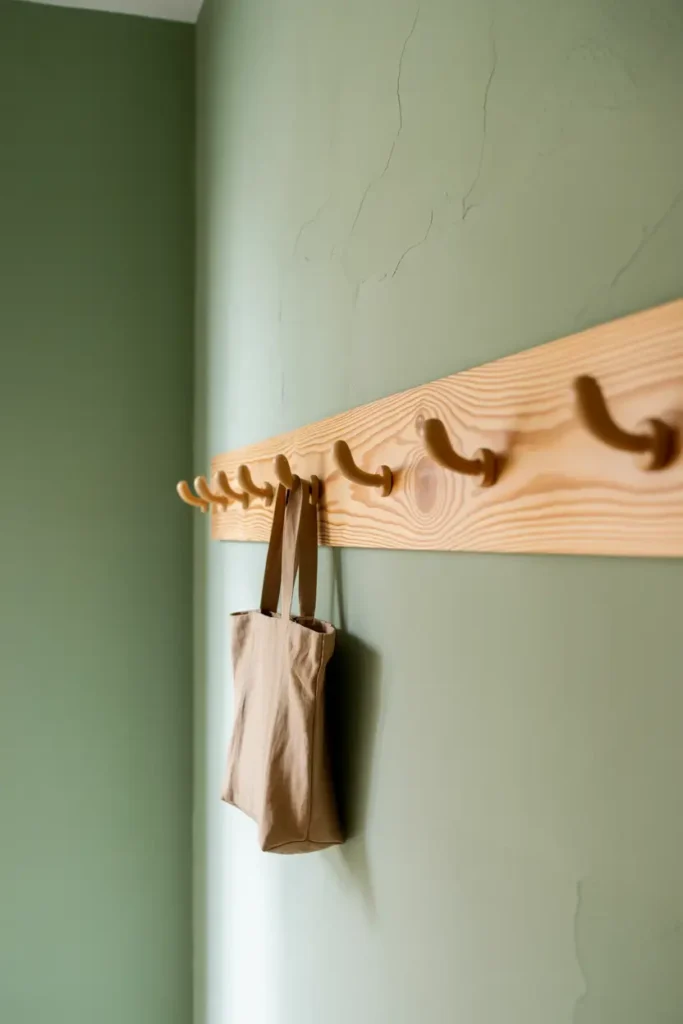
To handle coats and bags without the visual weight of a heavy wardrobe, a vertical or horizontal Shaker peg rail offers a rhythmic, organized wall design. The pine is light and unfinished, feeling slightly dry and textured. The pegs are sturdy and rounded, casting a series of repeating, identical shadows along the wall.
Visually, the pegs act as a graphic element even when empty. When in use, they hold items like a canvas tote or a sun hat, adding a soft, lived-in layer to the entry. You will see the slight darkening of the wood where hands have gripped the pegs over time. You might notice a small scuff on the wall behind a peg where a heavy bag has rubbed.
The sound of a coat loop sliding over the wood is a soft, dry scrape. This wall styling choice provides a massive amount of utility for almost zero square footage. It keeps the entryway looking clean and professional while embracing the “organized chaos” of a busy household.
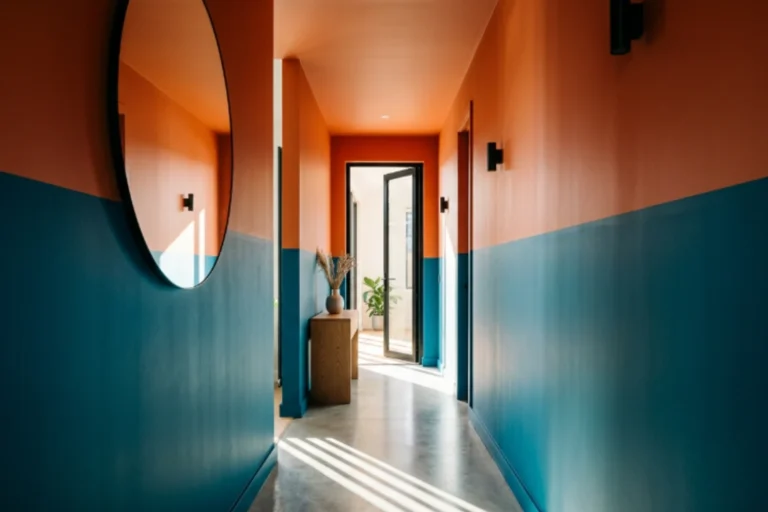
3. Oversized Horizontal Mirror with an Ultra-Thin Black Frame
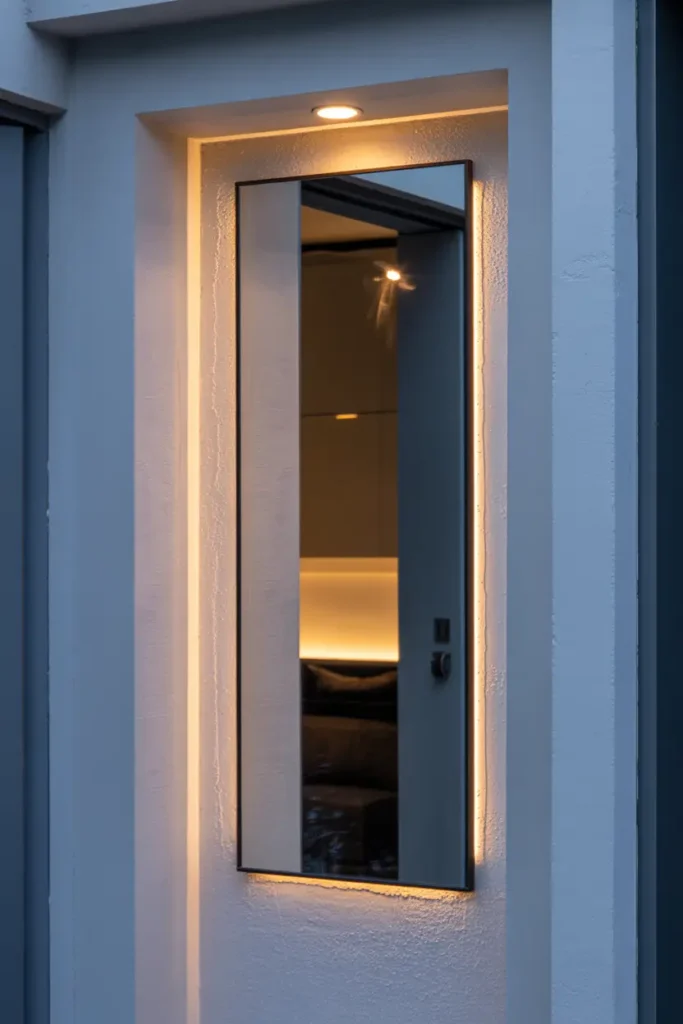
A mirror is the oldest trick in the book for a reason: it effectively “deletes” the wall it hangs on. In a narrow entry, a large horizontal mirror with a thin black metal frame adds visual interest while doubling the perceived width of the space. The glass is cold and reflects the light from the rooms beyond.
The reality of a mirror in a high-traffic area is that it catches everything. You will see the occasional fingerprint on the edge or a faint streak from a quick morning wipe-down. It reflects the opposite wall, so if that wall is clean, the entry feels twice as open. In the evening, it catches the glow of a nearby lamp, pushing warmth into the center of the hallway.
The frame is sharp and minimalist. You might see the tiny mounting screws at the top or the reflection of the floorboards stretching into the distance. This interior design choice makes the hallway feel like it breathes, turning a cramped entry into an airy gallery.
4. Recessed Wall Pockets for Mail and Magazines
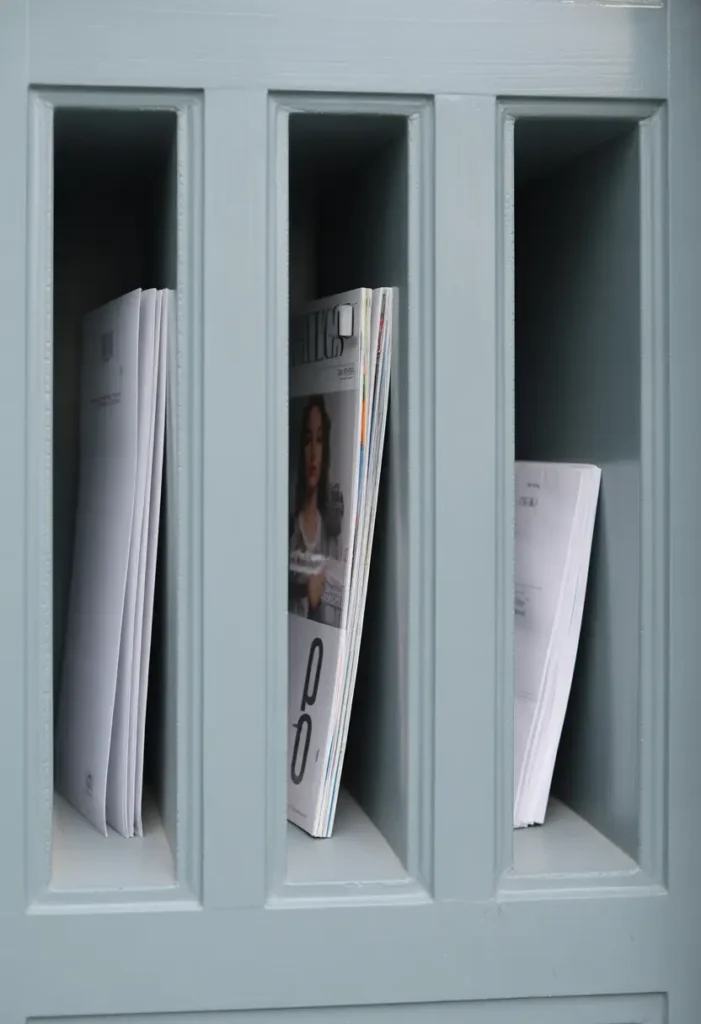
Instead of a bulky mail organizer, cutting into the wall to create recessed “pockets” lined with thin plywood or metal provides a hidden storage solution. These pockets are flush with the wall, so they do not take up any physical space in the corridor. The material inside is cool and matte, absorbing the sound of papers being dropped in.
The visual beauty is in the depth. The pockets look like dark, thin slits in the wall until you get closer. You will see the edges of envelopes and the colorful spines of magazines peeking out. You might notice a tiny bit of wear on the bottom edge of the pocket where mail is frequently pulled out.
This wall design creates a sense of “built-in” order. It does not reflect light: it creates small, deep pools of shadow. It is a sophisticated way to handle paper clutter in a space that cannot afford a desk or a tray, keeping the spatial balance perfectly intact.
5. Linear Brass Gallery Rail with Hanging Art
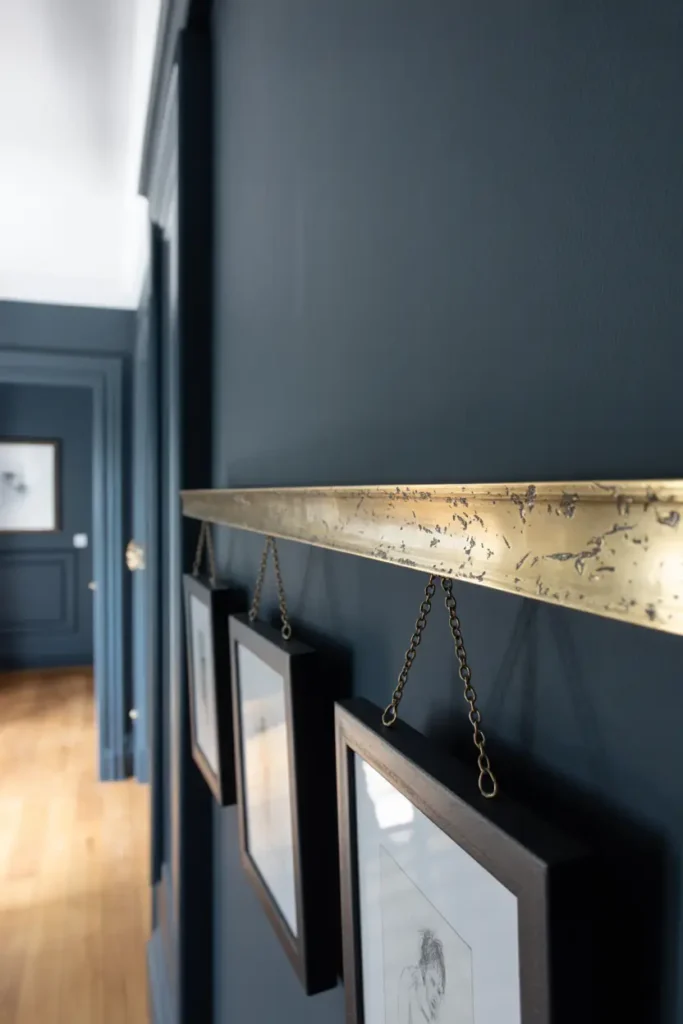
A thin brass rail mounted high on the wall with delicate chains or wires hanging down allows you to display art without the bulk of heavy frames sticking out. The brass is a warm, “living” metal that will develop a dull patina over the years. It catches the light with a soft, golden glint that moves as you walk past.
The art hangs flat against the wall, almost like a tapestry. Because the frames are suspended, they have a tiny bit of “swing” to them if the door is opened quickly. You will see the thin wires and the small hooks that hold the pictures. You might notice a bit of dust settled on the top of the brass rail.
The sensory experience is high-end and curated. The metal is cold and solid. This aesthetic inspiration allows you to create a gallery feel in a narrow space, making the entry feel like a purposeful part of the home’s “story” rather than just a place to leave your shoes.
6. Woven Wall Baskets for Small Accessories
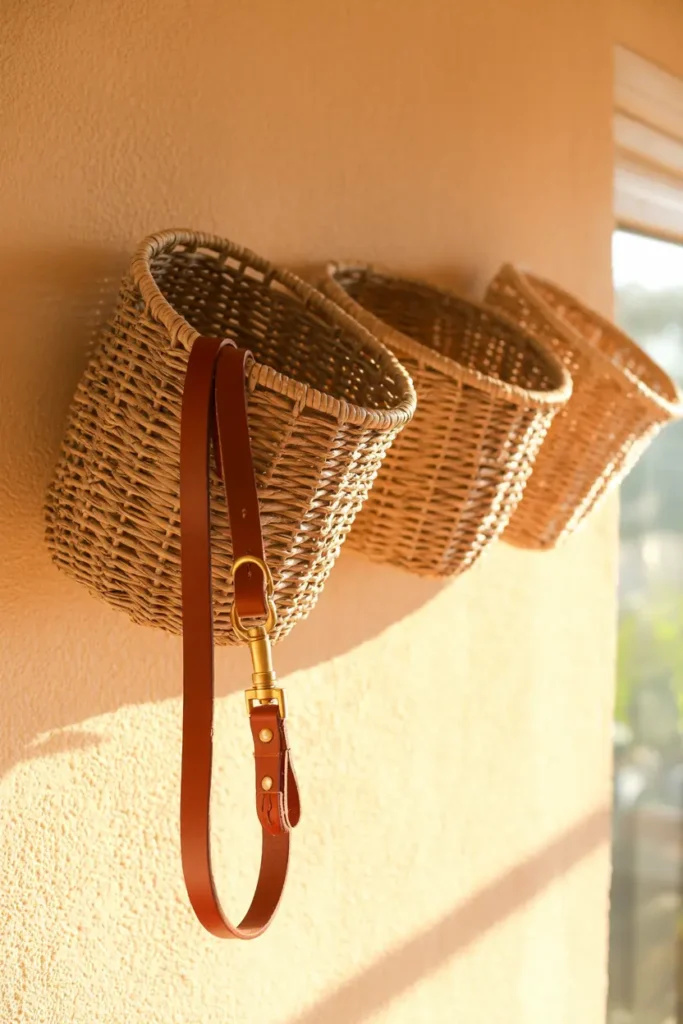
Mounting shallow, woven seagrass or wicker baskets directly to the wall provides a “catch-all” for gloves, dog leashes, or umbrellas. The material is rough, organic, and brings a sense of “outdoors” inside. The baskets have a complex weave that creates a map of tiny shadows when the light hits them.
Visually, they add a soft, rounded texture that balances the hard surfaces of the door and floor. You will see stray fibers poking out and perhaps a slight tilt to a basket that has been used heavily. They have a faint, dry scent of natural grass that is particularly noticeable on damp days.
Every time you drop a set of keys or a leash into a basket, you hear a soft, muffled rustle. This is a budget-friendly narrow entryway wall idea that adds a tactile, human element to the space. It feels grounded and real, making the entry feel more like a home and less like a hallway.
Making the Entrance Count
The secret to a narrow entryway is not to fight the space, but to work with its limitations. By choosing décor that stays close to the wall and focuses on high-quality textures: like walnut, brass, and seagrass: you can create a passage that feels curated rather than cluttered.
Don’t be afraid of the small, authentic imperfections: the dust on a ledge, the patina on a hook, or the smudges on a mirror. These are the details that signal a home that is lived in and loved. A well-designed entry does not just look good: it works hard for you every day, ensuring that your transition in and out of the house is as smooth and stylish as possible.