8 Boho Kitchen Wall Décor Ideas That Look Natural
Boho kitchen walls are often misunderstood as “just adding more stuff.” In reality, the style works best when it feels collected over time, not arranged in one go. Kitchens make this even trickier because the environment is constantly changing. Steam, heat, cooking smells, and daily use affect how materials look and age.
In a real kitchen, walls are rarely untouched. You start noticing faint oil marks near cooking areas, slight fading where sunlight hits strongest, or textures that behave differently depending on humidity. Boho décor actually benefits from these conditions because it leans into imperfection rather than hiding it.
The key is to use elements that feel relaxed, slightly irregular, and naturally integrated into the space. These ideas focus on that balance, where the wall feels expressive but still grounded in everyday kitchen use.
1. Layered Textile Strip with Uneven Hanging Tension
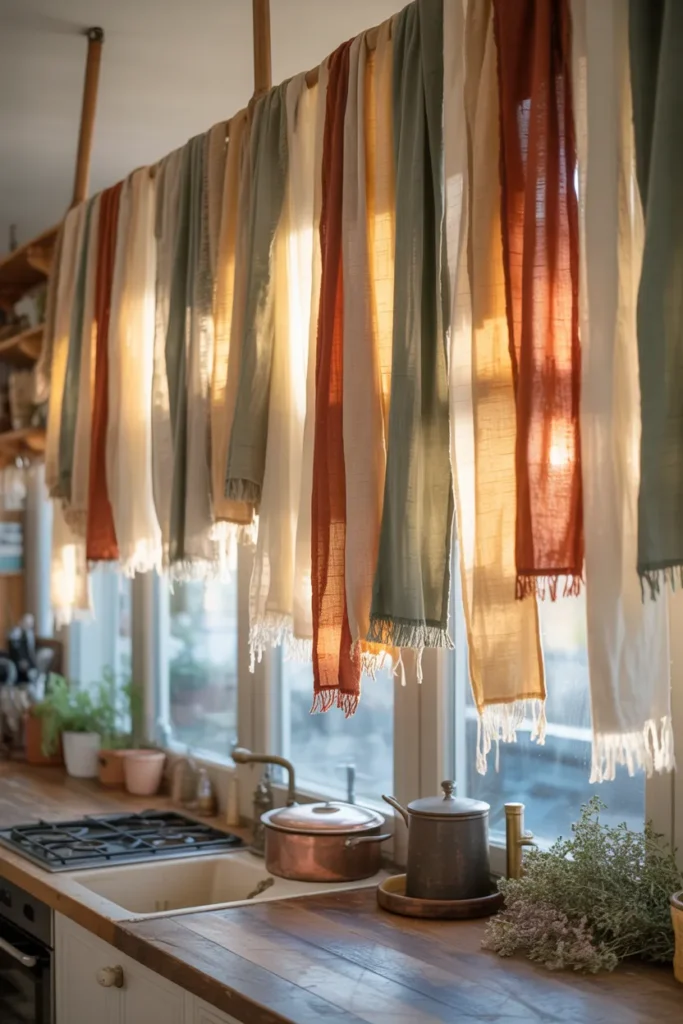
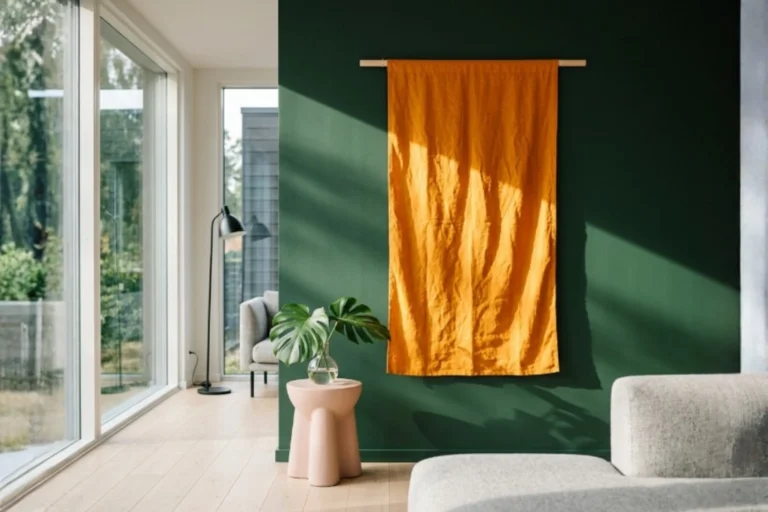
Instead of one large textile piece, use multiple narrow fabric strips hung side by side, each with slightly different lengths and tension. Some may hang straighter, while others naturally twist or curve a little due to airflow or fabric weight.
In a kitchen, these fabrics react subtly to heat and movement. When cooking, you may notice a slight shift in how they hang, especially if there is a nearby window or exhaust fan. In morning light, the fabric textures become more visible, with soft shadows forming between folds. By evening, the colors appear deeper and more muted.
Over time, edges may fray slightly, and the lower sections can absorb faint cooking smells. Instead of feeling worn out, this adds to the lived-in quality. You might also notice slight discoloration where steam rises regularly.
This setup works well when you want movement and softness on the wall without relying on rigid décor.
2. Raw Clay Plate Cluster with Imperfect Spacing
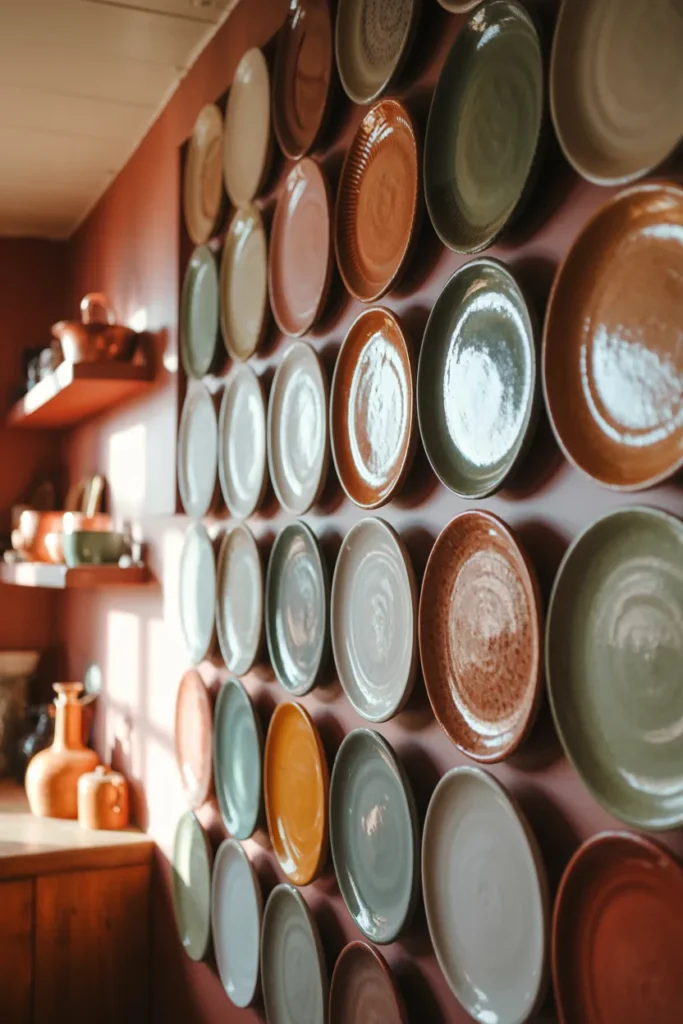
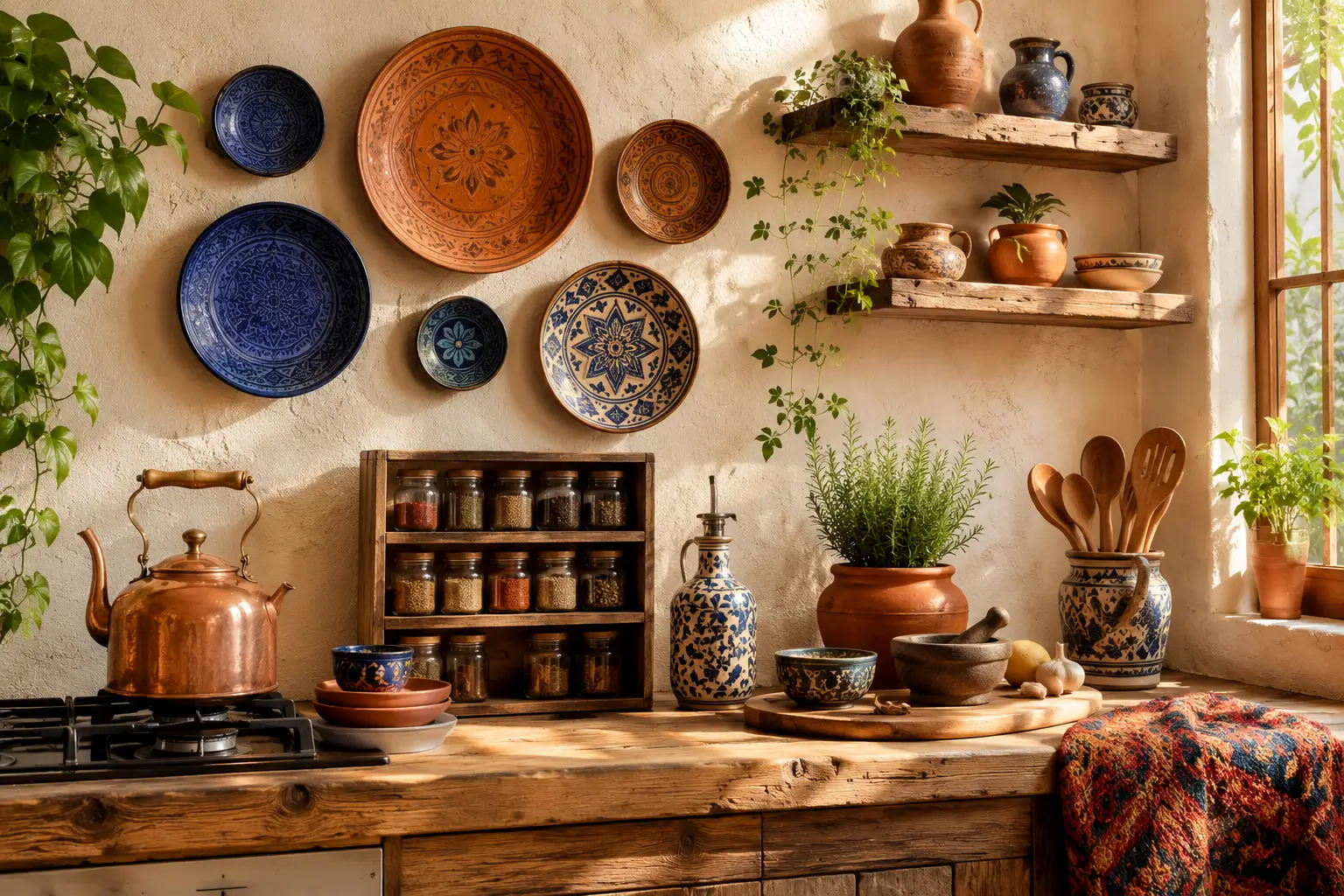
Use handmade clay plates arranged loosely on the wall, but avoid symmetrical placement. Let the spacing vary naturally, with some plates slightly closer together and others more isolated.
Each plate surface reacts differently to light. Some absorb it with a matte finish, while others reflect a faint sheen depending on the clay treatment. In daylight, especially near a window, you will notice subtle color variations across the surfaces. In evening lighting, the textures flatten slightly but still hold depth.
Because this is a kitchen, small marks develop over time. You may see faint grease spots or dust collecting along the edges. Plates closer to the cooking area might show more wear.
The slight irregularity in shape and placement keeps the wall from feeling overly styled. It feels more like a collection than a design decision.
3. Vertical Rope Drop with Attached Organic Elements
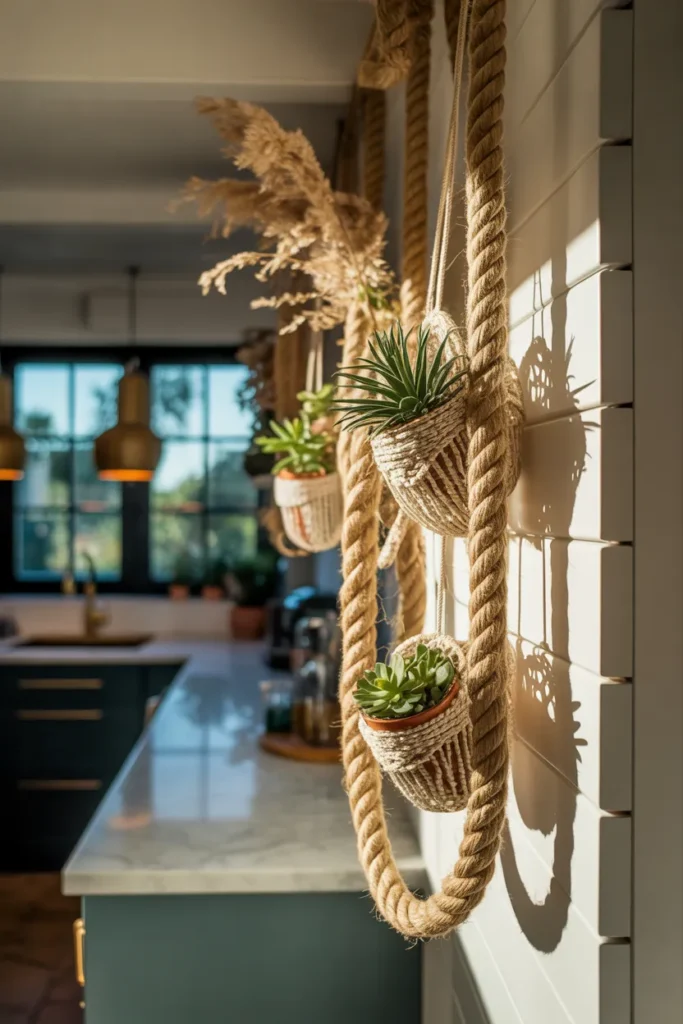
Instead of fixed décor, suspend a vertical rope from a hook and attach small natural elements like dried herbs, wooden beads, or lightweight objects along its length. The rope does not stay perfectly straight and may curve slightly.
In a kitchen environment, the rope fibers slowly change texture. They may feel slightly rougher over time, especially with exposure to humidity. Light catches on the twisted fibers differently depending on the angle, creating small highlights and shadows.
During the day, sunlight can create a thin shadow line behind the rope, while at night, the shadow becomes more compact and defined. The attached elements may shift slightly, especially if brushed while moving around.
You might also notice subtle scent traces from dried herbs lingering near the wall, blending with cooking aromas.
This idea brings vertical movement without adding heavy visual weight.
4. Partial Limewash Wall with Visible Brush Variations
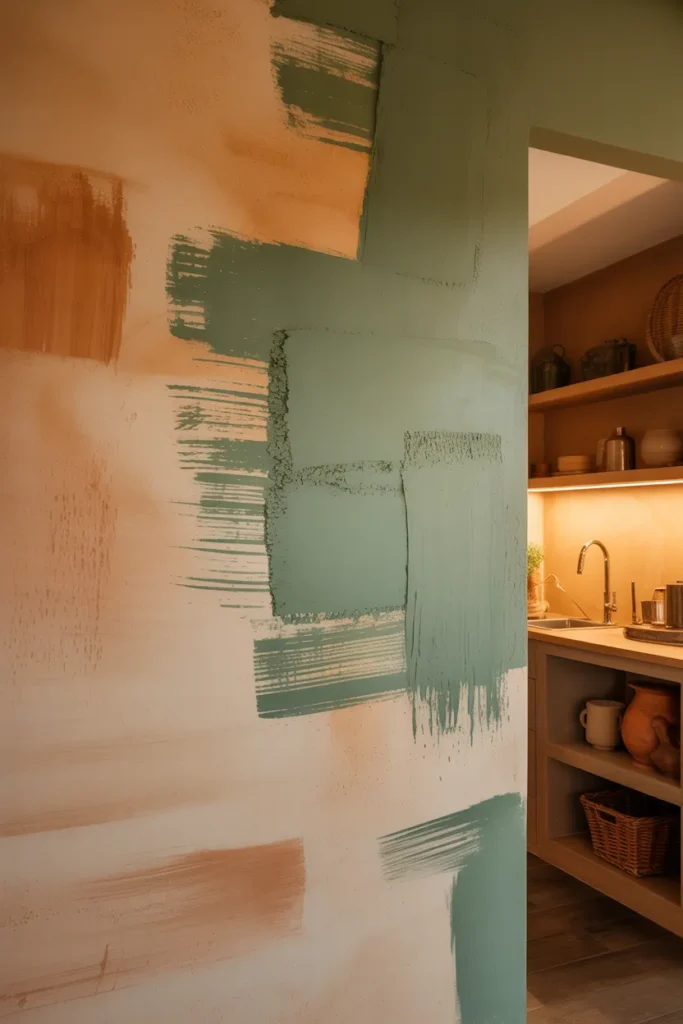
Instead of decorating over the wall, treat the surface itself as the feature using a partial limewash finish. Apply it unevenly so brush strokes remain visible.
In morning light, these strokes become more noticeable, creating a soft layered texture. By evening, the wall appears smoother, with the variations blending into a more uniform tone. The surface reacts differently depending on moisture in the air, sometimes appearing slightly darker in certain areas.
In a kitchen, this finish develops character quickly. You may notice faint splash marks near prep areas or slight fading where sunlight hits repeatedly. Running your hand across the wall, you can feel subtle differences in texture between heavier and lighter application areas.
This approach keeps the wall minimal while still giving it depth and warmth.
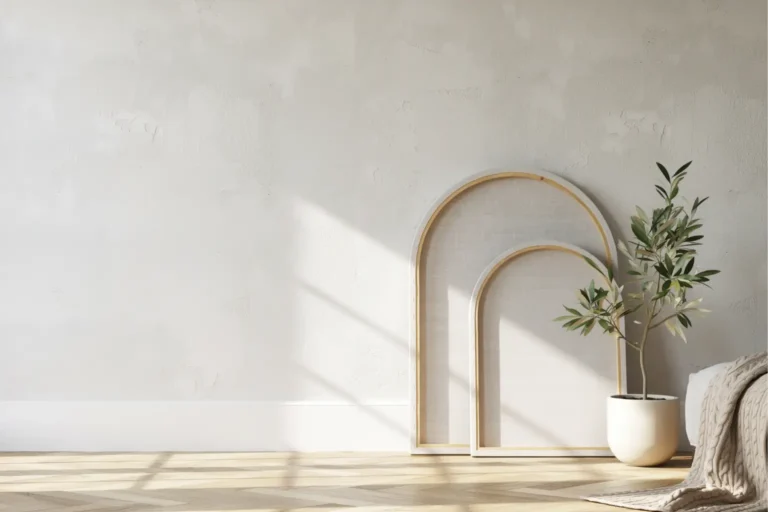
5. Leaned Wooden Board with Organic Surface Wear
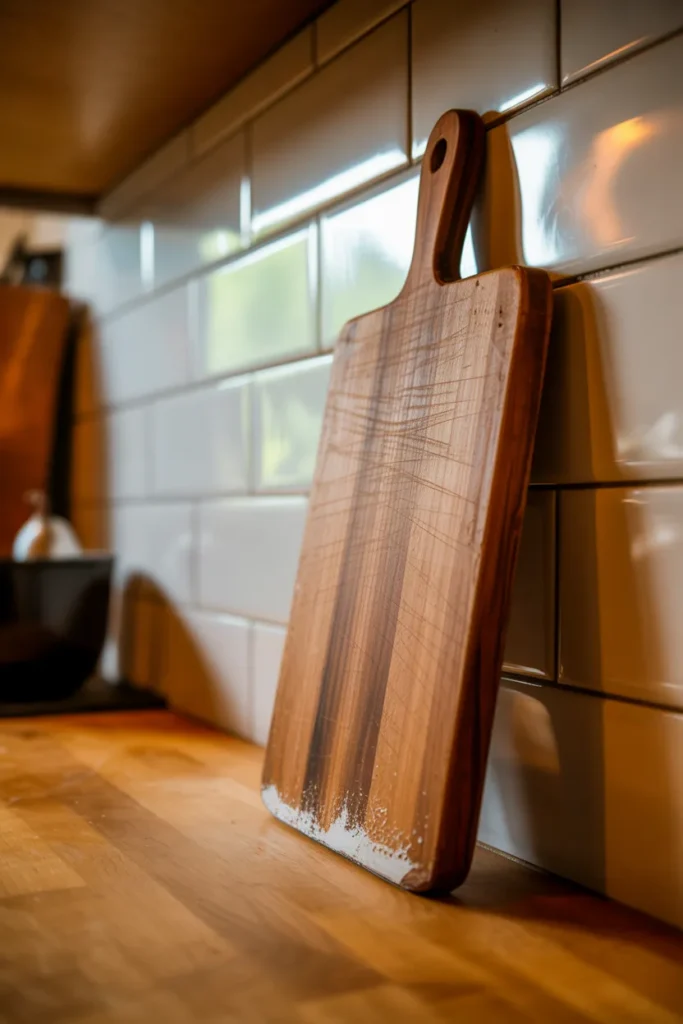
Place a medium-sized wooden board against the wall rather than mounting it. The wood should show natural grain variation, with some areas slightly darker or rougher than others.
In daylight, the grain becomes more visible, especially when light hits at an angle. By evening, the board absorbs more light, appearing deeper in tone. The slight gap between the board and the wall creates a soft shadow that shifts throughout the day.
Over time, the bottom edge may show wear from floor contact. You might see faint marks or slight smoothing of the wood where it touches the surface. Dust tends to gather along the base and behind the board.
Because it is not fixed, the board may shift slightly, adding to the relaxed, non-permanent feel that works well in boho spaces.
6. Hanging Dried Plant Bundle with Natural Irregularity
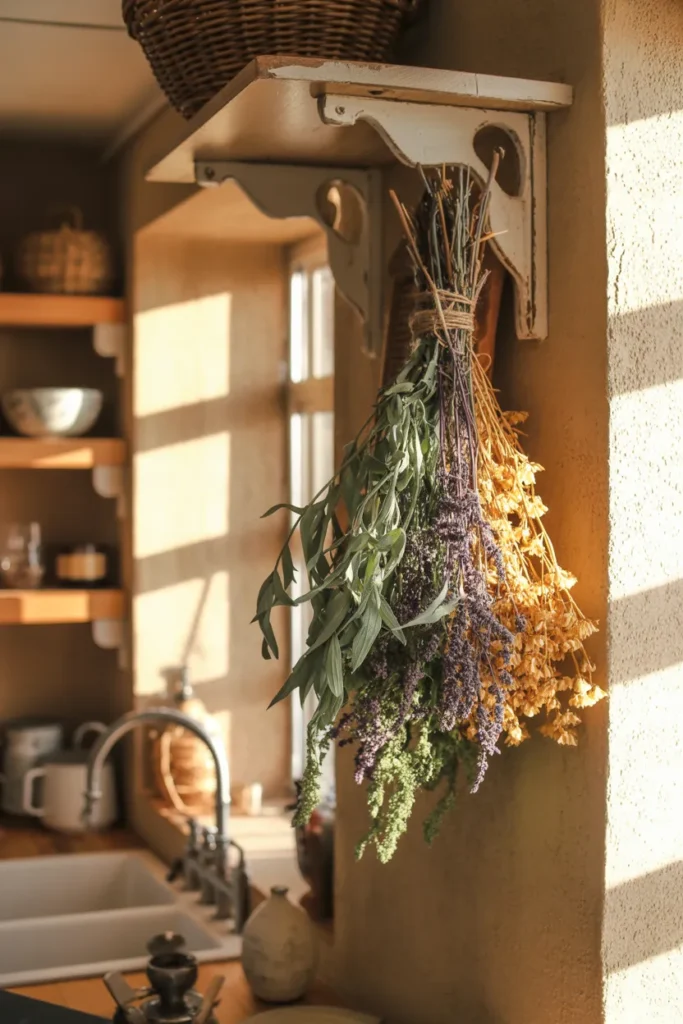
Use a loosely tied bundle of dried plants or branches hung directly on the wall. The arrangement should feel slightly uneven, with some stems extending further than others.
In a kitchen, these plants interact with airflow and heat. They may shift slightly over time, and some parts can become more brittle. In morning light, the fine details of leaves and stems create delicate shadows. In the evening, the bundle appears more compact and darker.
You may notice subtle dust settling on the upper parts, and the color may fade slightly where exposed to direct sunlight. A faint earthy scent can linger, especially when the air is warm.
This adds an organic focal point without introducing rigid structure.
7. Offset Shelf Fragment with Minimal Objects
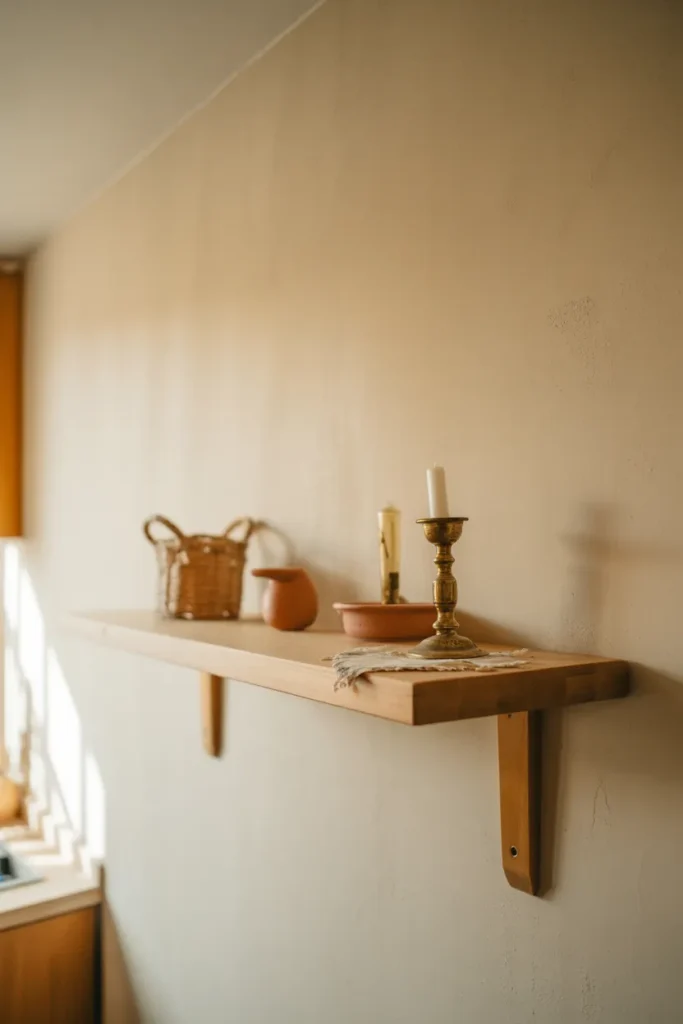
Instead of a full shelf, use a short, offset shelf segment placed slightly away from center. Keep only one or two objects on it, leaving most of the wall empty.
The shelf casts a defined shadow underneath, which changes throughout the day. In daylight, the shadow stretches slightly outward. At night, it tightens and becomes darker.
Because it is a kitchen, small details appear over time. Dust gathers along the top edge, and objects may leave faint marks where they sit. If the shelf is not perfectly level, you might notice a slight tilt when looking closely.
This controlled imbalance keeps the wall from feeling static while maintaining a minimalist boho look.
8. Bare Wall with Soft Shadow Movement from Nearby Elements
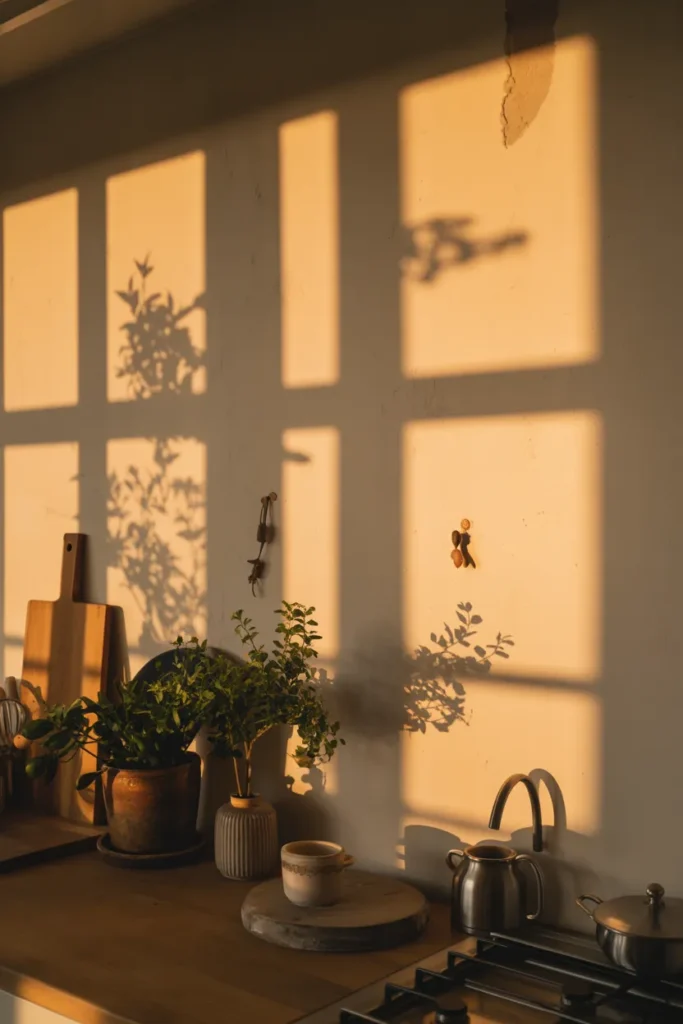
Sometimes the most natural boho approach is not adding décor directly to the wall. Instead, rely on nearby elements like plants or utensils to cast moving shadows.
In the morning, shadows stretch longer and softer across the surface. Around midday, they become sharper and more defined. In the evening, they return to a softer, warmer tone.
Because nothing is mounted, the wall itself shows its own character. Slight paint inconsistencies, faint marks, or uneven texture become visible depending on the light. These details create depth without adding objects.
This approach works especially well in smaller kitchens where too much décor can feel overwhelming.
Conclusion
Boho kitchen wall décor works best when it feels unforced. Instead of trying to fill the space, the goal is to introduce elements that naturally interact with light, air, and daily use. Small imperfections, shifting textures, and gradual wear are not problems here. They are part of what makes the wall feel real.
In a kitchen, where conditions constantly change, this approach holds up better over time. The wall evolves instead of breaking down visually. Start with one or two elements, observe how they behave, and build slowly from there.
That is usually when the space starts to feel natural.