20 Living Room Wall Décor Ideas That Transform Any Space
Living room walls usually stay blank longer than they should. Furniture comes in first, then rugs, lighting, and small details, but the walls often get whatever is left at the end.
That is why many spaces feel “almost finished” but not quite right.
Wall décor does not just fill empty space. It changes how light moves, how sound feels, and how the room holds attention when you sit in it for longer than a few minutes. Some choices make a room feel quieter, others make it feel more layered or grounded.
The ideas below are not styled for catalog perfection. They are based on how these setups actually behave in real homes, with light shifting during the day, small imperfections showing up over time, and materials reacting to daily use.
1. A Gallery Wall That Feels Collected, Not Installed
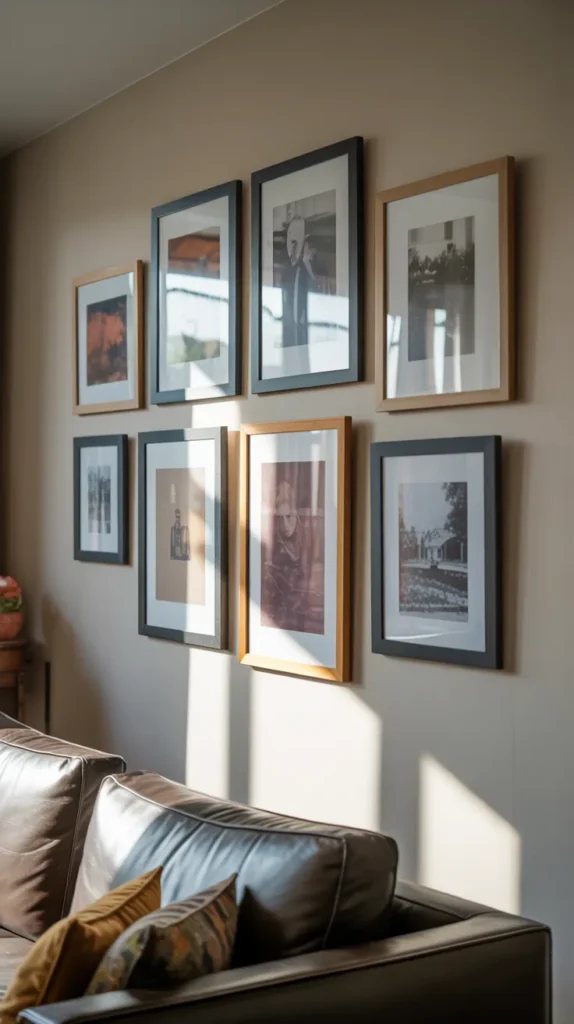
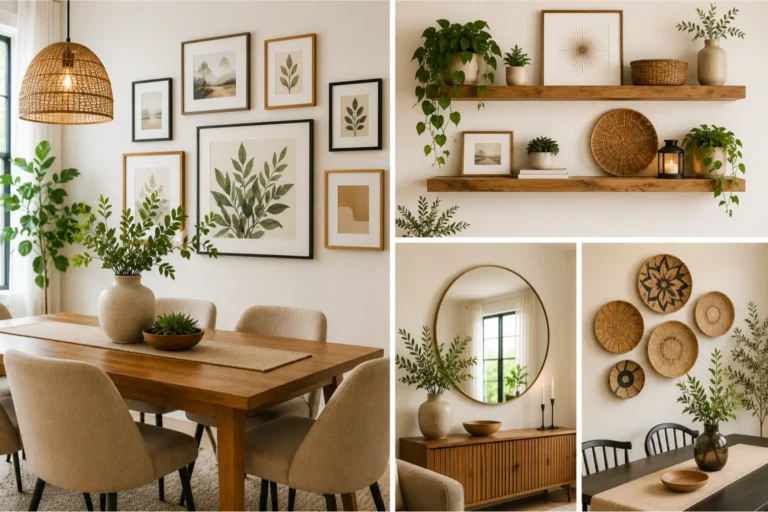
A gallery wall starts looking better when it stops looking “new.” The ones that feel right usually come together slowly, not all at once.
Frames rarely sit in perfect alignment unless someone forces them to. One edge might dip slightly, especially if the wall itself is not completely straight. In the afternoon, sunlight coming from the side can hit the glass at an angle, creating patches of glare that move across different frames as the light shifts. It can be distracting at first, then it becomes part of the rhythm of the room.
There is also a faint sound detail people don’t expect. If the wall is shared with another room or hallway, frames can produce a soft ticking or tapping sound when doors close nearby. It is subtle, but noticeable in quiet homes.
Older wooden frames sometimes carry a dry, slightly dusty scent, especially if they have been stored before hanging. New frames, on the other hand, often have that faint factory smell that fades within a few days.
The arrangement works better when spacing is not mathematically perfect. Small inconsistencies break the stiffness and make the wall feel like it belongs to the room instead of sitting on top of it.
2. A Large Canvas That Reacts to Light Throughout the Day
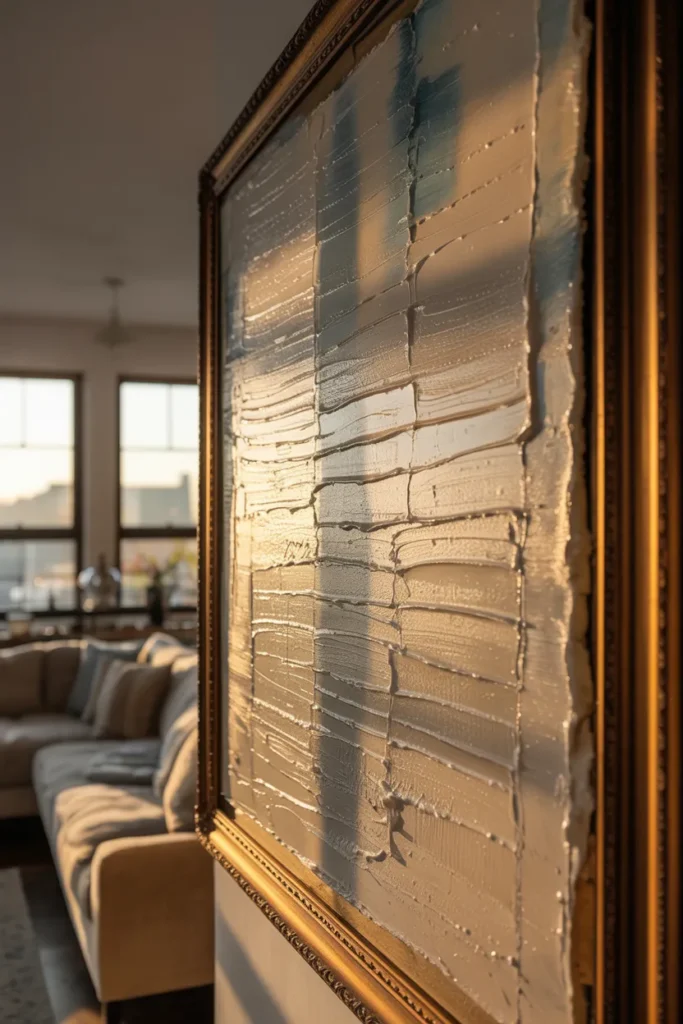
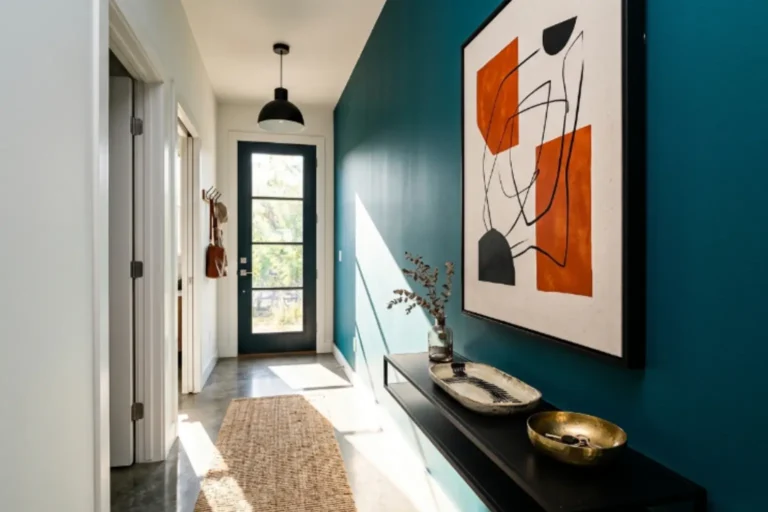
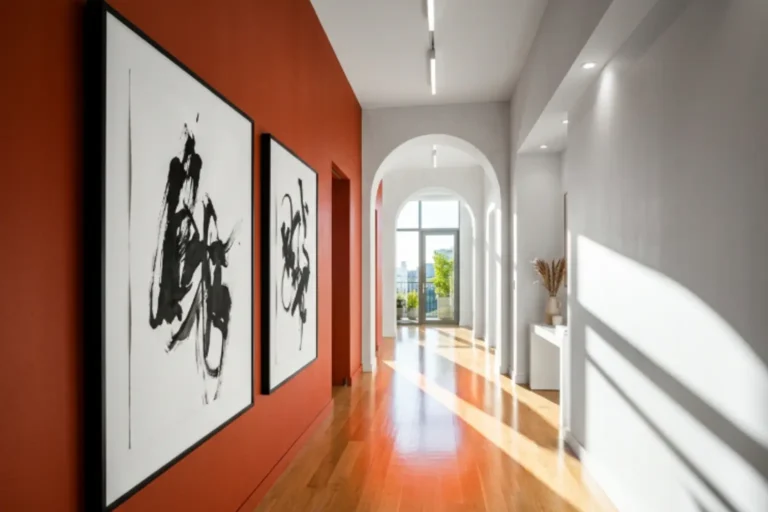
A large canvas changes more than expected depending on where the light comes from. In the morning, indirect daylight tends to flatten colors, making even textured paint look soft and muted. By evening, warmer indoor lighting pulls out deeper tones that were not obvious earlier.
From a close distance, the surface is not smooth. Brush strokes create small ridges where paint has dried unevenly. Running a hand lightly across it reveals that texture. It is not rough, but it is not flat either.
There is also a faint scent when the piece is new. Fresh canvas and paint can carry a slightly chemical smell, especially in enclosed spaces. It fades, but it is noticeable during the first few days.
Hanging a large piece introduces its own small issues. Walls are rarely perfectly straight, so the shadow gap between the canvas and the wall can look uneven from certain angles. Once seen, it becomes hard to ignore.
If the room is quiet, even the act of adjusting the frame produces a dull, hollow knock against the wall. That sound tends to echo slightly more if the wall is otherwise empty.
3. A Mirror That Reflects More Than Just Light
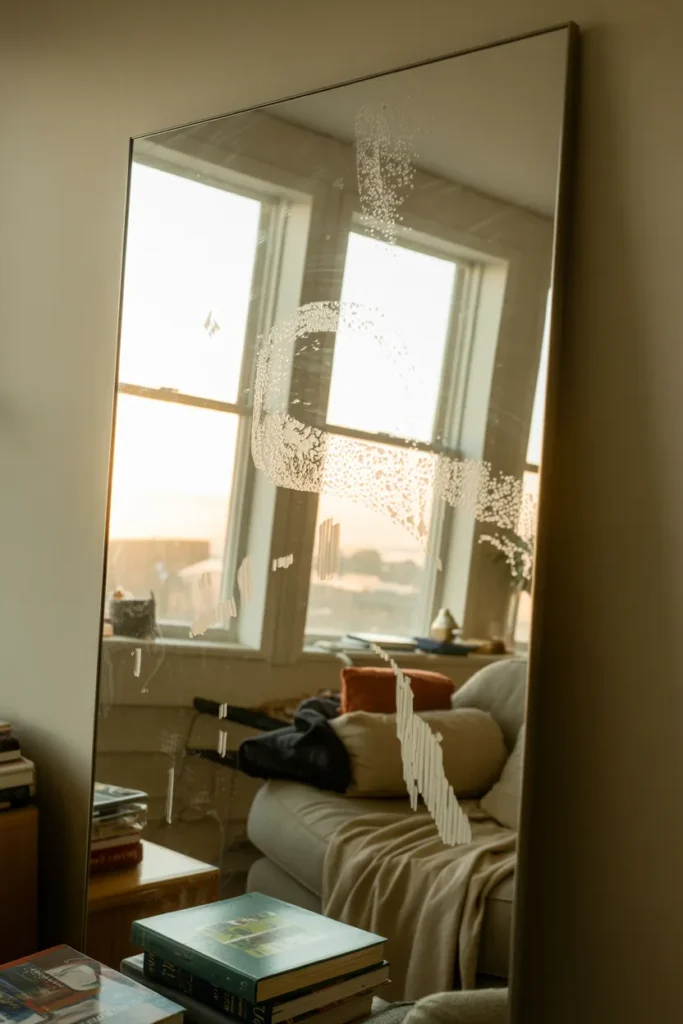
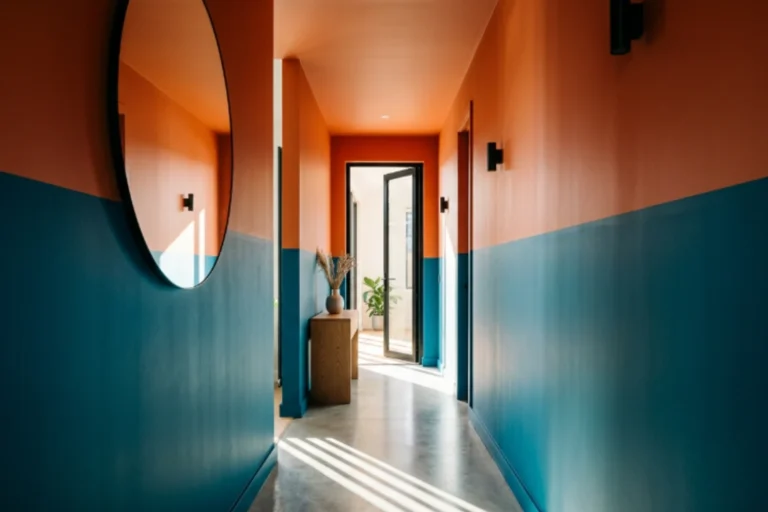
A mirror changes depending on what it ends up reflecting. During the day, it can pull in bright window light and stretch it across the room. At night, it reflects darker corners, sometimes doubling the dimmest parts of the space instead of the brightest.
Fingerprints build up quickly, especially around the edges where people tend to adjust it. Under certain lighting, those marks become clearly visible, forming faint smudges across the surface.
There is also a temperature difference that becomes obvious on contact. Metal frames feel cool even in a warm room, while wooden frames carry a softer, warmer touch.
Sound behaves differently as well. Hard reflective surfaces like mirrors do not absorb anything, so nearby sounds feel slightly sharper. Conversations, footsteps, even the click of a remote can bounce subtly compared to walls with fabric or wood.
Cleaning introduces its own sensory detail. Glass cleaner leaves behind a sharp, almost citrus-like scent that lingers briefly before fading.
Placement matters because the mirror will always reveal something. Sometimes that includes things not meant to be part of the design, like cables, clutter, or uneven corners.
4. Shelves That Change Every Few Days Without Planning
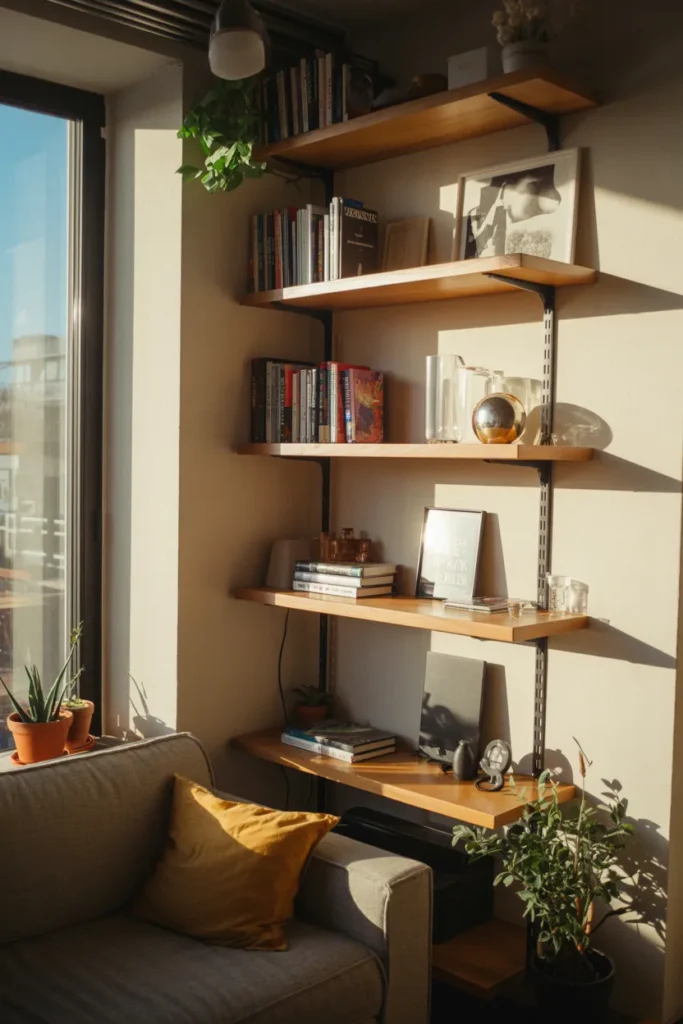
Floating shelves rarely stay arranged the same way for long. Objects shift, get replaced, or disappear entirely. The setup evolves without a clear plan.
Books placed upright can lean slightly over time, especially if they are not tightly packed. Small ceramic pieces sometimes leave faint rings or marks on painted surfaces. Plants introduce their own variables. Overwatering can leave a slight damp smell, while dry soil carries a dusty, earthy scent.
Dust settles faster than expected. Under direct light, especially from a window, it becomes visible as a thin layer along edges. Dark shelves make it more obvious.
There is also a soft sound detail when placing items down. Wood shelves produce a dull, muted thud, while metal brackets can create a sharper, hollow note depending on how they are fixed.
If the shelf is not perfectly level, objects slowly drift visually. It might not move physically, but the imbalance becomes noticeable when stepping back.
Leaving small gaps between objects helps reduce that crowded feeling. Empty space does more work than it seems.
5. Wooden Panels That Add Warmth You Can Sense
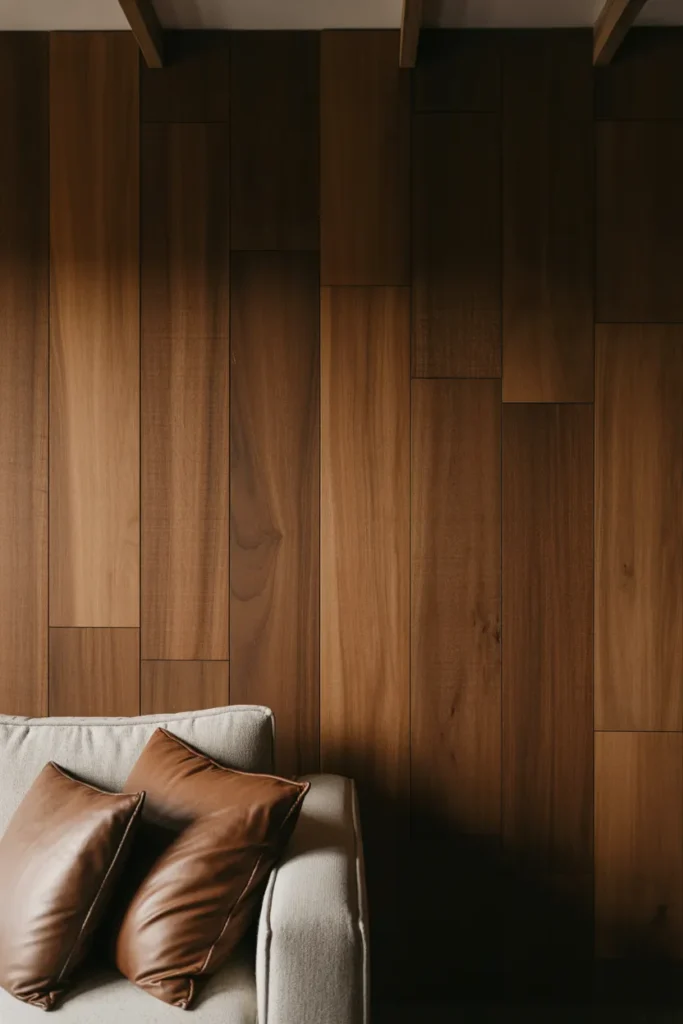
Wood changes the atmosphere of a room in a way that goes beyond appearance. It carries a natural scent, especially in the first few weeks after installation. Depending on the type, it can smell slightly sweet, dry, or even resin-like.
The surface itself is never completely uniform. Even processed panels show subtle variations in grain direction and tone. Running a hand across it reveals faint ridges and lines that catch light differently from each angle.
Sound shifts noticeably. Rooms with wooden panels tend to feel quieter, not silent, but less sharp. The hollow echo of bare walls softens into something more controlled.
There are also small visual inconsistencies. Panels might not align perfectly, leaving thin seams that become visible under angled lighting. These are rarely noticeable in photos but stand out in person.
Heat and light affect the color slightly over time. Areas exposed to direct sunlight may lighten, while shaded sections remain deeper in tone.
Touching the surface leaves faint marks, especially on darker finishes. They usually fade, but under certain lighting, they remain visible.
6. A Vertical Plant Wall That Never Looks the Same Twice
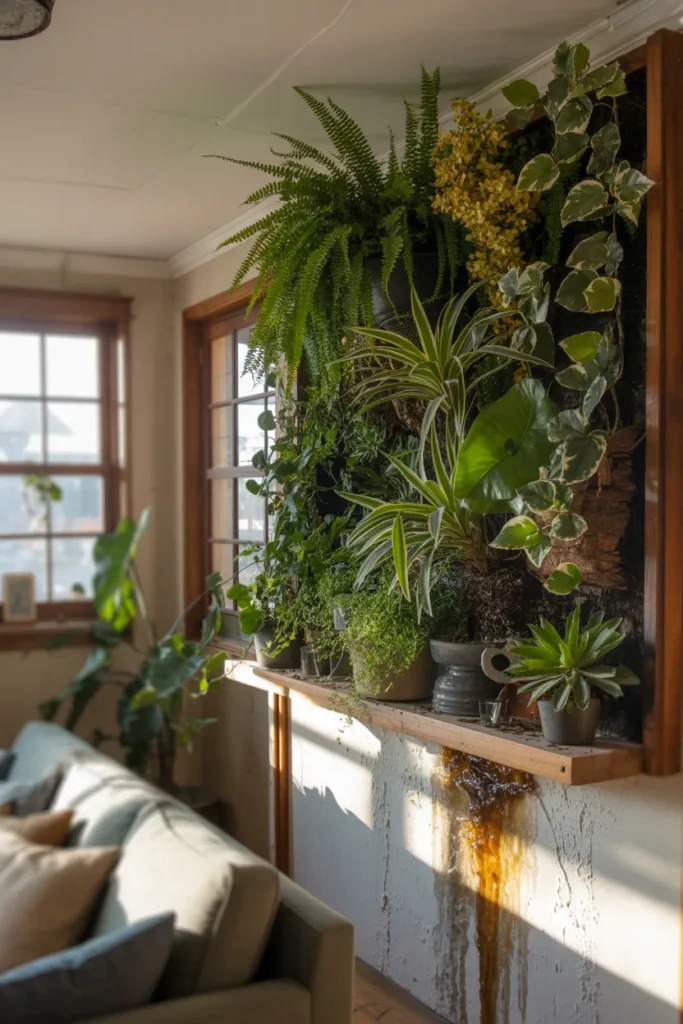
A wall filled with plants does not stay visually fixed. Even in a closed room, leaves shift slightly due to airflow that usually goes unnoticed. A ceiling fan on low speed or air moving from a window is enough to create small, irregular movements. These movements change the shadows on the wall throughout the day, especially when sunlight comes in at an angle.
Growth adds another layer of unpredictability. Plants closer to natural light tend to become fuller and lean outward, while those placed slightly off-center may stretch thinner. After a few weeks, the arrangement stops looking symmetrical even if it started that way.
There is also a noticeable change after watering. The soil releases a damp, earthy smell that lingers for a short time, especially in warmer rooms. If water spills or drips, faint marks can form on the wall behind or below the setup. Over time, repeated moisture can leave slightly darker patches if not wiped.
Sound is subtle but present. Water hitting soil produces a soft, dull tone, and occasionally a droplet sliding off a leaf creates a light tapping sound.
Dust behaves differently here. It mixes with moisture and settles on leaves, sometimes leaving faint marks that are only visible in direct light.
7. Frames That Lean Instead of Being Mounted
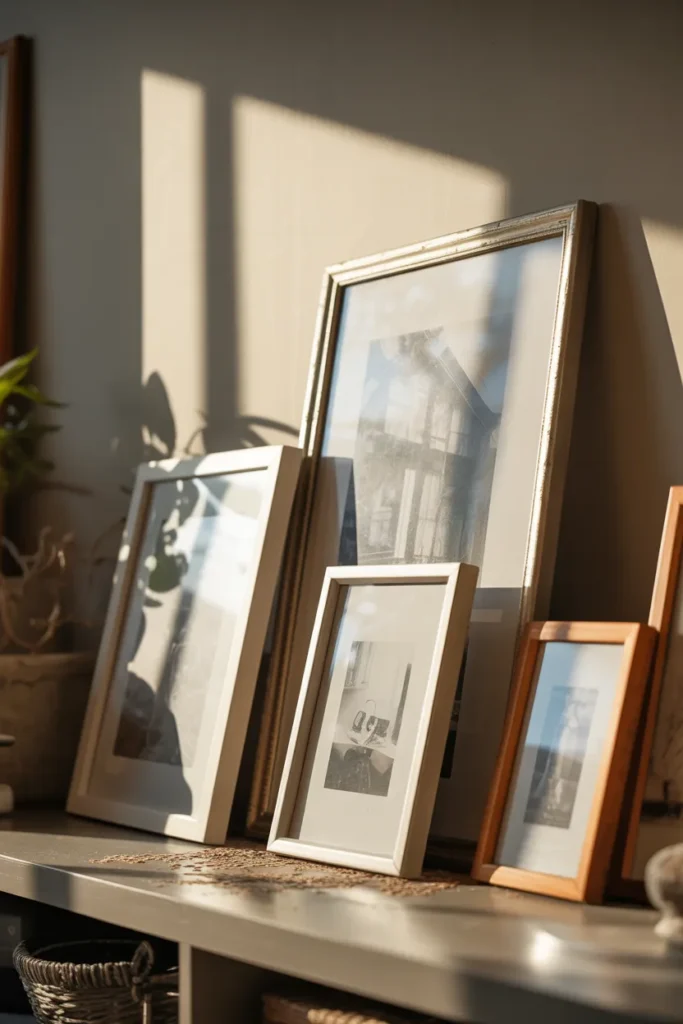
Leaning frames change how a wall behaves because nothing is fixed in place. Instead of being locked into position, each piece rests against the wall at a slightly different angle. Larger frames tend to sit more upright, while smaller ones lean further back, creating uneven shadow lines behind them.
These shadows become more noticeable in the evening when light comes from lamps rather than windows. You get overlapping layers of darkness that shift depending on where the light source is placed.
There is also a physical interaction that comes with this setup. Adjusting a frame produces a soft tap where wood or glass meets the surface below. On harder materials like stone or polished wood, the sound becomes sharper and more defined.
Dust gathers along the bottom edges where frames touch the surface. It is not obvious at first, but over time, a thin line forms that becomes visible when light hits from the side.
One thing that stands out is how easily alignment changes. A small vibration, like someone sitting down heavily on the sofa nearby, can shift a frame slightly. It rarely falls, but it does move just enough to break symmetry.
This approach feels less controlled and more temporary, which is often the appeal.
8. Decorative Frame Panels That Create Structure Without Depth
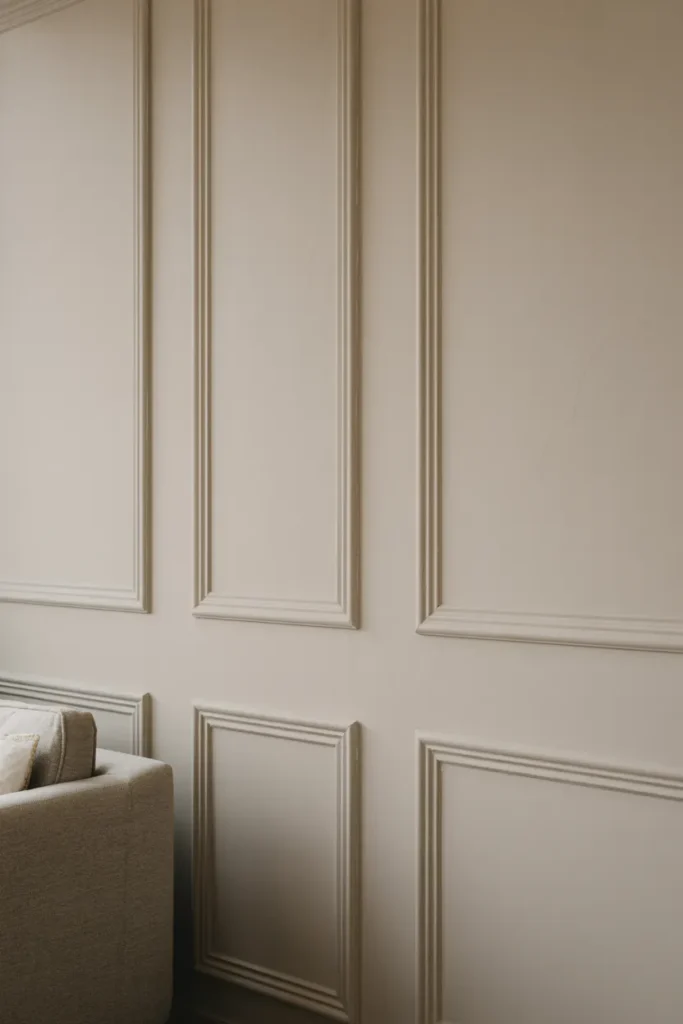
Decorative wall panels add structure to a flat surface, but they do it through illusion rather than actual depth. From a distance, the wall appears divided into sections, almost like molding, even though everything sits on the same plane.
The effect becomes more noticeable when light hits from the side. Thin shadows form along the edges, creating a subtle outline that shifts depending on the time of day. In natural daylight, the shadows are soft and barely visible. Under artificial lighting, they become sharper and more defined.
Up close, imperfections appear. Painted panels often show slight brush strokes or uneven finishes where edges meet. Corners are rarely perfectly sharp, especially in hand-finished setups.
There is also a difference in sound. Tapping on these panels produces a faint hollow tone, especially if they are lightweight or mounted over drywall. It contrasts with the more solid sound of thicker materials like wood.
Dust tends to collect along the inner edges, forming thin lines that gradually become visible. These areas are harder to clean because of the angles.
When overused, the pattern can start to feel repetitive. Spacing and proportion matter more than the design itself.
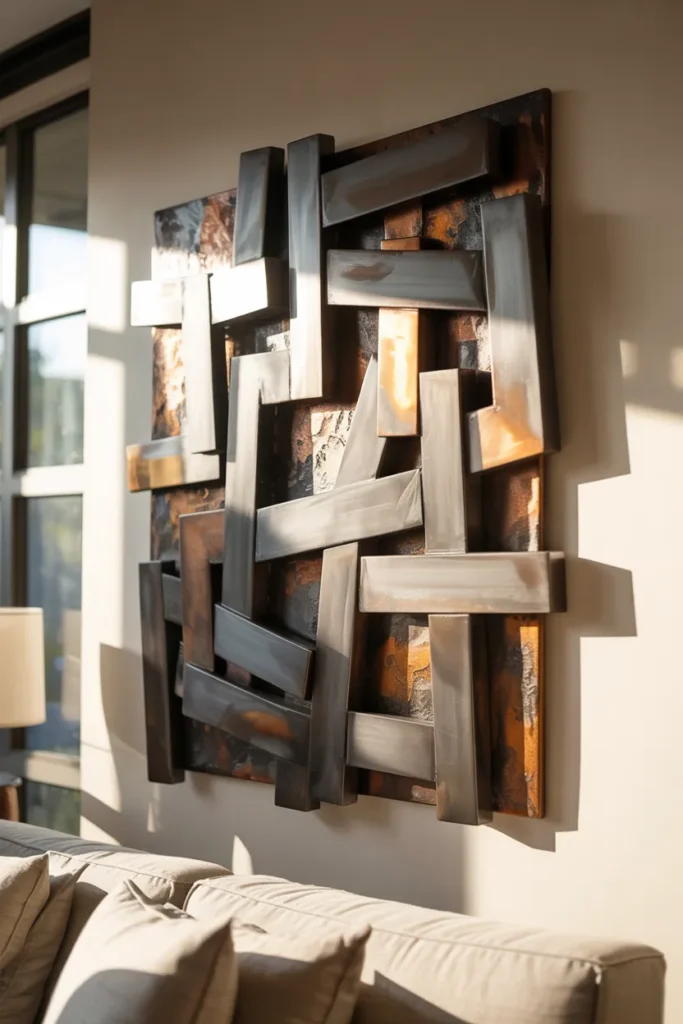
9. Sculptural Wall Pieces That Shift With Light and Shadow
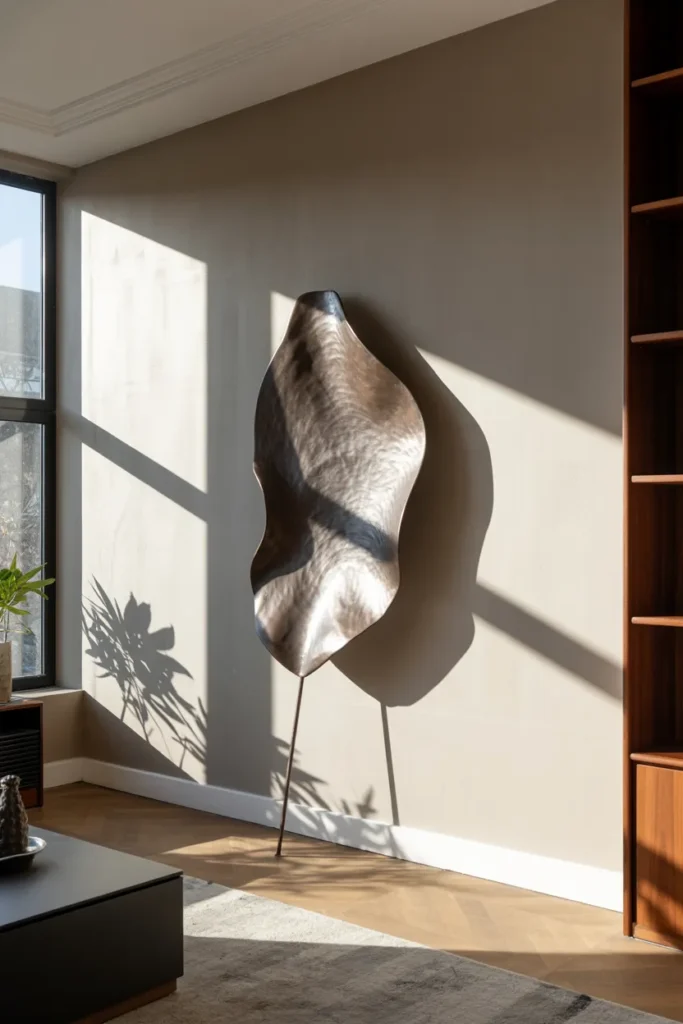
Sculptural décor behaves differently from flat art because it exists slightly away from the wall. This creates real shadows that move and change shape depending on lighting conditions.
In the morning, when light is softer and more diffused, shadows stay close to the object. As the light becomes stronger or more directional, those shadows stretch outward, sometimes doubling the visual size of the piece.
Material plays a role in how it feels. Metal sculptures are cool to the touch and may carry a faint industrial scent when new. Wooden pieces feel warmer and have a more neutral presence, with visible grain adding texture.
There is also a sound element when adjusting or touching the piece. Metal can produce a faint ringing or clicking sound, while wood gives a more muted response.
Dust collects unevenly, especially in joints and corners where shapes overlap. These areas tend to hold more buildup than flat surfaces.
Spacing becomes important. When placed too close to other elements, the shadow effect gets lost, reducing the impact.
10. Built-In Shelving That Becomes Part of the Wall
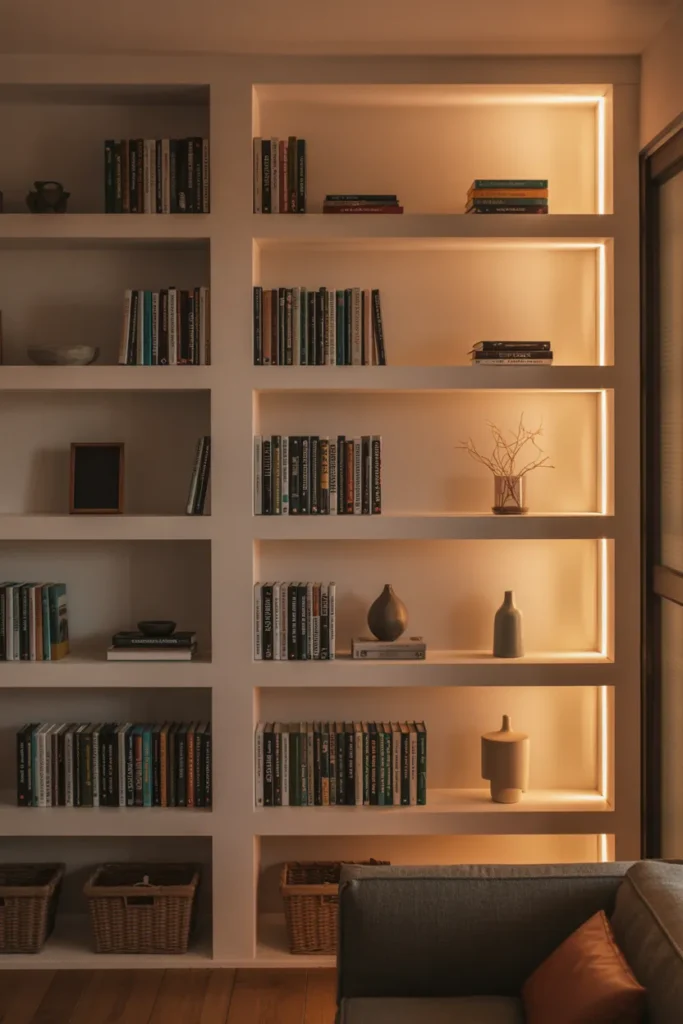
Built-in shelves change the structure of a wall rather than decorating it. They feel integrated, as if the wall was designed around them instead of having something added later.
Over time, subtle changes appear. Shelves carrying books or heavier items may show slight bending when viewed from the side. It is not obvious from the front, but noticeable from certain angles.
There is also a quiet sound associated with them. Adjusting heavier objects can create a faint creaking noise, especially if the shelves are tightly fitted.
Dust collects more in corners than on open surfaces. Inner edges where vertical and horizontal panels meet tend to trap buildup, creating slightly darker areas.
Paint differences can also show up. Even if the same color is used, built-ins may reflect light differently than the surrounding wall, especially under angled lighting.
Styling plays a major role here. Overfilling removes the clean, structured look and makes the space feel crowded. Leaving some sections partially empty helps maintain balance.
This type of wall feels more permanent and less decorative.
11. Painted Wall Art That Shows the Hand Behind It
Hand-painted wall designs never sit perfectly flat or uniform, even when they look clean from a distance. Up close, the surface tells a different story. Brush strokes overlap slightly, edges vary in thickness, and some areas carry more paint than others, creating a subtle uneven texture.
When light hits from the side, these variations become more visible. Thicker paint sections catch light differently, forming tiny highlights, while thinner areas appear flatter. This gives the wall a layered look that printed designs cannot replicate.
There is also a distinct smell that comes with fresh paint. It tends to linger longer in corners or near ceilings where airflow is limited. Over a few days, it fades, but during that time it becomes part of the room’s atmosphere.
Touching the wall reveals small differences. Painted areas may feel slightly raised compared to untouched sections. In some spots, especially where colors overlap, the surface feels a bit denser.
Small imperfections appear over time as well. Minor chips or marks stand out more on painted designs than plain walls, especially if contrasting colors are used.
This type of wall carries a sense of process. It does not feel manufactured, and that is what makes it hold attention longer.
12. Natural Material Displays That Shift With Environment
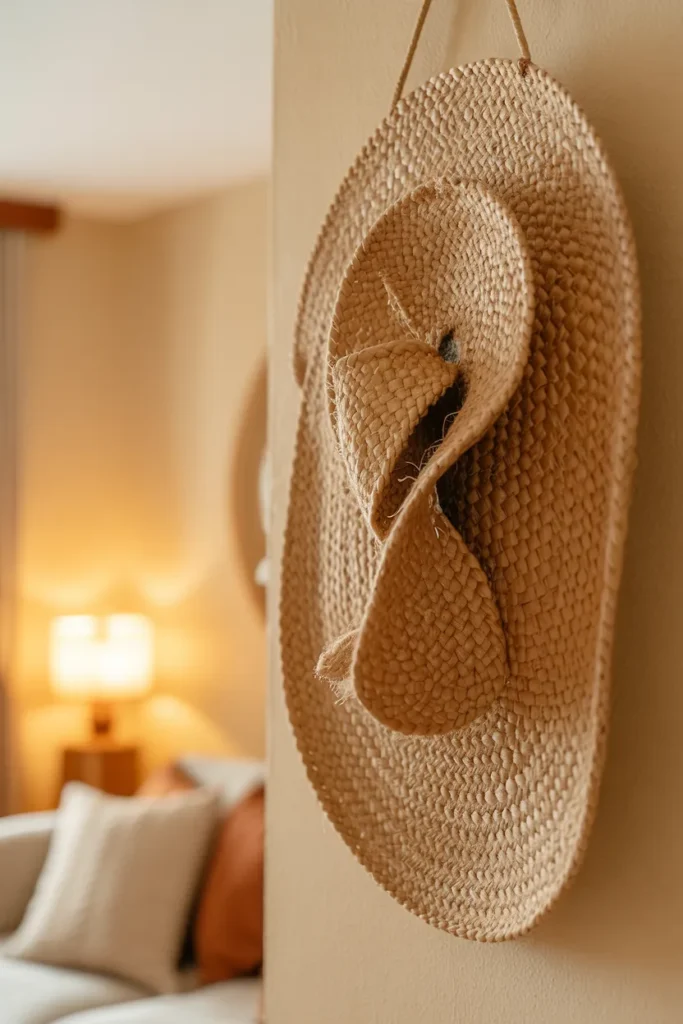
Walls decorated with natural materials like woven baskets or fiber pieces change subtly depending on the environment around them. Unlike rigid décor, these materials react to humidity, temperature, and airflow.
In slightly humid conditions, fibers can expand and feel softer. In drier air, they tighten and become more brittle to the touch. Over time, this can cause small changes in shape, especially along edges.
There is also a natural scent present, particularly in enclosed rooms. Materials like rattan or seagrass carry a dry, earthy smell that becomes more noticeable when the room is warm.
Dust behaves differently here. Instead of settling on a flat surface, it gets trapped within the weave. This makes it less visible but harder to remove completely, especially in deeper patterns.
When touched or adjusted, these pieces produce a soft, muted sound. It is more of a dull compression than a sharp tap, reflecting the material’s flexibility.
Light also interacts unevenly. Some parts of the weave catch more light, while others remain shadowed, creating a layered visual effect that changes slightly throughout the day.
This kind of wall feels less static and more responsive to its surroundings.
13. Reclaimed Wood Walls That Carry Visible History
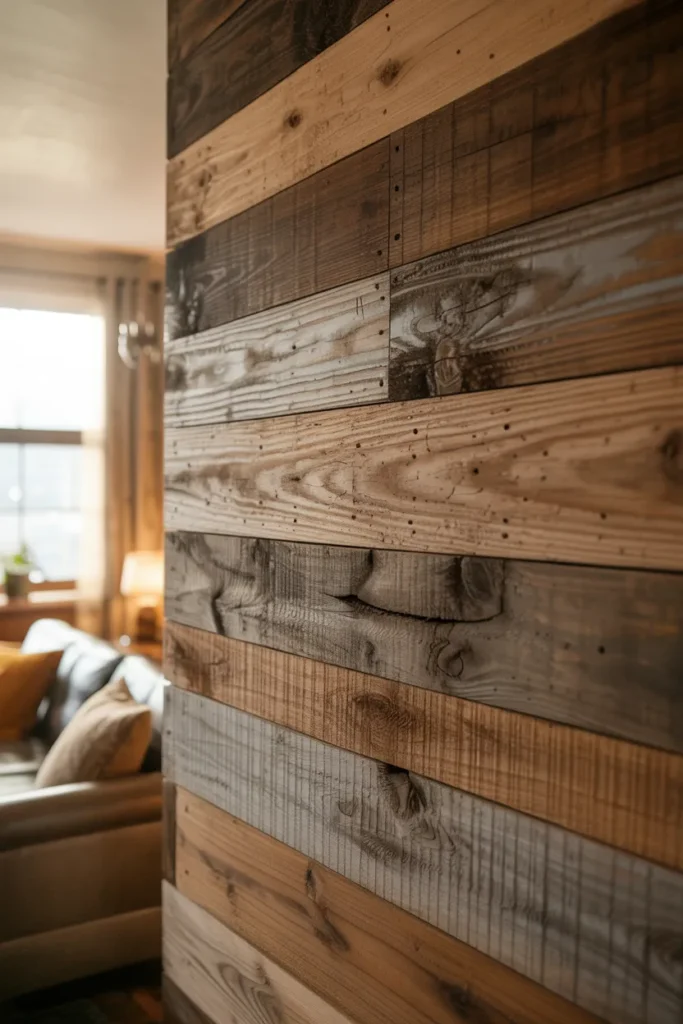
Reclaimed wood does not try to look new, and that is exactly why it stands out. Each plank carries marks from previous use, whether it is small dents, scratches, or uneven color patches.
When installed on a wall, these variations become part of the design. Some boards may appear darker, others lighter, depending on how they aged before. Under natural light, these differences become more pronounced, especially where planks meet.
There is also a noticeable scent, particularly in the first few weeks. It is a dry, slightly earthy smell that can feel stronger in warmer rooms. Over time, it fades but does not disappear completely.
Touch reveals inconsistencies. Some sections feel smooth from wear, while others remain rough or slightly splintered. Running a hand across the surface makes these differences obvious.
Sound behaves differently as well. Tapping reclaimed wood produces a denser, more solid tone compared to hollow drywall. It feels more grounded.
Dust tends to settle into grooves and imperfections rather than sitting evenly on top. This creates small darker areas that become visible under angled lighting.
This type of wall feels heavier, both visually and physically, but adds a sense of permanence.
14. Frame Grids That Reveal Movement Over Time

A grid layout looks precise when first installed, but it rarely stays that way. Even slight shifts become noticeable because the structure relies on alignment.
Frames can move gradually due to minor vibrations, changes in wall condition, or even temperature differences. A shift of just a few millimeters can break the symmetry.
Light makes this more obvious. Shadows between frames highlight uneven spacing, especially when light comes from one side. What looked aligned during installation may appear slightly off at certain times of day.
There is also a tactile interaction. Adjusting frames produces a small clicking sound as hooks settle back into position. On softer walls, the sound is more muted but still noticeable.
Cleaning becomes more demanding with this setup. Dust or fingerprints stand out more because the uniform layout makes any inconsistency easier to spot.
Over time, maintaining perfect alignment requires effort. Without regular adjustment, small imperfections build up and become part of the look.
This creates a contrast between intention and reality, which defines the character of this style.
15. A Mostly Empty Wall That Changes How the Room Sounds
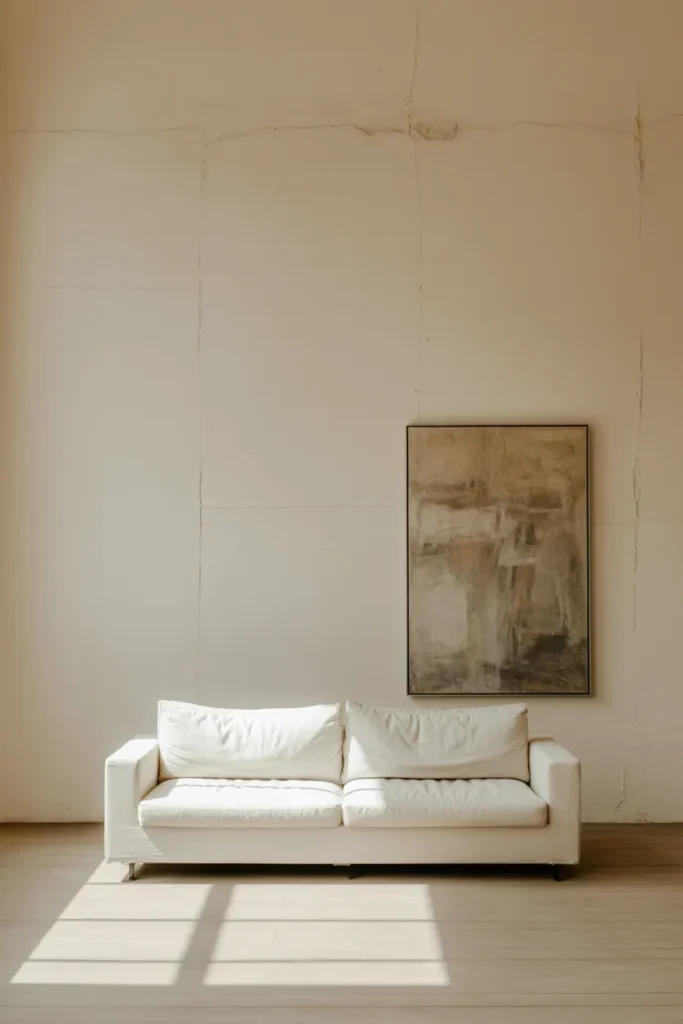
Leaving a wall mostly empty has a stronger effect than expected. Without objects to absorb or break up sound, the wall reflects it more directly.
In quieter moments, this becomes noticeable. Voices feel slightly sharper, and footsteps carry more clearly across the room. The space can feel more open, but also less contained.
Visually, the absence of décor makes light behave differently. Instead of being interrupted, it spreads evenly across the surface. This highlights the wall’s texture, including any small dents, uneven paint, or subtle color variations.
Touching the wall reveals these imperfections more clearly. Without distractions, the surface itself becomes the focus.
There is also a psychological effect. A mostly empty wall draws attention to whatever is placed on it. A single piece of art or décor appears more significant because it is not competing with anything else.
However, this approach requires restraint. Adding even one extra element can shift the balance completely.
It is less about decoration and more about what is intentionally left out. Continuing with the same depth and consistency. No shortcuts.
16. Textured Wall Panels That Change Character With Light Direction
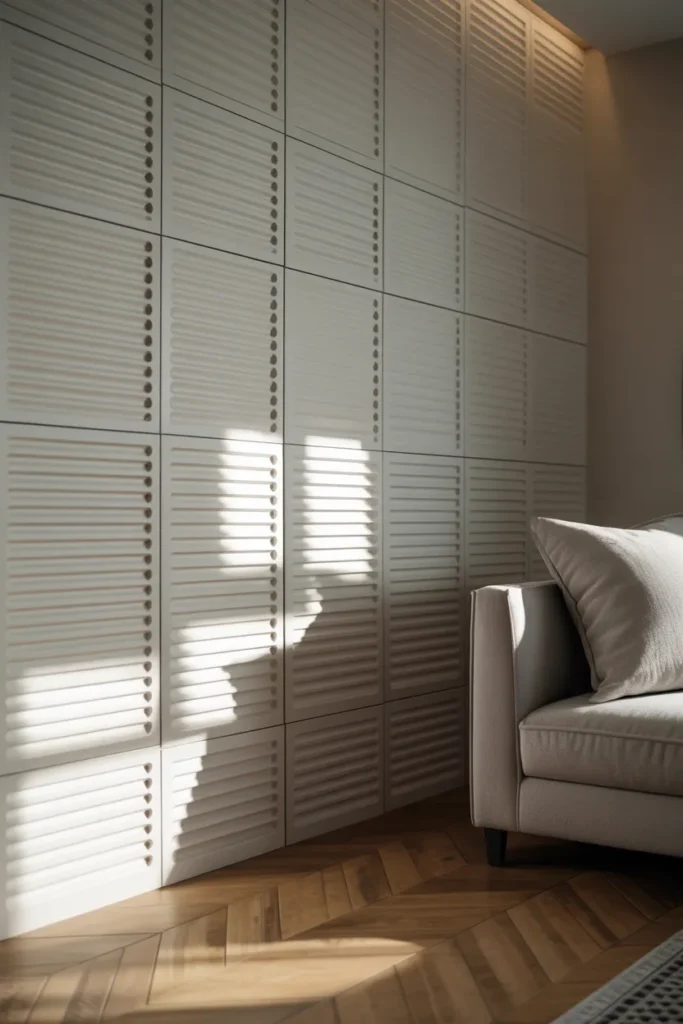
Textured panels rarely look the same throughout the day. When light hits them directly from the front, most of the depth disappears and the surface looks flatter than expected. But when light comes from the side, every ridge and indentation starts casting shadows, making the pattern feel much more pronounced.
This shift is not subtle in real spaces. Morning light might soften everything, while evening lighting from lamps creates stronger contrast, exaggerating the depth. The same wall can feel calm during the day and more dramatic at night.
Touch adds another layer to it. Running a hand across the surface reveals repeating patterns, but they are not always perfectly uniform. Some sections feel slightly sharper or deeper depending on how the panels were manufactured or installed.
There is also a hollow sound when tapping certain types of panels, especially lighter materials like PVC or MDF. Heavier panels feel more solid, producing a denser, shorter sound.
Dust collects along the edges of raised sections. Over time, thin lines of buildup form in grooves, becoming more visible under angled lighting.
Installation imperfections can show up as well. Slight misalignment between panels creates seams that are not always visible immediately but become noticeable once light hits at the right angle.
17. Metal Wall Art That Reflects Light and Movement
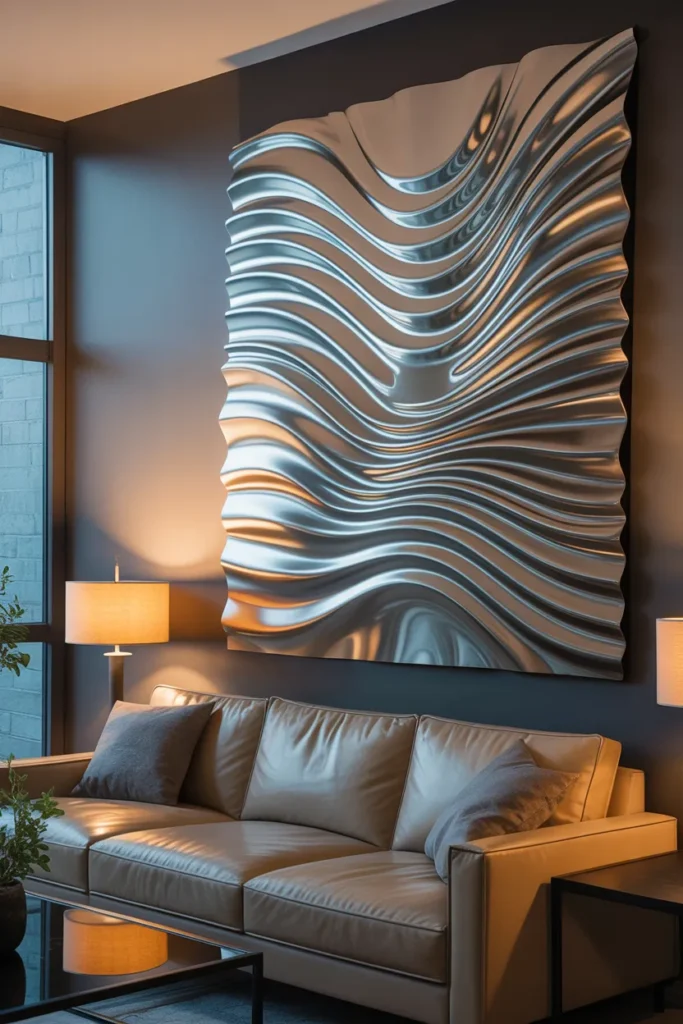
Metal wall art behaves differently from most materials because it interacts with light in a more active way. Even small changes in lighting can create shifting highlights across the surface.
Matte finishes absorb light and feel more stable visually, while polished or semi-gloss surfaces reflect brighter spots that move as the light source changes. In rooms with multiple light sources, this can create a constantly changing appearance.
Touch immediately reveals temperature. Metal feels cooler than surrounding materials, especially in air-conditioned spaces. This contrast becomes noticeable when adjusting or cleaning the piece.
There is sometimes a faint metallic scent when the piece is new, particularly with untreated or minimally coated finishes. It fades over time but can linger slightly in enclosed areas.
Sound is more defined compared to other wall décor. Even a light tap produces a sharper, clearer tone. If the piece is not mounted tightly, it may produce a faint vibration or clicking sound when touched.
Fingerprints and dust show up quickly, especially on darker finishes. Under angled light, smudges become more visible than expected.
This type of décor adds contrast, but also requires more maintenance to keep it looking clean.
18. Layered Art Arrangements That Create Depth Without Precision
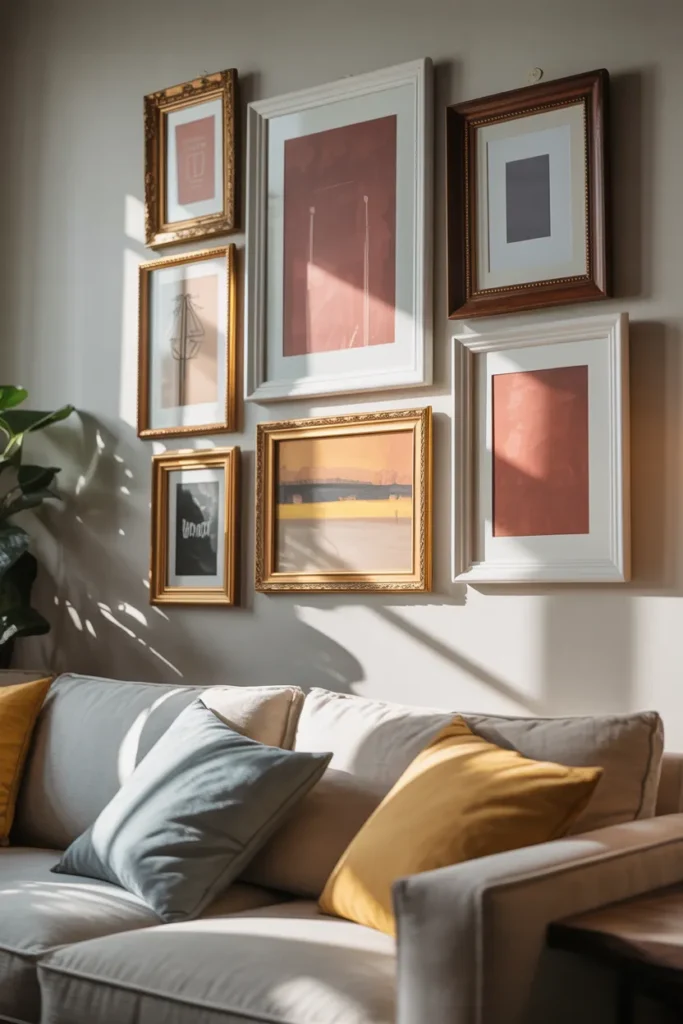
Layering artwork instead of aligning it changes how the wall feels. Instead of a fixed structure, pieces overlap slightly, creating depth through placement rather than spacing.
Frames sit at different distances from the wall. Some rest directly against it, while others lean forward slightly, creating multiple shadow layers behind them. These shadows shift depending on the direction of light, especially in the evening.
There is a physical interaction between pieces. Adjusting one frame often causes slight movement in another, producing soft contact sounds where edges meet.
Dust collects in the gaps between layers. These areas are harder to clean and tend to hold buildup longer than exposed surfaces.
Edges are not always fully visible. Overlapping hides parts of frames, which softens the overall look and reduces the need for perfect alignment.
This setup changes frequently. Adding or removing one piece affects the entire arrangement, making it feel more flexible than structured layouts.
It works best when not overfilled. Too many layers can make the wall feel heavy rather than deep.
19. Wall Decals That Slowly Reveal Their Edges
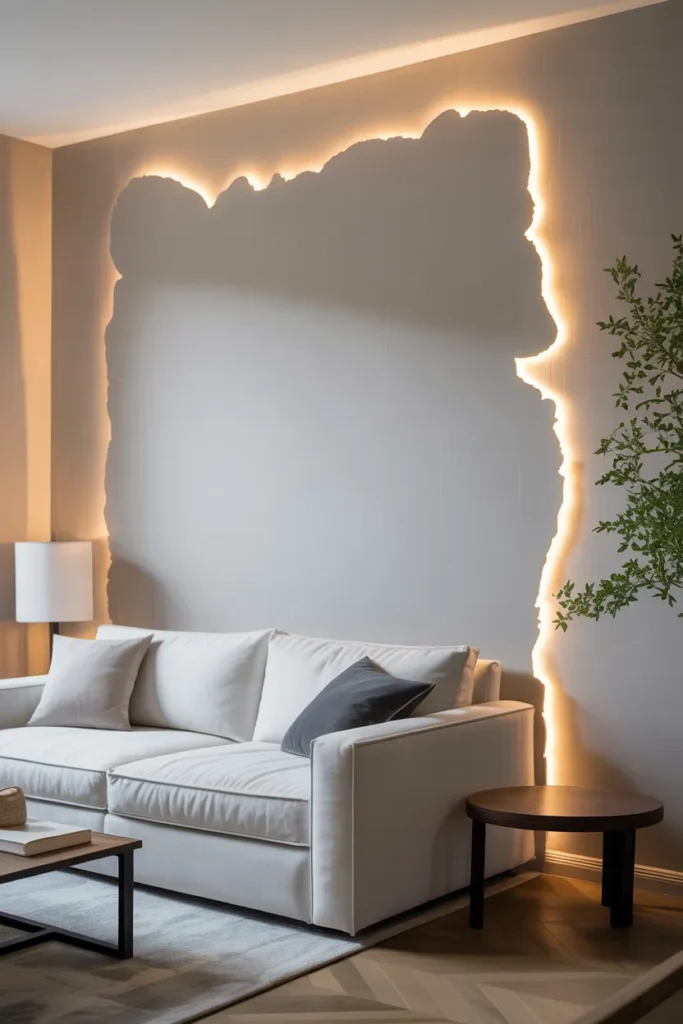
Wall decals look seamless when first applied, but over time, small details start to appear. Edges may begin to lift slightly, especially in areas exposed to heat or direct sunlight.
The surface feels different compared to painted walls. Decals are smoother and sit on top rather than blending in, which becomes noticeable when running a hand across them.
There is often a faint adhesive smell right after installation. It fades within a few days but can linger slightly in enclosed spaces.
Light plays a role in revealing imperfections. When light hits from the side, the edges of decals become more visible, creating thin outlines that were not noticeable before.
Removing decals can leave subtle marks behind. In some cases, the paint underneath appears slightly different due to uneven exposure.
Dust tends to collect along the edges, making them stand out more over time.
This type of décor is easy to apply, but it does not always age as cleanly as it starts.
20. Mixed Material Walls That Feel More Complex Over Time
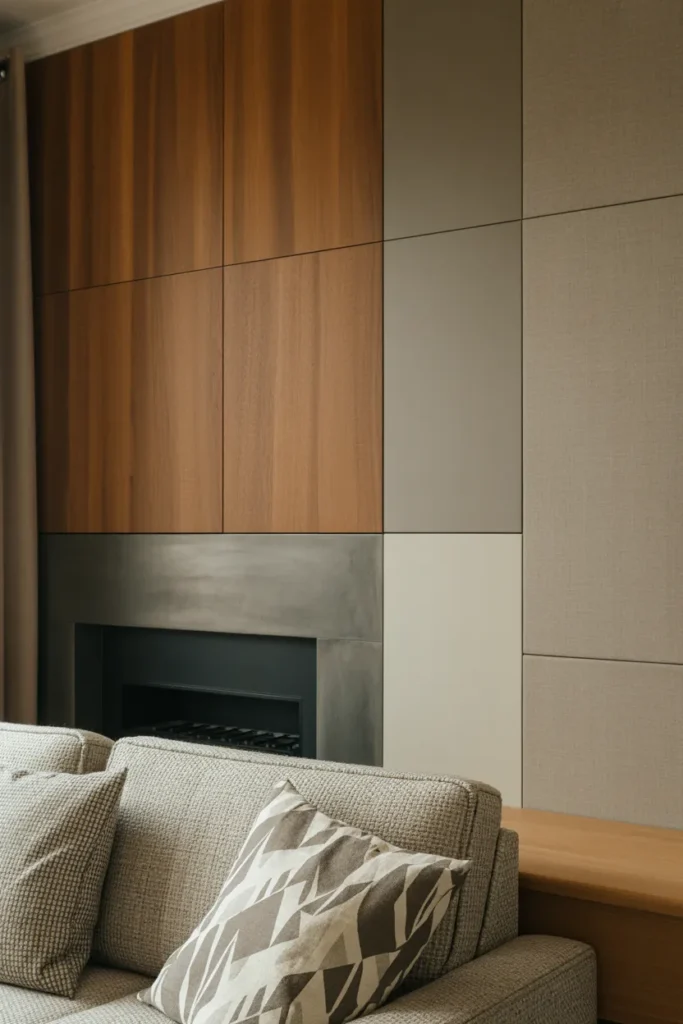
Combining different materials on one wall creates variation that cannot be achieved with a single surface. Wood, metal, fabric, and painted areas all respond differently to light, touch, and sound.
Wood absorbs some sound and feels warmer, metal reflects both light and noise, and fabric softens everything slightly. When placed together, these differences become noticeable, especially in quieter environments.
There is also a mix of scents. Wood can carry a natural, slightly dry smell, fabric may hold a softer, neutral scent, and metal can feel almost scentless or faintly industrial when new.
Light interacts unevenly across materials. Some areas reflect more, others absorb, creating a layered visual effect that shifts throughout the day.
Dust behaves differently on each surface. It settles visibly on smooth materials like metal, while blending into textured ones like fabric or wood grain.
This type of wall requires balance. Too many elements can make it feel cluttered, while too few reduce the effect entirely.
When done carefully, it creates a space that feels more dynamic and less predictable.
Conclusion
Most living rooms don’t feel incomplete because something is missing. They feel incomplete because the walls haven’t been given enough attention yet.
Once you start changing the wall, even slightly, the entire room begins to shift. Light behaves differently, shadows become more noticeable, and the space starts to feel more settled instead of temporary. Some choices make the room quieter, others add movement or texture, but none of them stay completely static over time.
That’s the part people usually don’t expect. A gallery wall slowly shifts out of alignment. Plants grow unevenly toward light. Wooden surfaces change tone depending on the time of day. Even something as simple as a mirror can start reflecting parts of the room you didn’t originally think about.
The goal isn’t to get everything perfect on the first attempt. It’s to create a wall that feels like it belongs to the space as it evolves.
Small changes tend to work better than trying to finish everything at once. One piece leads to another, and over time the wall starts to feel less like an empty surface and more like a part of how the room actually functions.